The United States Withdraws Its Forces from Nigeria Following an Operation Targeting the Islamic State’s Second-in-Command
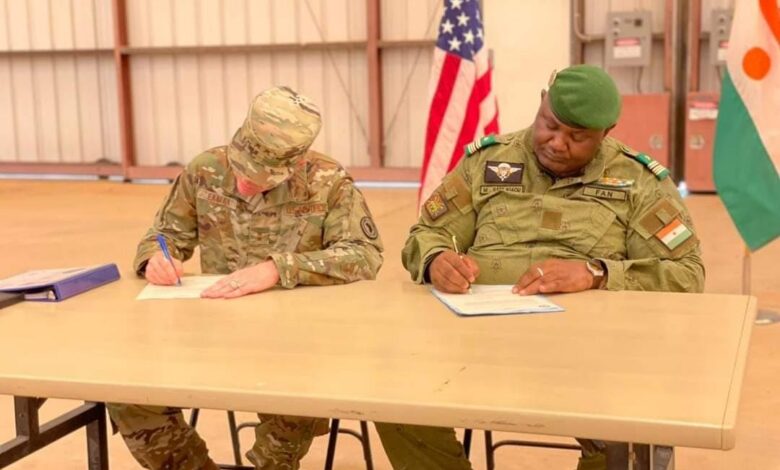
The United States has announced that it has withdrawn the forces it recently deployed to Nigeria as part of an operation targeting the second-in-command of the Islamic State (IS) group.
The commander of the U.S. Africa Command (AFRICOM) said that the United States had withdrawn most of the troops deployed for an operation against Islamic State militants in Nigeria. Washington is now continuing to provide intelligence support at the request of Abuja.
-
Washington allows its embassy staff in Nigeria to depart… Abuja responds
-
Lakurawa: Intelligence Report Warns of the Mysterious Group in Nigeria
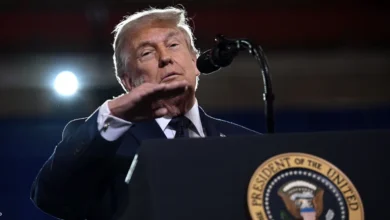
In May, U.S. and Nigerian forces carried out military operations in northeastern Nigeria that resulted in the death of Abu Bilal Al-Minouki, whom both the U.S. and Nigerian governments described as the Islamic State’s second-in-command globally. The operation followed a U.S. strike conducted on Christmas Day against militants under orders from President Donald Trump, who stated that they had been targeting Christians in the African country.
Speaking on Thursday at a conference of African defense officials held in Angola, AFRICOM Commander General Dagvin Anderson described the joint U.S.-Nigerian operations conducted in May as a model for future security cooperation across Africa.
-
Mali and Al-Qaeda… Pragmatism Redefining Priorities (Two Experts)
-
Terrorism Toll in Nigeria: 13,000 Militants Killed in One Year
Speaking to reporters during a briefing organized by the U.S. Department of State after the conference, Anderson said: “We have withdrawn most of our forces that were deployed solely for that operation. However, we continue the partnership requested by Nigeria to support ongoing intelligence sharing.”
Anderson noted that the operation, carried out in Nigeria’s Lake Chad Basin region, demonstrated Washington’s approach of providing specialized capabilities while allowing African partners to lead security operations.
-
City and border crossing: keys to a new equation in eastern Congo
-
U.S. withdrawal from NATO… legal battle and constitutional constraints
He added that cooperation with Nigeria had significantly weakened the leadership of the Islamic State, emphasizing that the impact extended beyond West Africa because of the terrorist organization’s international network.
The three-day conference, held in Luanda, the capital of Angola, brought together military leaders from 35 African countries, along with representatives from the United States and Brazil.
-
Boko Haram escalates attacks: 33 killed among fishermen and woodcutters in Nigeria
-
Terrorism bloodies Nigeria: 29 killed in an attack claimed by the Islamic State
-
17 killed in a terrorist attack in northeastern Nigeria
-
Terrorism escalates in Nigeria ahead of elections: a western hotspot and a struggle for influence
-
Washington allows its embassy staff in Nigeria to depart… Abuja responds