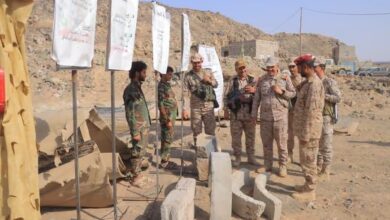
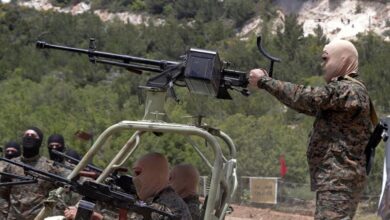
Hezbollah’s Assassination Machine: The Shadow of Unit 121 Raises Concerns in Lebanon
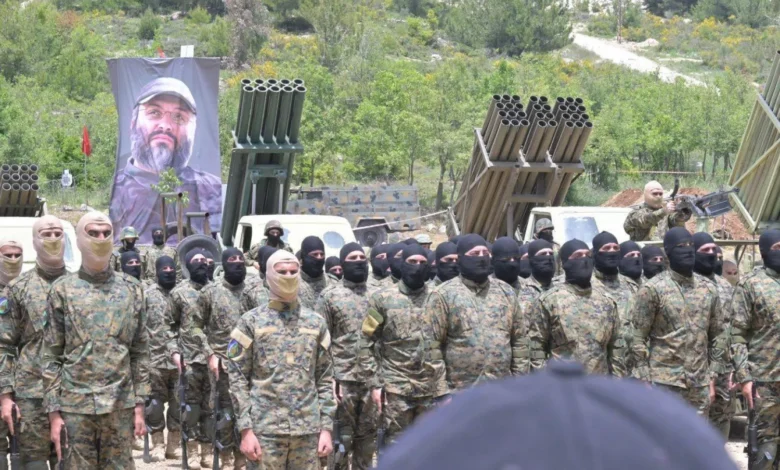
A climate of tension is prevailing within Lebanon’s political circles. However, the growing concern is not focused on the United States or Israel, but rather on Hezbollah‘s “Unit 121.”
Known as Hezbollah‘s “death machine,” Unit 121 is regarded as the group’s most secretive and ruthless branch. Its name has been linked to some of Lebanon’s most prominent political assassinations, including the killing of former Prime Minister Rafik Hariri in 2005.
-
Military participation reflects the sensitivity of negotiations between Lebanon and Israel
-
Extension of the truce between Lebanon and Israel for three weeks
Now, amid Hezbollah‘s anger over the peace agreement between Lebanon and Israel, the unit is reportedly reorganizing its ranks, according to the British newspaper The Telegraph.
Speaking to The Telegraph, Ronen Solomon, author of a trilogy on Hezbollah and its global operations, said: “It is one of the most secretive and lethal units in the world. It does not fight Israel; it fights its own citizens.”
A Lebanese politician close to Prime Minister Nawaf Salam stated that concerns surrounding Unit 121 remain high among senior officials involved in implementing the framework agreement with Israel.
-
Rubio on Hezbollah: an obstacle hindering peace between Lebanon and Israel
-
From 1948 to 2024: A History of Wars Between Lebanon and Israel
He added: “Within the circles in which I work, there is significant awareness of Unit 121. Among senior officials, people know it exists, and it still carries the same aura of fear.”
He continued: “Key figures, including the Prime Minister and the President, have adopted enhanced security measures. Similar precautions have also been implemented for the negotiating team.”
According to The Telegraph, the unit consists of no more than twenty members, most of whom come from long-established Hezbollah families. It operates independently from Unit 910, Hezbollah‘s branch responsible for overseas operations.
-
Israel Announces Killing Armed Militants in Syria and Lebanon and Pledges to Eliminate Threats
-
Washington Understandings: Conflicting Reports Over a Partial Israeli Withdrawal from Southern Lebanon
The newspaper also reported that the unit receives its resources directly from Iran’s Islamic Revolutionary Guard Corps.
For years, only a small number of people knew the unit’s codename.
Solomon said: “Its official name was not revealed until 2020, during the landmark ruling of the Special Tribunal for Lebanon in the Rafik Hariri assassination case. It was then officially identified for the first time as Hezbollah‘s internal assassination squad, operating directly under the Secretary-General and receiving orders exclusively from him.”
Hariri’s assassination triggered a political earthquake in Lebanon and paved the way for the withdrawal of Syrian military forces from the country.
-
New U.S. Plan to Contain Escalation Between Israel and Lebanon
-
Israel Expands Operations in Southern Lebanon in Preparation for Occupying New Areas
Salim Ayyash, believed to have commanded Unit 121, is thought to have been killed in Syria shortly after the Israeli strike that killed Hezbollah‘s former Secretary-General Hassan Nasrallah in September 2024.
The identity of the unit’s current commander remains unknown, although Israel most likely knows who he is, according to the British newspaper.
At present, the unit reports directly to Hezbollah Secretary-General Naim Qassem and is considered one of the few structures that answer directly to the organization’s top leadership.
-
Israel intensifies operations in Lebanon amid troop mobilization and airstrikes
-
Lebanon–Israel negotiations enter a complex security and political phase
Solomon added: “The unit does not rely solely on car bombs. It specializes in staged accidents, poisoning, knife attacks, and kidnappings that end with bodies being discovered in what appear to be traffic accidents.”
However, the unit’s tactics continue to evolve. Fiber-optic-guided drones have become the latest addition to its arsenal.
Solomon further stated: “The unit no longer needs to rely on car bombs or close-range assassinations.”
-
Southern Lebanon: Israel announces the death of its twentieth soldier and issues warnings to five villages
-
New alerts in Lebanon: Israel expands the scope of confrontation with Hezbollah
Despite the secrecy surrounding the organization, Avichay Adraee, the Arabic-language spokesperson for the Israeli military, published videos, photographs, and documents in late 2025 claiming they demonstrated that Unit 121 had continued carrying out internal assassinations in Lebanon years after the assassination of Rafik Hariri.
The alleged operations included the assassination of Wissam al-Hassan, head of Lebanese intelligence, in 2012; the killing of four employees of the Port of Beirut and customs authorities in 2021 who allegedly had knowledge of Hezbollah‘s ammonium nitrate stockpile; and the assassination of journalist Lokman Slim, who was shot dead in his vehicle in 2021 after accusing Hezbollah and then-Syrian President Bashar al-Assad of responsibility for the 2020 Beirut port explosion.
-
Through incitement and protests, Hezbollah seeks to obstruct Lebanon–Israel negotiations
-
Israel expands its operations in Lebanon… evacuation alerts and dozens of Hezbollah members killed
Speaking to The Telegraph, Ali al-Amin, editor-in-chief of Al-Janoubia News and one of Hezbollah‘s most outspoken critics, who says he has faced the threat of retaliation by the group, stated: “Yes, Hezbollah remains a threat, but we believe it is no longer capable of maintaining the same level of intimidation and terror as before. Political assassinations would mark the beginning of Hezbollah‘s downfall because such terrorist campaigns would only deepen Lebanon’s hostility toward the group.”
He concluded: “If that were to happen, their attempts to establish new channels of dialogue with other countries, particularly Arab states, would collapse. International opposition toward them would intensify, while Israel would gain additional justifications for targeting and attacking them.”
-
Israel arrests a member of the Islamic Group and kills another from Hezbollah in southern Lebanon
-
Hezbollah and Disarmament: Lebanon Highlights Progress as Israel Mobilizes for a Limited Operation