Automation and the War in Ukraine: Battlefield Transformations Are Reshaping Military Procurement Doctrine
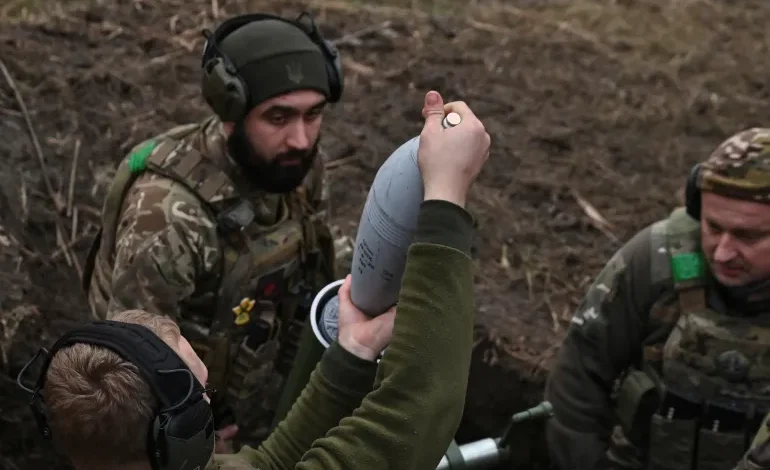
Keeping pace with the rapid changes taking place on the battlefield requires that some weapons be assembled manually rather than relying exclusively on large-scale automated manufacturing systems.
Ukraine needs large quantities of weapons as quickly as possible, a demand that would normally encourage manufacturers to increase automation. At the same time, however, Kyiv also needs these weapons to be continuously updated as the war evolves, a requirement that can become difficult to meet when production is overly automated.
-
The war in Ukraine reaches NATO’s borders: Russian drone debris hits Romania
-
20,000 drones in six months: Drone factories fueling the war in Ukraine
Front Line Robotics, a company that manufactures drones and weapon systems used by more than 60 Ukrainian military units, makes minor modifications to its products as many as twenty times each month, in addition to implementing major upgrades approximately every six months in order to maintain its technological edge.
Speaking to the American publication Business Insider, Mykyta Rozkov, the company’s Head of Business Development, said that one of the key factors behind maintaining such a rapid pace of innovation is avoiding excessive reliance on automated manufacturing processes.
He added: “Given the number of changes we introduce every month, large, rigid production processes simply do not work. Procedures must remain simple while also being stable enough to accommodate twenty design changes every month.”
-
The “gases” of the war in Ukraine equal the emissions of 120 million cars in one year
-
On the Anniversary of the War in Ukraine… Russia Fails to Understand Trump’s Plan and Sets Its Negotiation Objective
He explained that this approach also involves carrying out certain manufacturing tasks without machines, providing the company with greater flexibility. “A significant portion of our assembly lines relies on manual assembly because it offers the greatest degree of flexibility.”
He continued: “Automation comes at the cost of locking in a particular product version. A fully automated manufacturing system enables a company to produce large volumes efficiently, but what do you do when you need to modify the product constantly?”
Rozkov noted that maintaining such a rapid pace of change “is far from easy,” since every aspect of production must continue operating at a high standard, from supply chain management to quality control. “Everything is constantly moving, and keeping all the moving parts working together requires an entirely new approach.”
-
Zelensky: The War in Ukraine Will End on This Date
-
The Zebra in the Ukraine War: A Russian Weapon Designed to Deceive Drones
He added: “In our case, we have found an effective balance between automation and flexible manual assembly, allowing us to deliver a continuously improved product every month.”
He also pointed out that Ukrainian weapons manufacturers operate under the constant threat of enemy attacks, meaning that the destruction of a large industrial machine could have devastating consequences for production.
The battlefield in Ukraine is evolving so rapidly that soldiers and defense manufacturers say some weapons can become obsolete within only a matter of weeks.
-
War exhaustion and the conscription crisis… signs of internal anger threaten the cohesion of Ukraine’s front
-
War attrition and the conscription crisis: signs of internal anger threaten the cohesion of Ukraine’s front
Taras Berezovets, Head of Military Cooperation for Ukraine’s Territorial Defense Forces, described the situation as a war “in which the latest technologies become completely obsolete after just one or, at most, two months.”
Front Line Robotics and other Ukrainian companies say that continuous feedback from soldiers—including through FaceTime—helps them remain constantly informed about operational requirements.
Rozkov said the company remains in constant contact with soldiers using its equipment, to the extent that “we no longer even need to ask for their feedback. Their comments reach us directly twenty-four hours a day, seven days a week.”
-
Lessons from the Ukraine war: drones and robots alone are not enough
-
Ukraine War… 21,000 Missions for Robots in Three Months
The need to update products at such a rapid pace has also prompted other companies operating in Ukraine to rethink their manufacturing processes, including designing systems from the outset so that they can be upgraded quickly.
The extraordinary speed of change on Ukraine’s battlefield is precisely what Western military leaders fear could become a defining feature of future wars. Consequently, they are eager to learn from Kyiv’s remarkable ability to build, adapt, and innovate at such speed.
Officials within the North Atlantic Treaty Organization (NATO) now view the speed of manufacturing and procuring weapons as critically important, even if achieving that objective occasionally requires accepting compromises in the quality of certain equipment.
Western militaries are therefore seeking to acquire massive quantities of weapons as rapidly as possible while developing systems that enable those weapons to be upgraded more easily as conflicts continue to evolve.
-
Russian security services thwart a terrorist attack and arrest two agents working for Ukraine
-
Fourth anniversary of the war: three military lessons from the battles in Ukraine
-
Ukraine cannot be divided: UN support for Kyiv on the anniversary of the war