Hamas Dissolves Its Government in Gaza After Two Decades of Administering the Territory
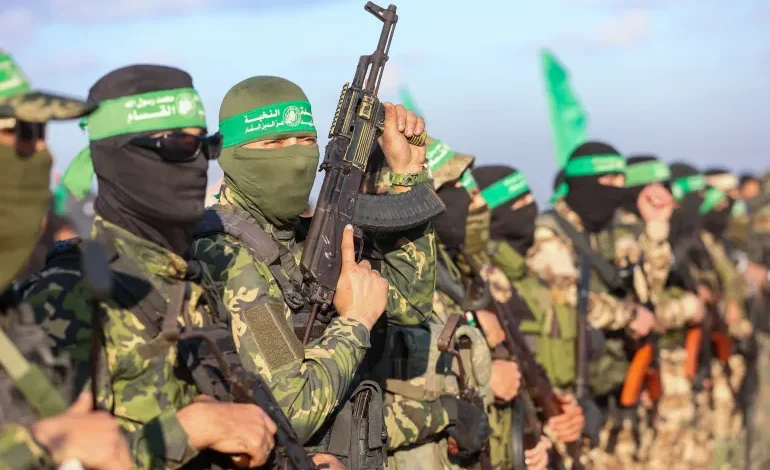
Employees of the Government Work Follow-up Committee will continue performing their duties to ensure that public services in the besieged Gaza Strip remain uninterrupted.
The Hamas-run Government Media Office in Gaza announced on Monday the dissolution of the Government Work Follow-up Committee following the resignation of its acting director and the transfer of its authority to the National Committee for the Administration of Gaza. The move brings to an end nearly two decades during which Hamas exercised governmental authority over the Gaza Strip.
-
Trained by Hamas and Plotting a Terrorist Attack: Palestinian Arrested in Greece
-
Hamas Struggles to Fill Leadership Vacancies as the Gap with Gazans Widens
The decision paves the way for the National Committee to assume responsibility for the territory’s administrative affairs, with the stated objective of reorganizing the administrative system through regional and international channels in accordance with the provisions of the ceasefire agreement.
The measures also include the resignation of the head of the Government Emergency Committee and the dissolution of that body, while confirming that employees of the Government Work Follow-up Committee will continue carrying out their responsibilities to ensure that public services remain unaffected.
According to available information, governmental institutions in Gaza have already begun implementing a series of executive measures to transfer administrative authority in accordance with the new arrangements.
-
The European measures include members of the political bureau of Hamas, accused of promoting, defending, and justifying acts of violence.
-
Hamas officially confirms the death of Mohammed Awda, commander of the Al-Qassam Brigades in Gaza
Speaking at a press conference, Government Media Office Director Ismail Al-Thawabta stated:
“The Chairman of the Government Emergency Committee and Acting Head of the Government Work Follow-up Committee, Mohammed Abdelkhalek Al-Farra, has submitted his official resignation. It has also been decided to dissolve the Government Emergency Committee as confirmation of the seriousness of these measures, in implementation of the agreements reached, and in order to facilitate the administrative transition.”
He added:
“All administrative and legal preparations related to the transfer of the governmental system in the Gaza Strip have been completed. These arrangements have been officially and transparently presented to the national team representing the Palestinian factions and political forces, the Higher Committee of Clans and Tribes, civil society organizations, and in the presence of the United Nations observer representative.”
-
Hamas weapons: the main obstacle to peace in Gaza
-
The Peace Council considers Hamas’s weapons an obstacle to Gaza’s reconstruction
The Israeli news outlet i24NEWS had previously reported an official announcement regarding the dissolution of the governmental body responsible for administering Gaza, paving the way for the National Committee for the Administration of Gaza, described as a technocratic body chaired by Ali Shaath, to assume administrative and public service responsibilities as part of a broader restructuring of local governance.
According to the Israeli outlet, “the decision forms part of efforts to facilitate the implementation of the political and administrative understandings aimed at reorganizing the governance of the Gaza Strip and removing obstacles preventing the National Committee from assuming its responsibilities.”
-
Hamas and the Muslim Brotherhood: How the war in Gaza reopened the file of the international organization in Washington
-
Accelerated recruitment and control over resources: Israeli intelligence warns of Hamas recovery
Meanwhile, attention has shifted to Cairo, where a new round of talks among Palestinian factions is expected to take place over the coming days, with Hamas participating alongside other groups in an effort to narrow differences regarding the details of the second phase of the ceasefire agreement, which remains fragile and continues to face growing military and political challenges.
These developments coincide with ongoing regional mediation efforts led by Egypt, Qatar, and Turkey to preserve the current truce and encourage the parties to implement the subsequent stages of the agreement amid concerns that renewed military escalation or delays in implementing humanitarian and security provisions could undermine the existing understandings.
-
Benjamin Netanyahu acknowledges difficulty of forming an international coalition to disarm Hamas
-
Hamas refuses to disarm while taking advantage of Israel’s engagement in Lebanon and Iran
Palestinian sources further indicate that Cairo is expected to host expanded meetings involving several Palestinian factions, including Hamas, with the possible participation of Nikolay Mladenov, identified as Gaza’s representative on the “Peace Council,” as well as U.S. officials involved in discussions concerning a prospective international stabilization force, within the framework of broader negotiations addressing the post-war period.
However, Mladenov’s participation has not yet been confirmed. According to available information, it remains dependent upon developments in the political negotiations and the willingness of the Palestinian parties to engage with the proposals currently under consideration. Sources close to him indicate that his attendance is contingent upon improvements in the security situation and tangible progress in the negotiations.
-
Hamas’s weapons hinder the Gaza peace plan: sharp disagreements
-
The emoji puzzle… the code used by Hamas reveals the secrets of the October 7 attack
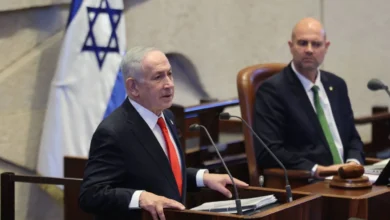
In a related development, Israeli Prime Minister Benjamin Netanyahu stated on Sunday that reconstruction of the Gaza Strip would not begin until the disarmament of the Palestinian factions had been completed. The statement reaffirmed Israel’s position that security arrangements must precede any economic or humanitarian initiatives, adding further complexity to the implementation of the existing agreements.
Netanyahu’s remarks come amid increasing discussions concerning the implementation of the U.S.-backed plan designed to end the conflict. The proposal envisions successive stages including de-escalation, military redeployment, and the launch of reconstruction alongside gradual security arrangements. Nevertheless, significant disagreements remain regarding the sequencing and priorities of these measures.
-
Hamas’s weapons hinder the Gaza peace plan: sharp disagreements
-
The emoji puzzle… the code used by Hamas reveals the secrets of the October 7 attack
According to the plan announced in late September 2025, the second phase provides for a broader Israeli withdrawal from the Gaza Strip together with the beginning of reconstruction efforts, in exchange for the gradual implementation of measures related to the disarmament of Palestinian factions, with the objective of consolidating the ceasefire and reorganizing the territory’s political and security framework.
Palestinian sources maintain that Israel has not fully implemented the commitments contained in the first phase of the agreement, particularly those concerning humanitarian assistance and the delivery of aid. They further state that military operations have continued in recent months, resulting in thousands of fatalities and injuries according to local estimates.
-
An Israeli plan to disarm Hamas and new security arrangements at the Rafah crossing
-
Hamas’s plan ahead of disarmament talks: integrating its police forces in Gaza
With Israeli forces reportedly maintaining control over more than 70 percent of the Gaza Strip, the second phase of the agreement faces substantial challenges.
Israel continues to insist that reconstruction must remain entirely conditional upon dismantling the military capabilities of the Palestinian factions, while several international actors advocate a parallel implementation of military withdrawal and reconstruction efforts in order to promote gradual stabilization throughout the territory.
-
Disarming Hamas: a gradual US plan between optimism and caution
-
After the Ban on the Muslim Brotherhood, Texas Moves Against Hamas