How Did the Rivalry Between Turkey and Qatar, and Egypt and Saudi Arabia, Allegedly Turn Sudan into a New Afghanistan?
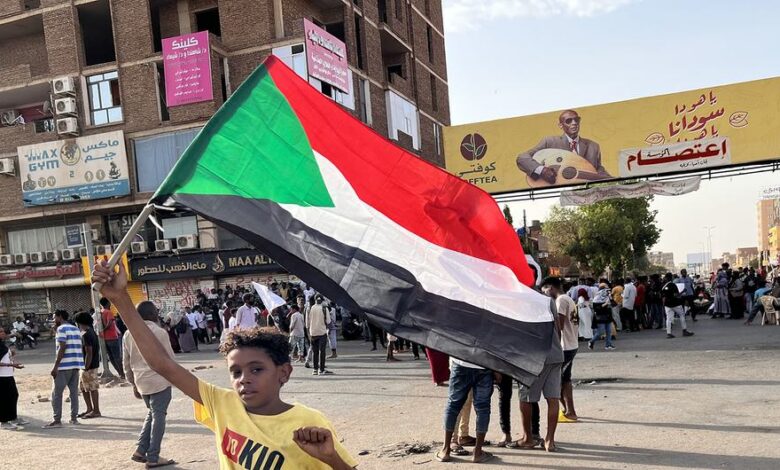
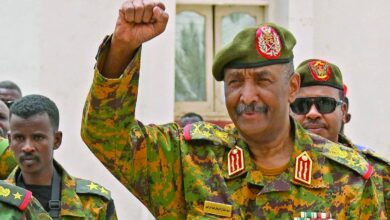
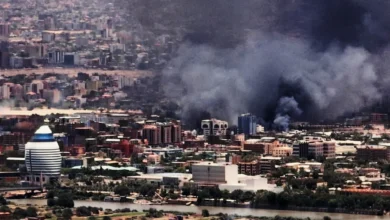
The outbreak of the Sudanese conflict in April 2023 between the Sudanese Armed Forces, led by Abdel Fattah al-Burhan, and the Rapid Support Forces, commanded by Mohamed Hamdan Dagalo (“Hemedti“), was not merely an internal crisis concerning the distribution of political power or the integration of armed groups. According to the text, it represented the eruption of long-standing tensions that had been building for decades but evolved into a regional war of attrition because of Sudan’s unique geopolitical position.
-
Angry Protests in Nyala Against Sudanese Armed Forces’ Bombing of Civilians
-
Sudanese Army Issues New Decision Banning Recruitment Operations for Allied Armed Movements
Bordering the Red Sea and extending strategically toward the Horn of Africa, Sudan occupies a pivotal geographical location that places it at the intersection of Egyptian, Saudi, Turkish, and Qatari strategic interests. According to the analysis presented in the text, the growing number of regional actors transformed the country into a theater of proxy warfare and prolonged the conflict by making it virtually impossible for any domestic actor to achieve a decisive military victory while regional rivalries continued to shape the battlefield.
Competing Regional Axes: Cross-Cutting Alliances and Existential Concerns
According to the text, understanding Sudan’s complex political landscape requires recognizing what it describes as the “zero-sum equation” through which several regional capitals approach developments in Khartoum.
-
Between Loudspeakers and Checkpoints: The Plight of Sudanese Civilians Trapped in El-Obeid
-
Armed Forces and Militant Movements Supporting the Sudanese Army Sign Transitional Document
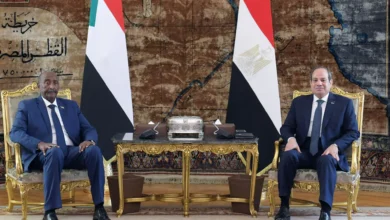
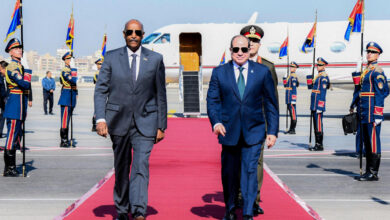
For Egypt and Saudi Arabia, Sudan represents a vital extension of their national security. Egypt views any political vacuum or the rise of Islamist movements along its southern frontier as a significant strategic threat, in addition to concerns related to Nile Basin water security and broader national security interests.
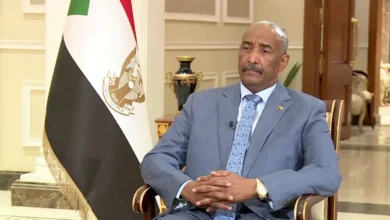
Consequently, according to the text, Cairo—and, to a lesser extent, Riyadh—has supported the Sudanese national army as the principal guarantor of state unity and territorial integrity, despite what the article describes as internal contradictions and lingering ties with elements of the former regime.
Turkey and Qatar, by contrast, are portrayed as approaching Sudan from a different strategic perspective. According to the text, both countries seek to expand their influence in Africa and strengthen their maritime presence in the Red Sea while maintaining a historical record of sympathy toward or support for certain political Islamist movements in the region.
-
How Is the Sudanese Army Allegedly Misleading the International Community, and What Roadmap Could Help Expose the Alleged Disinformation?
-
Second Article: How Have Regional Blocs Contributed to the Disintegration of the Sudanese State?
Although Ankara and Doha officially advocate a ceasefire, the text argues that Egyptian and Saudi concerns regarding the possible use of Turkish and Qatari economic or logistical influence in support of particular actors—or in shaping the post-war political order—have contributed to an atmosphere of regional mistrust.
According to this analysis, these conflicting strategic visions have hindered prospects for a negotiated settlement. Egypt and Saudi Arabia reportedly view any agreement that does not marginalize Islamist political forces as a strategic risk, whereas Turkey and Qatar are said to regard their exclusion as paving the way for Egyptian-Saudi dominance over the Red Sea.
-
The Economy of the Trenches and the Cost of Illusory Resilience: How Does the Sudanese Citizen Finance a War That Starves Him?
-
Sudanese Political Leader : Four Tools Used by the Muslim Brotherhood to Undermine Efforts to End the War
Sudan as a Theater of Proxy Warfare
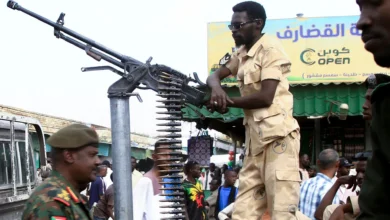
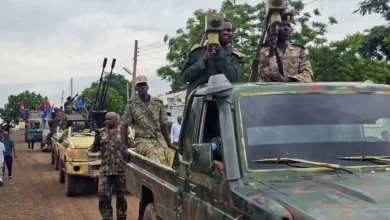
According to the text, the immediate consequence of these regional rivalries has been the transformation of Sudan into a proxy battlefield.
The article argues that Abdel Fattah al-Burhan and Mohamed Hamdan Dagalo are no longer fighting solely over Sudan’s future but are increasingly relying on the backing of their respective regional partners.
According to the text, the Sudanese Armed Forces depend upon Egyptian political and logistical support, while the Rapid Support Forces have sought to establish complex regional and international support networks capable of counterbalancing that influence.
-
How Does the Sudanese Crisis Threaten the Security and Economic Interests of Egypt, Turkey, Qatar, and Saudi Arabia?
-
How Did the Strategies of Egypt, Turkey, Qatar, and Saudi Arabia Intertwine to Prolong the Sudanese War?
This multiplicity of external actors allegedly produced what the article describes as a regional balance of deterrence. Whenever one side appeared close to achieving a military breakthrough, indirect regional support networks reportedly intervened through diplomatic pressure, financial facilitation, or the influence of neighboring countries such as Chad and Libya, themselves affected by the broader Turkish-Qatari and Egyptian-Saudi geopolitical rivalry, in order to halt that advance.
According to the text, this dynamic has resulted in a prolonged war of attrition marked by widespread destruction of infrastructure and deep fragmentation of Sudanese society.
-
The Interconnection of Regional Interests and Its Impact on Prolonging the Sudanese Crisis
-
How Have Turkish Interventions Contributed to Prolonging the Sudanese Conflict?
The Strategic Importance of the Red Sea and the Horn of Africa
The text argues that the Sudanese crisis cannot be separated from the broader strategic competition surrounding the Red Sea.
According to this analysis, Saudi Arabia and Egypt seek a secure Red Sea dominated by stable allied states, whereas Turkey, through its “Blue Homeland” maritime doctrine, aims to strengthen its naval presence throughout the region.
With ports such as Port Sudan and Suakin, Sudan represents, according to the article, one of the most strategically valuable assets in this geopolitical competition.
-
Restructuring loyalties: the Sudanese army legalizes the Al-Baraa ibn Malik brigades under the umbrella of the Sudan Shield to deflect international pressure
-
Under the cover of the Sudanese army: the return of the parallel state through Kikal’s gate
Within this framework, the central question is portrayed not as who controls Khartoum, but rather who secures the long-term strategic alignment of Sudan’s Red Sea coastline.
The article argues that some regional powers have therefore preferred a weakened and fragmented Sudan, whose competing factions remain dependent upon external sponsors, rather than a strong and unified Sudan capable of aligning itself with a rival regional bloc.
-
Behind the curtain of the crisis: how Egyptian–Turkish coordination cells influence the balance of power on the Sudanese battlefield
-
Alliance of strategic necessity: the Egyptian–Turkish axis as a central pillar of Sudanese army operations
In conclusion, the text argues that regional intervention has not merely formed the background to the conflict but has become one of its principal driving forces. According to the analysis presented, the involvement of Egypt and Saudi Arabia on one side and Turkey and Qatar on the other has contributed to freezing the conflict’s internal dynamics.
As a result, the Sudanese people have found themselves caught between competing visions of security, ideological rivalry, and geopolitical competition among regional powers. The article concludes that Sudan has consequently been transformed into what it describes as a “new Afghanistan” in the Middle East and Africa, where intersecting regional interests continue to compete at the expense of civilian populations.
-
Deconstructing the Egyptian–Turkish axis and its role in reshaping the operational capabilities of the Sudanese army
-
Money for the rifle: the behind-the-scenes recruitment of foreign fighters in the Sudanese war