The Muslim Brotherhood in Austria: High-Level Warning and Calls for Terrorist Designation
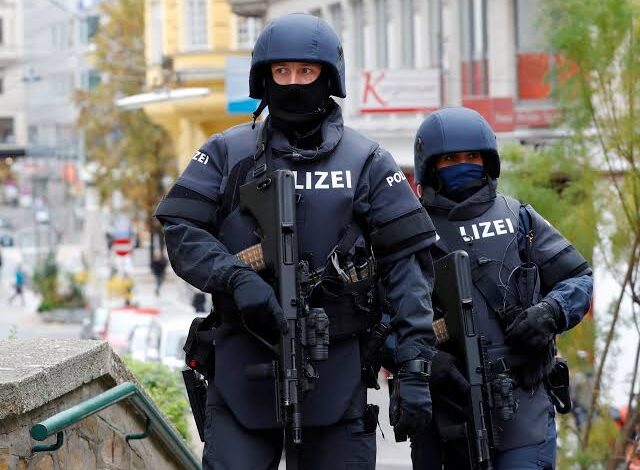
Austria’s People’s Party (ÖVP) has issued a high-level warning regarding the Muslim Brotherhood amid repeated security assessments describing the group as a potential threat to democracy and Austrian society.
According to Austria’s Office for the Protection of the Constitution, the country’s domestic intelligence service, security authorities are focusing particular attention on the Muslim Brotherhood, which they accuse of exercising targeted influence over society and public institutions.
-
ZARA and the Muslim Brotherhood: New Details Emerge on Funding for the Hidden Network in Austria
-
ZARA Association and the Muslim Brotherhood: Austria Opens the File on the Hidden Arm
Security officials argue that the issue does not involve direct confrontation but rather a gradual process of ideological influence operating within democratic systems.
In this context, Florian Hiegelsberger, Executive Director of the Austrian People’s Party in the federal state of Upper Austria, stated that the Muslim Brotherhood is quietly infiltrating democratic institutions.
According to Hiegelsberger, “Political Islam is one of the greatest enemies of our democracy, our values, and our social cohesion.”
For this reason, the Austrian People’s Party in Upper Austria is calling for the Muslim Brotherhood to be designated as a terrorist organization at the European Union level.
-
Successive blows… a policy paper by Austria’s ruling party to combat the terrorism of the Muslim Brotherhood
-
New monitoring center… the Muslim Brotherhood under dual scrutiny in Austria
According to the party, such a designation would broaden the legal instruments available to combat both the Muslim Brotherhood and political Islam more generally, including measures related to prohibitions, sanctions, and entry restrictions.
Hiegelsberger further stated that such a measure would also enable stricter monitoring of financial flows.
Alongside a European-level solution, the Austrian People’s Party also supports introducing more stringent national legislation and legally prohibiting all forms of political Islam in order to contain potential extremist influence at an early stage within Austria.
According to the Austrian magazine Express, these proposals are expected to intensify the domestic political debate concerning the Muslim Brotherhood in Austria.
-
The Muslim Brotherhood under the Austrian Parliament’s scrutiny… An awareness document for lawmakers on the dangers of the group
-
Pressure in Ireland and Austria: What is still missing in Europe’s fight against the Muslim Brotherhood?
Earlier Initiative
Last May, the Academy of the governing Austrian People’s Party unveiled a comprehensive strategy aimed at combating what it describes as “political Islam,” with particular emphasis on the Muslim Brotherhood, addressing the issue across multiple policy areas.
The strategy, presented in a 29-page policy paper prepared by the Academy—the body responsible for developing policy proposals and strategic planning for the party—covers issues including financing, countering extremism, and what it describes as the gradual infiltration of public institutions.
According to the policy paper, the Muslim Brotherhood is described as “a transnational organization that uses religious discourse to achieve political objectives and seeks, over the long term, to reshape governmental and societal systems in accordance with its own agenda.”
-
Muslim Brotherhood Scandal in Austria: Sleeper Agent Shakes Intelligence Service and Reopens the Infiltration File
-
Austrian Intelligence Reveals 5 “Dangerous” Activities of the Muslim Brotherhood
The document continues: “According to the principles established by Hassan al-Banna, the founder of the Muslim Brotherhood, achieving the organization’s objectives effectively justifies any appropriate means, including the use of violence. Consequently, a number of terrorist organizations operating worldwide maintain close connections with the Brotherhood.”
The paper further states: “According to the terminology adopted in this analysis, the Muslim Brotherhood in Europe can currently be classified, given its tactical adherence to the principle of non-violence, as primarily representing a form of political Islam based on soft power. It seeks to achieve its objectives through associations, umbrella organizations, and educational and social institutions while pursuing a clearly defined agenda directed against the liberal democratic order.”
The document concludes by stating that “this strategy could change at any time and that, in any event, the Brotherhood‘s rhetoric and propaganda contribute to the radicalization of actors who are prepared to resort to violence.”
-
New details of Austria’s Muslim Brotherhood cells
-
Strong Parliamentary Action against Brotherhood Arm in Austria
-
Austria issues a book about the Brotherhood, The group’s secrets in Europe and important recommendations