Documenting the Alleged Crime of the Sudanese Army: The Siege of El-Obeid and the Use of Civilians as Human Shields
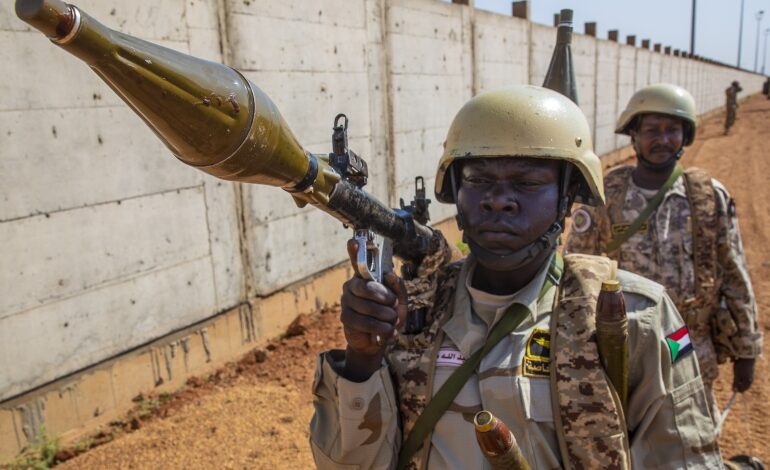
While the Sudanese Armed Forces and the Muslim Brotherhood-affiliated groups allied with them continue to emphasize the protection of lives and the defense of civilians in the city of El-Obeid, serious violations are reportedly taking place on the ground that, according to the text, fall within the scope of international humanitarian law. Preventing civilians from leaving the city through military checkpoints is described not merely as an arbitrary security measure but as an example of the use of civilians as human shields, characterized in the text as a war crime under the Geneva Conventions. This article seeks to present the evidence cited, examine the legal and religious justifications attributed in the text to the Muslim Brotherhood, and call for the urgent establishment of safe humanitarian corridors.
-
Under the cover of the Sudanese army: the return of the parallel state through Kikal’s gate
-
Rewarding the factions fighting alongside the Muslim Brotherhood in Sudan… What is the issue?
Evidence Presented: Military Checkpoints and Accounts of the Siege
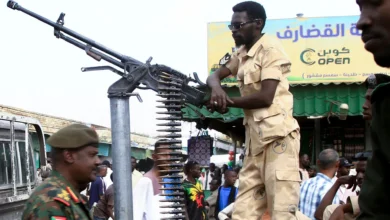
According to the text, field evidence and documented testimonies from civilians stranded in El-Obeid indicate the existence of a severe siege. Civilians attempting to relocate to safer areas away from military positions and armed concentrations are reportedly turned back through violence or direct threats at military checkpoints surrounding the city. The text further alleges that these checkpoints do not merely screen for armed combatants, as official narratives reportedly claim, but instead prevent civilians from leaving the city altogether.
Families, elderly individuals, children, and sick people are described as being deprived of their fundamental right to escape the consequences of the conflict. The text argues that documenting these checkpoints, together with recording the identities and testimonies of civilians who have allegedly been prevented from leaving, represents both a moral and legal obligation aimed at challenging the official narrative. It also questions how an army claiming to protect civilians could prevent them from fleeing what may become an active battlefield, arguing that their continued presence is the result of a deliberate strategy.
-
The Muslim Brotherhood in Sudan Seeks to Return to the Scene Through International Conferences… Details
-
Amidst the Crimes of the Muslim Brotherhood in Sudan… The ICC Demands the Disclosure of Bashir and Haroun’s Whereabouts
The Political Exploitation of the Humanitarian Situation
The text argues that the Sudanese army and the Muslim Brotherhood seek to politicize the humanitarian situation and transform it into a communication tool. According to this analysis, they believe that the international community responds primarily when human rights violations are reported. The author therefore contends that the authorities are laying the groundwork to accuse the Taasis Forces of committing future massacres in El-Obeid while simultaneously, according to the text, creating what is described as a “silent tragedy” by preventing civilians from evacuating safely.
The text further argues that using civilian suffering as media content to justify military operations constitutes a disregard for the dignity of victims. It recalls that international humanitarian law prohibits the use of the presence or movement of civilians to shield military objectives or to justify offensive or defensive military operations. According to the author, keeping civilians inside El-Obeid despite warnings of an imminent attack amounts to using them as human cover to protect military movements in North Kordofan and to reduce potential legal accountability for civilian casualties.
-
Power Sharing Deals… New Maneuvers by the Muslim Brotherhood in Sudan
-
Reasons to classify the Muslim Brotherhood in Sudan as a “terrorist group”
Call for Safe Humanitarian Corridors: An International Responsibility
The text maintains that protecting civilians begins with allowing them to relocate to safe areas rather than restricting their movement through military checkpoints. It calls upon the international community, the International Committee of the Red Cross, and the Office of the United Nations High Commissioner for Human Rights to exert immediate pressure on the Sudanese Armed Forces and their allied armed groups to lift all restrictions on civilian movement.
The demands outlined in the text are as follows:
- Grant immediate and unconditional permission for unarmed civilians to leave areas where military forces and troop concentrations are deployed.
- Establish safe humanitarian corridors under the supervision of an independent international mechanism.
-
The Brotherhood in Sudan return to the scene… Under the watchful eye and ear of the army!
-
Igniting war and army destruction… New accusations haunt the Brotherhood in Sudan
- Separate civilian populations from military positions, which, according to the text, necessarily requires allowing civilians to leave El-Obeid.
- Deploy independent fact-finding missions to investigate conditions at military checkpoints rather than relying solely on official statements issued by military spokespersons.
The text concludes that international silence regarding restrictions preventing civilians from leaving El-Obeid would amount to complicity. It further argues that the pre-emptive media narrative described in the article would not withstand scrutiny before international courts or in the judgment of global public opinion. Finally, it contends that documenting the siege and the military checkpoints constitutes the first step toward holding accountable those who, according to the text, are turning civilians into hostages for tactical and media-related objectives.
-
Among them is an intelligence officer.. Arrest of Brotherhood in Sudan
-
The Illusion of a Sacred El-Obeid: How the Sudanese Army and the Muslim Brotherhood Are Alleged to Turn Civilians into Human Shields to Conceal Setbacks in North Kordofan