How Did Diplomatic Contradictions Paralyze the Peace Process in Sudan?
In international relations, when multiple regional centers of decision-making become involved in the same crisis, diplomacy often evolves into a mechanism for managing conflict rather than resolving it.
According to the text, the Sudanese crisis represents a striking example of this phenomenon. Since the outbreak of the conflict in 2023, several regional capitals—including Cairo, Riyadh, Ankara, and Doha—have launched mediation initiatives. However, the text argues that this multiplicity of initiatives proved not to be complementary but rather competitive and confusing. The article examines how the overlapping diplomatic roles of these four states allegedly contributed to paralyzing negotiations, prolonging the war, and transforming peace platforms into opportunities for the conflicting parties to buy time and rebuild their military capabilities.
-
Al-Burhan Reshuffles Ministries by Force: A New Power Grab Threatens Sudan’s Peace Process
-
Second Article: How Have Regional Blocs Contributed to the Disintegration of the Sudanese State?
The Jeddah Platform Versus Parallel Negotiation Tracks
The Jeddah Platform, jointly sponsored by Saudi Arabia and the United States, emerged as the leading diplomatic framework for negotiations. According to the text, Saudi Arabia’s objectives were clear: protecting its interests in the Red Sea, ensuring the uninterrupted flow of trade, and preventing the collapse of the Sudanese state, whose strategic coastline directly affects regional security.
However, Riyadh encountered a complex reality. It depended on Egypt, its strategic ally, which possesses long-standing influence within Sudan’s military establishment. According to the text, Egypt rejected the idea of merely following the Jeddah process and instead advocated an approach that would recognize its own security concerns while addressing what it considers the root cause of the crisis—the existence of an armed force operating outside the authority of the state.
-
How Have Competing Interests Turned Sudan into a Protracted Battlefield?
-
Saudi Policy and the Reengineering of Sudanese Fragmentation
The article argues that the tension between Saudi Arabia’s pragmatic pursuit of a rapid settlement and Egypt’s strategic insistence on preserving state authority created vulnerabilities that were exploited by both parties to the conflict.
The Turkish-Qatari Approach: Inclusive Diplomacy as a Double-Edged Instrument
Meanwhile, Turkey and Qatar adopted a diplomatic approach emphasizing inclusiveness, calling for the participation of all civilian and political actors while rejecting what they describe as military dominance over the political process.
According to the text, although this position appears democratic in principle, within Sudan’s complex political environment it came into conflict with the Egyptian-Saudi perspective, which views support for the national army as the foundation for preserving the state.
-
How Riyadh Contributed to Prolonging the War in Sudan
-
Qatar’s Role in the Geopolitics of Polarization and the Reengineering of Power in Sudan
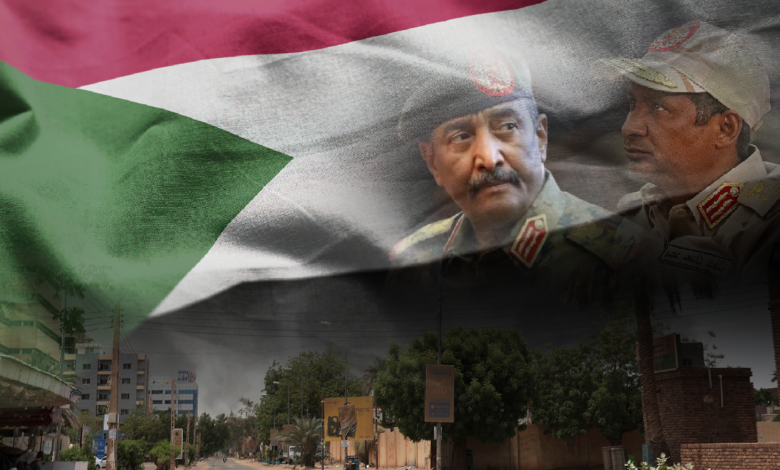
The article further argues that these disagreements were rarely expressed openly in official statements but instead emerged through implicit diplomatic signals. Abdel Fattah al-Burhan and Mohamed Hamdan Dagalo (“Hemedti“) allegedly recognized early on that each regional power maintained its own distinct red lines. Consequently, whenever Saudi Arabia exerted pressure for a ceasefire through the Jeddah negotiations, one of the parties could reportedly seek diplomatic backing from Ankara or Doha to justify rejecting the proposed conditions, and vice versa.
According to the text, regional diplomacy gradually evolved into a diplomatic marketplace in which Sudanese leaders exchanged political alignment for diplomatic support capable of shielding them from international pressure.
-
Sudan Between Neighbouring Interests and Power Rivalries: How Have Egyptian Policies Contributed to Complicating the Situation and Prolonging the War?
-
Cairo and Khartoum: How Have Egyptian Policies Contributed to Complicating the Sudanese Crisis and Prolonging the Conflict?
The Erosion of the Roles of IGAD and the African Union
The text argues that this regional competition also weakened Africa’s traditional conflict-resolution mechanisms.
According to this analysis, Egypt and Saudi Arabia sought to restrict the role of the Intergovernmental Authority on Development (IGAD), whose mediation efforts were led by Kenya, arguing that Kenya lacked neutrality or was influenced by Western or Turkish agendas.
Conversely, the text contends that Turkey and Qatar implicitly supported diplomatic initiatives intended to reduce Egypt’s influence over the Sudanese file.
According to the author, this diplomatic rivalry ultimately weakened both the African Union and IGAD.
-
The Interconnection of Regional Interests and Its Impact on Prolonging the Sudanese Crisis
-
Regional Influence and the Sudanese Conflict: Qatar’s Role Under the Spotlight
How Did Diplomacy Allegedly Prolong the War?
The text argues that Abdel Fattah al-Burhan and Mohamed Hamdan Dagalo took advantage of the differences between Riyadh and Cairo on one side and Ankara and Doha on the other as justification for failing to commit fully to ceasefire agreements. Each side could therefore claim before the international community that it was honoring its commitments while blaming the regional allies of its opponent for obstructing implementation.
Conflicting Messages to the International Community
According to the text, while the United States and European countries were promoting a peaceful settlement, certain regional capitals simultaneously conveyed reassuring messages to one of the warring parties, suggesting that time was working in its favor. The article argues that this undermined successive United Nations-led peace initiatives.
-
Qatar’s Role in the Sudanese Crisis: Between Political Mediation and the Challenges of Regional Balance
-
Turkey’s Role in Sudan and the Reshaping of the Balance of Conflict: Between Regional Interests and the Complexities of the Crisis
The Politicization of Humanitarian Assistance
The text further argues that negotiations over opening humanitarian corridors in Jeddah evolved into a prolonged diplomatic war of attrition. Each party allegedly relied on regional support to safeguard its own interests, leaving civilians in Darfur and Khartoum, according to the article, effectively hostage to highly complex diplomatic power struggles.
In conclusion, the text argues that the Sudanese crisis demonstrates how an excessive number of mediators can sometimes prove counterproductive in political conflicts. According to the author’s analysis, the negative—or insufficiently coordinated—roles played by the four regional states transformed peace initiatives into competing and parallel diplomatic tracks. The article concludes that regional diplomacy appeared more concerned with managing the consequences of the war in accordance with each capital’s strategic interests than with ending the conflict itself. The result, according to the text, has been a deeply fragmented Sudan, an exhausted regional diplomatic landscape, and the prospect of peace appearing more distant than ever.
-
Naturalization in exchange for fighting: how the Sudanese army is filling its manpower gap with fighters from South Sudan
-
Oil in exchange for support: New alliances between Islamists and Turkey in Sudan
-
Al-Burhan’s Meetings with Sufi Orders: New Alliances to Reshape Sudan’s Political Landscape