Switzerland Seeks an Alternative to Patriot as South Korea’s L-SAM Emerges as the Preferred Option
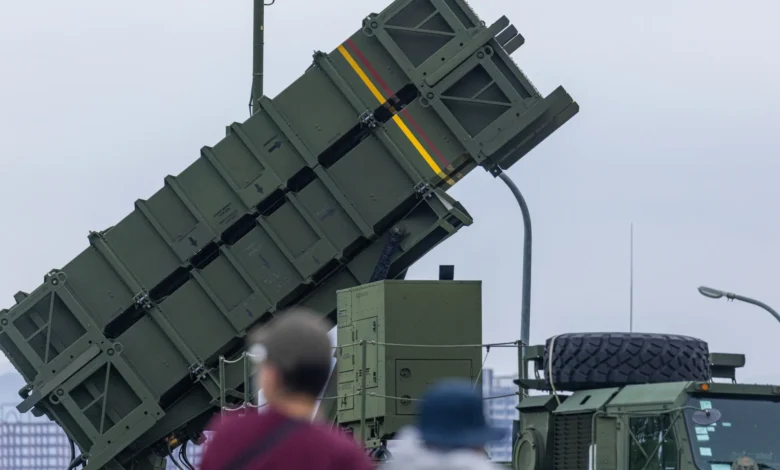
South Korea’s new L-SAM air defense system is emerging as a strong competitor to the U.S.-made Patriot system in Switzerland’s upcoming air defense procurement plans.
According to several reports, the Swiss Federal Department of Defence is considering the acquisition of South Korea’s long-range L-SAM air defense system as an alternative to the U.S. MIM-104 Patriot system, amid growing concerns over delivery delays and escalating procurement costs affecting the American platform.
-
Destination Iran: the United States withdraws thousands of smart bombs from South Korea
-
The Awakening of the Monster in South Korea… and Its Eyes on the Neighbor’s Fortifications
Switzerland is facing significant challenges with its current Patriot acquisition program, including delivery delays of up to seven years and cost increases of at least 50 percent above the original contract value.
Military Watch magazine reported that these challenges have prompted Swiss defense planners to reassess alternative next-generation air defense solutions capable of countering both aerodynamic threats and ballistic missile interception requirements.
One of the L-SAM‘s most significant advantages is its ability to engage targets at substantially higher altitudes than the Patriot system.
-
Pyongyang shoots down a South Korean drone and warns Seoul of a heavy price
-
Dozens of warheads… a very dangerous increase in North Korea’s nuclear capabilities
The system is expected to intercept ballistic missiles at altitudes ranging from approximately 50 to 60 kilometers, placing it close to the lower tier of exo-atmospheric missile defense.
By comparison, the Patriot PAC-3 MSE system was primarily designed to intercept missiles during their terminal flight phase and generally engages ballistic missiles at much lower altitudes, typically between 30 and 40 kilometers.
The L-SAM also offers a considerably larger engagement range than the Patriot. Its interception range against ballistic missiles is estimated at approximately 150 to 200 kilometers, compared with roughly 35 to 60 kilometers for the Patriot PAC-3 MSE. This extended range provides substantial advantages during large-scale missile attacks.
-
Satellite images reveal a military surprise weighing thousands of tons in North Korea
-
Nuclear Domino… North Korea vows to retaliate against Seoul and Washington
In addition to the proposed South Korean system, Switzerland is reportedly evaluating several other alternatives, including the European Eurosam SAMP/T NG system, Germany’s IRIS-T SLX system, and Israel’s David’s Sling and Arrow missile defense systems.
The L-SAM was designed as a high-altitude interception system positioned between conventional air defense systems and exo-atmospheric missile defense platforms.
In principle, it was developed to perform roles similar to those of the THAAD system and Israel’s Arrow family while maintaining the flexibility to conduct broader air defense missions comparable to those of the Patriot system.
-
Missile Wings Soar Over Tension: North Korea Tests the Ultimate Deterrent
-
Loudspeaker War Between the Koreas… A Silent Truce Ends Decades of Noise
This dual-role architecture enables the system to engage both aircraft and ballistic missiles, giving it an operational advantage over systems such as the M-SAM missile defense system, which has already achieved notable success in both export markets and operational service.
European members of the North Atlantic Treaty Organization (NATO) have significantly depleted their Patriot interceptor missile inventories through extensive military assistance provided to Ukraine.
Western reports also indicate that the U.S. military used more than 800 Patriot interceptor missiles during just the first five days of the conflict involving Iran.
-
In “Star Wars”… Seoul Prepares for North Korean Drone Marches
-
North Korea : Test-fires New ‘Long-range Cruise Missile’
Deliveries of Patriot systems to Switzerland have been substantially delayed because priority has been given to supplying Ukraine, while the United States has also prioritized rebuilding its own strategic missile inventories.
The L-SAM remains in the early stages of operational deployment, with current production primarily dedicated to meeting the requirements of the Republic of Korea Air Force, limiting its immediate export availability.
Nevertheless, it is expected to become available well before the Patriot system, largely because it does not face a similarly extensive international backlog of customer orders.
-
Following the Stealthy F-35: Seoul Joins the Elite Club with an Air Superiority Fighter
-
30 Years in Prison for Former President: Seoul Closes the Martial Law Case
This competition reflects broader shifts in the global air defense market. While European systems continue to lag behind the latest technological developments, the United States is facing increasing competition from both Israel and South Korea, whose advanced defense systems are designed in accordance with NATO standards.
South Korean defense products have rapidly expanded their market share across Europe thanks to their strong performance, shorter delivery schedules, and frequently lower costs compared with domestically developed European or American systems, providing them with a significant competitive advantage.
-
Rare Visit to a Close Ally: Xi to Be Hosted by Kim After Seven Years
-
The Beijing summit brings Iran, Taiwan, and artificial intelligence into focus… What do Trump and Xi want?