Iraq Faces a Security Test Following the Withdrawal of Coalition Forces
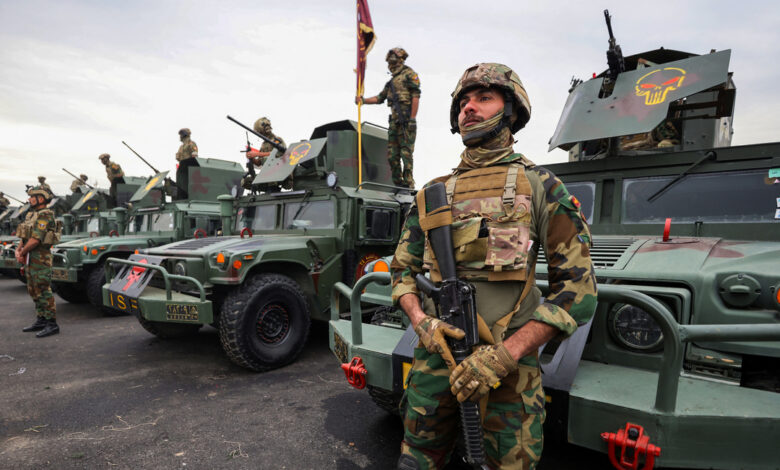
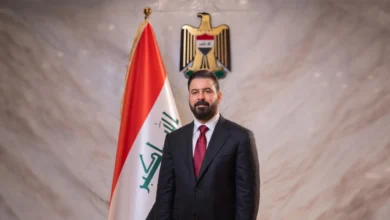
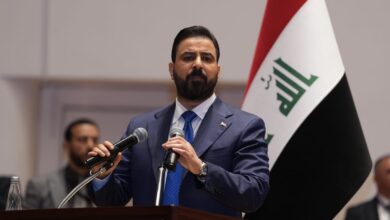
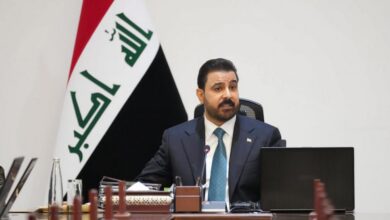
Prime Minister Ali Faleh Al-Zaidi believes that Iraq’s armed forces have reached a level of readiness that enables them to assume full responsibility for national security without the presence of foreign combat forces.
Iraqi Prime Minister Ali Faleh Al-Zaidi has confirmed that the mission of the International Coalition against the Islamic State (ISIS) will officially conclude on 30 September. The decision marks the beginning of a new phase in which Baghdad will rely entirely on its own security forces to safeguard the country, putting their capabilities to the test after more than a decade of operations conducted by the US-led coalition.
The decision reflects the Iraqi government’s assessment that the country’s armed forces have achieved a sufficient level of operational readiness to assume full security responsibilities without the need for foreign combat troops. It also illustrates the significant transformation in Iraq’s security challenges compared with the period following ISIS’s large-scale offensive in 2014.
Al-Zaidi also stated that the United States’ resumption of cash dollar shipments to Iraq represents a gesture of goodwill. He explained that these transfers are subject to specific standards established by the Central Bank of Iraq to ensure transparency and oversight of currency circulation.
Over recent years, Iraq’s security forces have undergone an extensive rebuilding process involving the Iraqi Army, the Counter-Terrorism Service, the Federal Police, and the Border Guard Forces, supported by training and equipment programs implemented by the International Coalition.
These forces have also gained substantial operational experience through the campaigns to liberate Iraqi cities from ISIS, followed by ongoing counterterrorism operations targeting terrorist cells in the provinces of Diyala, Salah al-Din, Kirkuk, Al-Anbar, and Nineveh. This experience has significantly strengthened their ability to conduct complex operations independently.
The Iraqi government believes that the nature of the threat has changed considerably. ISIS has evolved into a network of small cells relying primarily on ambushes, targeted assassinations, and limited-scale attacks. Consequently, the challenge has become predominantly intelligence- and security-driven rather than one requiring conventional military operations, giving Iraqi institutions greater capacity to manage the threat without foreign military involvement.
Baghdad is also seeking to reinforce the principle of national sovereignty by ensuring that all military and security operations are conducted solely under Iraqi authority.
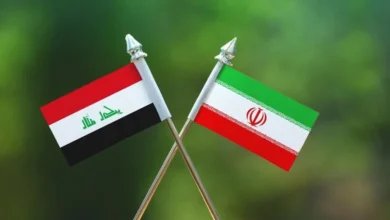
According to an informed source cited by Alhurra television, during an internal meeting held last week, Prime Minister Al-Zaidi stated: “Iraq no longer needs advisers from Iran’s Islamic Revolutionary Guard Corps. Their role should come to an end, just as the role of the International Coalition in Iraq is coming to an end.”
Approximately two days after the visit of Iranian Foreign Minister Abbas Araghchi, the commander of the IRGC’s Quds Force, Esmail Qaani, arrived in Baghdad on a visit that was not officially announced. Three separate sources—one within the Popular Mobilization Forces (PMF), another from the Coordination Framework, and a third from the Prime Minister’s Office—confirmed that the visit had taken place. According to those sources, Qaani met with Al-Zaidi at the government palace inside Baghdad’s Green Zone.
Few details have emerged regarding the meeting. However, the sources indicated that discussions also focused on relations between the Iraqi state and armed factions. According to the available information, Al-Zaidi adopted a firmer tone during the meeting, emphasizing that Iran should support the Iraqi state and its official institutions rather than backing armed factions at the expense of state authority.
A person close to the Prime Minister stated that this position forms part of a broader government strategy aimed at “ensuring the state’s exclusive monopoly over weapons and strengthening the authority of official institutions in managing national security.”
These meetings come as the Iraqi government has announced a plan to ensure that weapons remain exclusively under state control in preparation for the conclusion of the International Coalition’s mission next September. They also take place amid growing US pressure on Baghdad to curb the influence of Iran-backed armed factions.
The end of the coalition’s mission also carries significant domestic political implications, as it addresses one of the principal demands made by Iraqi political forces for several years, which have viewed it as an important step toward strengthening national sovereignty and ending the foreign military presence.
At the same time, the government has sought to reassure its international partners that the withdrawal will not create a security vacuum and that Iraq will remain an active partner in counterterrorism efforts through new forms of security cooperation.
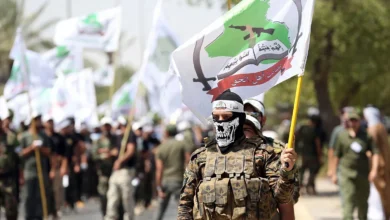
Two Iran-aligned factions—Asa’ib Ahl al-Haq and the Imam Ali Brigades—both designated by the United States as terrorist organizations, have recently responded positively to the government’s initiatives. However, other groups, most notably Kata’ib Hezbollah, continue to refuse to surrender their weapons, insisting that any such move must be preceded by the complete withdrawal of International Coalition forces from Iraq.
In an interview with the program Baghdad Hour, Iraqi government spokesman Haider Al-Aboudi stated that the circumstances that had led various groups to bear arms over recent years have fundamentally changed and that the need for weapons to remain outside state control “has now disappeared because the reasons that once justified it no longer exist.”