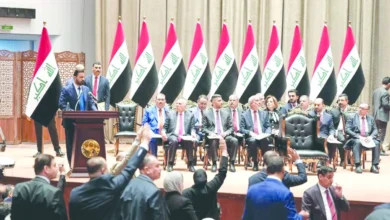
Al-Zaidi Reorders Public Spending Priorities by Cancelling Major Projects
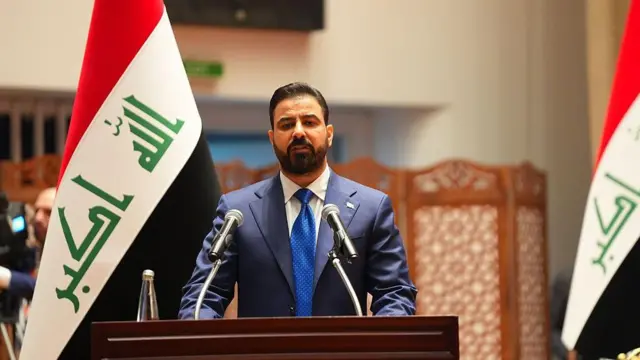
The decisions included cancelling the railway project due to its high cost and burden on the state budget, as well as terminating the Baghdad International Airport redevelopment project.
The decisions by Iraqi Prime Minister Ali Al-Zaidi to cancel the railway project and halt the Baghdad International Airport development project have generated widespread reactions and optimism regarding a new governmental approach aimed at reassessing public spending priorities amid the economic and financial challenges facing the country.
-
Al-Zaidi pledges to confront uncontrolled weapons in Iraq
-
An Iraqi Faction’s Rejection of State Control over Weapons Threatens Confrontation with the Government
On Sunday, Communications Minister Mustafa Sanad revealed that Prime Minister Ali Al-Zaidi and Transport Minister Wahab Al-Hassani had taken a series of decisions over the past two weeks that he described as “courageous and bold,” arguing that these measures had not received the media attention they deserved.
In a post on his official Facebook page, he stated that the most significant decision was the complete cancellation of the Baghdad International Airport redevelopment project, which had been awarded to the company “CAP” in coordination with the International Finance Corporation (IFC). He noted that this decision came only one week after another government decision cancelling the new railway project because it was considered “costly and burdensome” to the country’s public finances.
-
Asaib Ahl al-Haq Joins the Call to Place Weapons Exclusively Under the Authority of the Iraqi State
-
The Decision to Establish Iraq’s Supreme Sovereign Council for Integrity Sparks Constitutional Debate
The decision sparked extensive reactions. Political researcher Ghaleb Al-Daami argued that Al-Zaidi had addressed a fundamental issue, writing on his Facebook account:
At the administrative level, the Iraqi minister explained that the decisions also included a decisive measure taken a week earlier, involving the suspension from duty and immediate retirement of the Director General of the Iraqi Ports Company.
The parliamentarian concluded his post by stressing that these three major decisions had been taken within just two weeks as part of efforts to promote reform and safeguard public funds, lamenting that they had not received media coverage commensurate with their significance.
-
To restrict weapons to state control, Muqtada al-Sadr separates Saraya al-Salam from the Shiite movement
-
Does al-Kazimi turn the wheels around?
In another Facebook post, Sanad explained that the decisions included cancelling the railway project because of “its high cost and the strain it places on the state budget,” as well as terminating the Baghdad International Airport redevelopment project, which had been awarded to a company in coordination with the International Finance Corporation.
Financial considerations appear to be the primary factor behind these decisions. Large-scale infrastructure projects require investments worth billions of dollars and long-term financing that could place additional pressure on the national budget. Given Iraq’s continued heavy reliance on oil revenues, the government remains cautious about committing to major projects that could become a financial burden in the event of sharp fluctuations in oil prices and declining public revenues, particularly amid the repercussions of the U.S. war against Iran.
-
Changes in the Iranian Leadership Create Uncertainty Among Iraqi Factions
-
Washington launches crackdown on Iraqi militia leaders on terrorism charges
The move is also linked to efforts to rationalize public spending and direct resources toward more urgent sectors such as electricity, healthcare, education, and water and sanitation networks. The government faces growing public pressure to improve essential services, which may encourage it to prioritize projects with a direct impact on citizens’ daily lives over long-term strategic initiatives.
The minister added that the package of measures also included the suspension and retirement of the Director General of the Ports Authority, noting that the Minister of Transport is pursuing efforts to reintegrate airport management with air navigation services. The proposal is expected to be formally discussed during upcoming government sessions.
-
How a secret Israeli base in the Iraqi desert evaded army radar and was spotted by a shepherd
-
A military aircraft destroyed in a missile strike on an Iraqi base
Observers believe that these decisions are likely to ease pressure on the state budget and reduce future financial commitments, providing the government with greater flexibility to cover operational expenditures and finance other public service projects. They may also help reduce the risk of debt accumulation or the need to resort to borrowing to fund long-term projects.
On the other hand, the cancellations may result in negative consequences by delaying the development of Iraq’s air and land transport infrastructure. The railway project had been viewed as an important tool for strengthening connectivity between provinces and stimulating trade and transportation, while the redevelopment of Baghdad International Airport represented a key component of efforts to modernize infrastructure and enhance the country’s ability to attract investment and tourism.
-
Accusations against Iran of using Iraqi militias to suppress protests
-
U.S. Report: Iran Supplies Long-Range Missiles to Iraqi Factions for the First Time
These decisions reflect a difficult balance between the requirements of financial stability on one hand and the need to implement major strategic projects on the other. Their ultimate outcome will depend on the government’s ability to channel the savings into more urgent priorities and to strike a balance between managing current resources and meeting long-term development needs.
-
Growing Calls to Turn Halabja into an Iraqi Governorate and Justice for the Victims
-
Iran Authorizes Al-Sudani to Decide the Fate of Iraqi Factions Loyal to It