Ukraine Follows Russia’s Lead by Developing Drone Mother Ships: More Lethal Strikes Through Mobile Launch Platforms
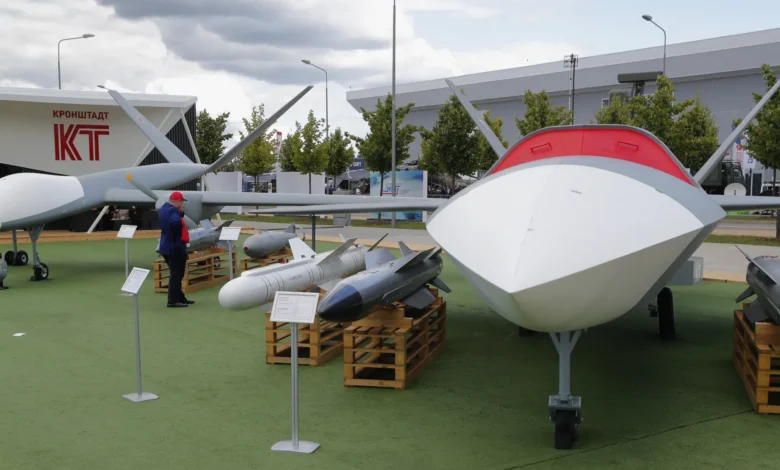
Ukraine’s drone warfare is entering the era of “mother ships,” with platforms capable of carrying smaller attack and interceptor drones directly to the battlefield.
At the outset of the conflict, Ukraine relied on unmanned naval platforms by equipping high-speed drone boats designed to ram and destroy Russian warships.
This unconventional tactic proved highly effective, disrupting Russia’s traditionally superior navy.
-
Ukraine Strikes Deep Inside Russia: Fatalities Near Moscow and Major Attack Foiled
-
Following the Patriot Authorization, Technical Details and Timing Remain Ukraine’s Main Concerns
However, Russia adapted, forcing Ukraine to innovate once again. Kyiv is now increasingly converting its unmanned boats into “mother ships” capable of deploying additional drones, according to the American publication Business Insider.
The publication noted that these platforms can launch offensive drones against enemy targets as well as interceptor drones that provide a new form of coastal air defense.
This approach enables Ukraine to conduct offensive and defensive operations over greater distances, from less predictable directions, and with systems that are significantly less expensive than conventional weaponry.
-
Automation and the War in Ukraine: Battlefield Transformations Are Reshaping Military Procurement Doctrine
-
Ukraine’s Weapon Reaches France: Tank-Hunting Technology Capable of Striking from Deadly Angles
Speaking to Business Insider, the commander of a unit within Ukraine’s military intelligence service stated: “The vessels had to do more than simply serve as suicide attack platforms. They needed to carry and deploy both attack drones and interceptor drones, which have now become an integral part of today’s battlefield.”
The emergence of these “mother ships” represents a significant shift in the conduct of drone warfare. While small drones have made precision strikes inexpensive and widely accessible, they remain constrained by limitations in range, endurance, resistance to electronic jamming, and the risks faced by their operators.
By transforming boats, aircraft, and vehicles into mobile launch platforms, Ukrainian forces can deploy smaller systems much deeper into the battlefield through more unpredictable methods, the report explains.
-
Ukraine Tests Western Unity: Macron Seeks a Lost Consensus
-
Fortune Teller and Money Laundering: Crises Hit Ukraine’s Former Number Two
During a visit to Ukraine, Business Insider journalists interviewed weapons manufacturers, military personnel, and defense officials involved in developing these systems. They shared firsthand accounts of the war and described the “mother ships” not as a revolutionary superweapon, but as a practical solution for a battlefield where launch locations, operational range, speed, and survivability have become decisive factors in determining the effectiveness of small drones.
The first “mother ships” began appearing on the battlefield last year, marking the beginning of a new phase in drone warfare.
In October of last year, analysts at the Institute for the Study of War (ISW) reported that Russian forces had been using support platforms since at least August 2025 to target Ukrainian supply routes and logistical facilities located behind the front lines.
-
The Zebra in the Ukraine War: A Russian Weapon Designed to Deceive Drones
-
Ukraine Misleads Russian Missiles with Lima… A €58,000 Defense System
According to the analysts, these systems are based on modified versions of the Russian fixed-wing Orlan and Molniya drones.
Ukrainian soldiers later described the Russian Molniya “mother ship” as resembling an “aircraft carrier,” capable of launching multiple reconnaissance drones near Ukrainian positions while carrying heavy payloads, including anti-tank mines.
Since then, Ukraine has begun developing its own fleet of mother ships, drawing inspiration from the same concept.
Oleksii Vyskob, Ukraine’s First Deputy Minister of Defense, described the “mother ships” as part of the country’s continuous wartime adaptation cycle, emphasizing that every new challenge emerging on the battlefield requires innovative technological solutions every few months.
-
Fearing attacks, Ukraine fortifies its border with Russia’s ally
-
Moscow: Ukraine launches its largest drone attack