Britain Joins the List: Countries That Have Designated Iran’s Islamic Revolutionary Guard Corps as a Terrorist Organization
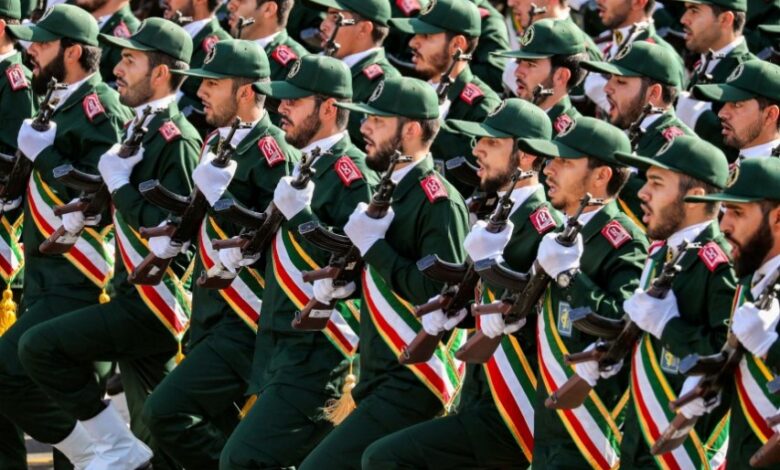
The Islamic Revolutionary Guard Corps (IRGC) is facing mounting international pressure from every direction. From Australia to Europe, across the Americas, and most recently the United Kingdom, one of the Iranian regime’s most influential institutions has become increasingly isolated.
These measures reflect a growing international trend toward tightening pressure on Tehran’s regional influence following a series of similar decisions in Western capitals and an increasing recognition of the organization’s perceived threat to international interests.
-
Iran’s Revolutionary Guards relied on Iraqi shadow cells in attacks against Gulf states
-
Reuters: Iran’s Revolutionary Guards formed secret cells in Iraq to attack Gulf states
United Kingdom
In the latest development, the British government officially designated the Islamic Revolutionary Guard Corps as a terrorist organization on Monday and criminalized support for the organization after Parliament passed legislation authorizing the designation.
On Monday morning, Prime Minister Keir Starmer announced the ban, stating that he would “never allow Britain to become a playground for states seeking to spread fear, division, and violence on our streets.”
The Americas
Britain’s decision came approximately three months after Costa Rica adopted a similar measure. In April, Costa Rica designated the Islamic Revolutionary Guard Corps, Hamas, and Yemen’s Houthi movement as terrorist organizations.
Public Security Minister Mario Zamora stated that the decision was intended to strengthen immigration controls and protect the country from organizations that “pose a threat to international security.”
-
Revolutionary Guard issues harsh criticism of Araqchi
-
Explosions on Iran’s Coast… The Revolutionary Guard Responds with Fire, but Against Whom?
He added that Costa Rican security agencies would work closely with international partners to strengthen monitoring measures and prevent potential members of these groups from operating within the Western Hemisphere as part of broader efforts to combat transnational threats.
Only days earlier, Argentina had also announced the designation of the Islamic Revolutionary Guard Corps as a terrorist organization.
According to a decree signed by President Javier Milei, “the national government has declared the Islamic Revolutionary Guard Corps a terrorist organization.”
The statement added that “the Argentine Republic was the victim of two of the most devastating terrorist attacks in its history during the 1990s, carried out by Hezbollah, the regional operational arm of the Islamic Revolutionary Guard Corps.”
Argentina was not the first country in the Americas to take such action.
-
A Puppet in the Hands of the Revolutionary Guards: How Has the Role of Iran’s Supreme Leader Changed?
-
Washington Offers Major Reward to Disrupt Iranian Revolutionary Guard Financing
In 2019, the United States designated the Islamic Revolutionary Guard Corps as a Foreign Terrorist Organization during President Donald Trump’s first term in office.
The U.S. Department of State accused the IRGC of direct involvement in terrorist plots.
Canada followed suit in 2024.
Ottawa stated that Iran had “demonstrated contempt for human rights and shown an intention to undermine the international order.”
Prior to that decision, Canada had already designated the Quds Force—the IRGC’s external operations branch—as a terrorist entity. Ottawa also severed diplomatic relations with Tehran in 2012.
-
Iran in the grip of the Revolutionary Guards… and the Supreme Leader out of the picture
-
United Kingdom and the Islamic Revolutionary Guard Corps: imminent legislation to ban Iran’s military arm
Europe
At the end of January, the Council of the European Union decided to designate the Islamic Revolutionary Guard Corps as a terrorist organization.
At the time, the European Union’s High Representative for Foreign Affairs, Kaja Kallas, stated that EU foreign ministers had approved the listing, describing it as a decisive step in responding to the actions of the Iranian regime.
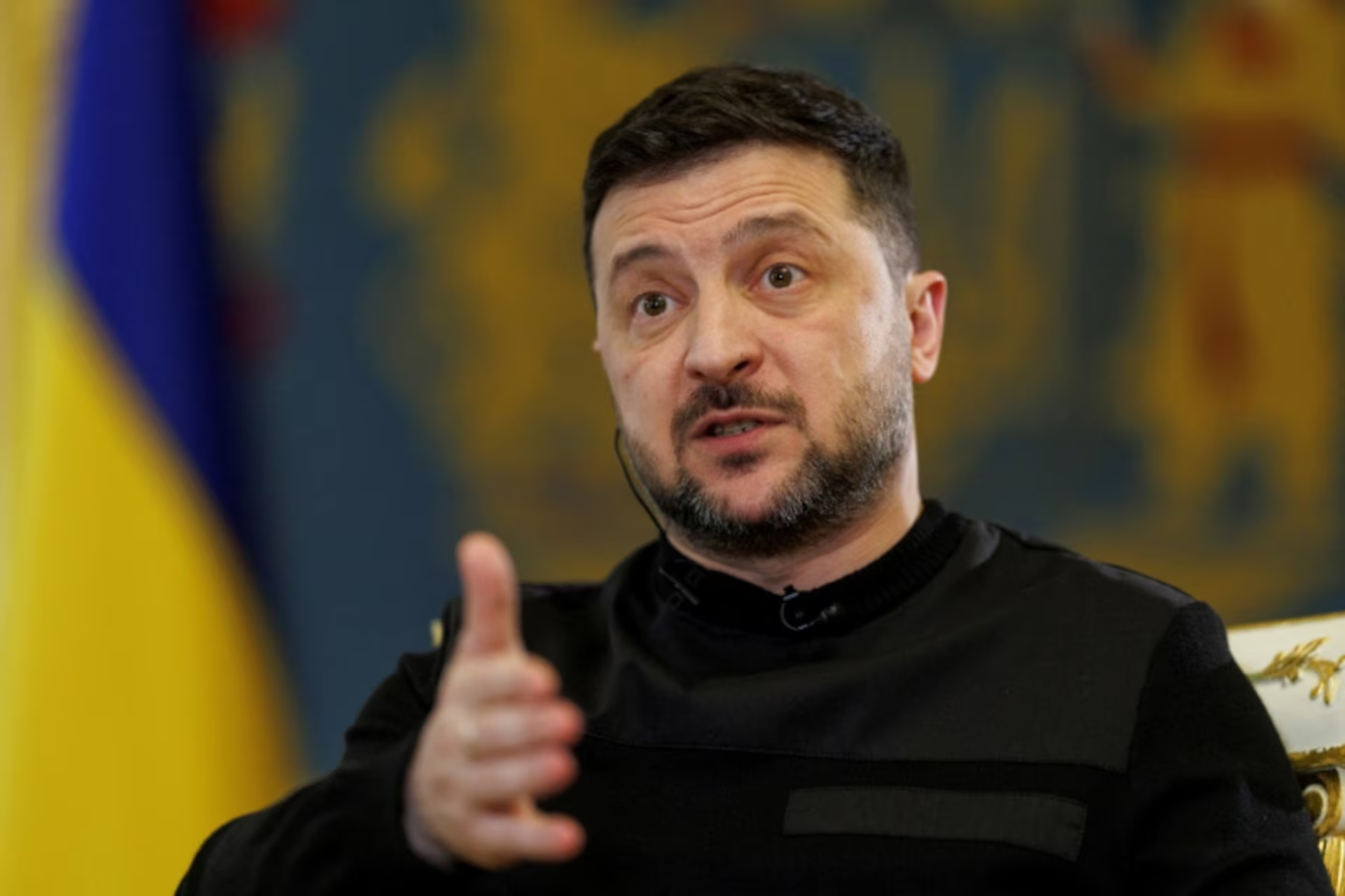
Two days later, Ukraine officially designated the Islamic Revolutionary Guard Corps as a terrorist organization, describing the decision as final and decisive.
Kyiv justified the move by citing what it considers Iran’s direct role in supporting violence and destabilization both domestically and abroad, particularly through the supply of drones to Russia for use in the war against Ukraine.
-
The Islamic Revolutionary Guard Corps attacks two vessels in Gulf waters
-
Most recently Argentina: Countries and blocs have designated the Islamic Revolutionary Guard Corps as a terrorist organization
On 17 March 2026, Albania also designated the Islamic Revolutionary Guard Corps as a terrorist organization and officially classified Iran as a “state sponsor of terrorism.”
In the preamble to its decision, Albania condemned the cyberattacks targeting its institutions, particularly the 2022 attack that prompted Tirana to sever diplomatic relations with Tehran.
Elsewhere in Europe, Lithuania’s Parliament adopted a resolution in October 2024 recognizing the Islamic Revolutionary Guard Corps as a terrorist organization.
At the time, Conservative lawmaker Emanuelis Zingeris, Chairman of the Foreign Affairs Committee, declared during a press conference: “We were the first among the parliaments of the European Union to make such a declaration. We recognize the Islamic Revolutionary Guard Corps as a terrorist organization.”
-
Death of the Iranian Revolutionary Guard spokesperson.
-
How Iran’s Revolutionary Guard reorganized Hezbollah’s ranks
Arab States
In 2018, Saudi Arabia and Bahrain designated the Islamic Revolutionary Guard Corps, along with several senior commanders of its Quds Force, as terrorist entities under their national terrorism lists.
Oceania
In Oceania, Australian Foreign Minister Penny Wong announced last August that Australia had placed the Islamic Revolutionary Guard Corps on its terrorism-related sanctions list following an intelligence assessment concluding that the organization had orchestrated attacks targeting Jewish communities in Australia.
Australia accused Iran of orchestrating two antisemitic arson attacks in Sydney and Melbourne and gave the Iranian ambassador seven days to leave the country, marking Australia’s first expulsion of an ambassador under such circumstances since the Second World War.
-
Washington mobilizes to designate the Revolutionary Guards and Hezbollah as terrorist organizations
-
The economic empire of Iran’s Revolutionary Guard: the dragon guarding its treasure
Israel
In April 2025, Israel officially designated the Islamic Revolutionary Guard Corps as a terrorist organization under its Counter-Terrorism Law.
The decision followed recommendations from Israeli security agencies and was published as part of measures adopted by the Ministry of Defense and the National Bureau for Counter Terror Financing.
What Is the Islamic Revolutionary Guard Corps?
The Islamic Revolutionary Guard Corps is one of the most powerful institutions in Iran. Its influence extends far beyond the military and intelligence sectors into politics, education, and the economy. It has consolidated its authority over the country following the deaths of numerous senior leaders during the war involving the United States and Israel.
The IRGC was established following the 1979 Iranian Revolution and operates independently from Iran’s conventional armed forces, often functioning alongside—and at times in competition with—the regular military.
-
Defections shake Iran’s Islamic Revolutionary Guard Corps
-
Dispute between the army and the Revolutionary Guard over closing the Strait of Hormuz
According to the British newspaper The Guardian, the Islamic Revolutionary Guard Corps is an elite force loyal to Iran’s Supreme Leader and has expanded significantly over several decades.
The IRGC comprises more than 150,000 personnel and maintains its own naval and air forces independently of Iran’s regular military establishment.
It is also responsible for overseeing Iran’s ballistic missile program.
However, according to several Western reports, the Islamic Revolutionary Guard Corps, its naval forces, and its ballistic missile infrastructure sustained extensive damage during the war that began on 28 February and during Israeli strikes targeting Iranian nuclear facilities in June.
-
Pressure to ban the Muslim Brotherhood and Iran’s Revolutionary Guard: the UK House of Lords escalates the debate
-
Iranian Revolutionary Guard drills in the Strait of Hormuz: readiness assessment and confrontation scenarios