Washington Launches a New Wave of Strikes as Iran Closes the Strait of Hormuz
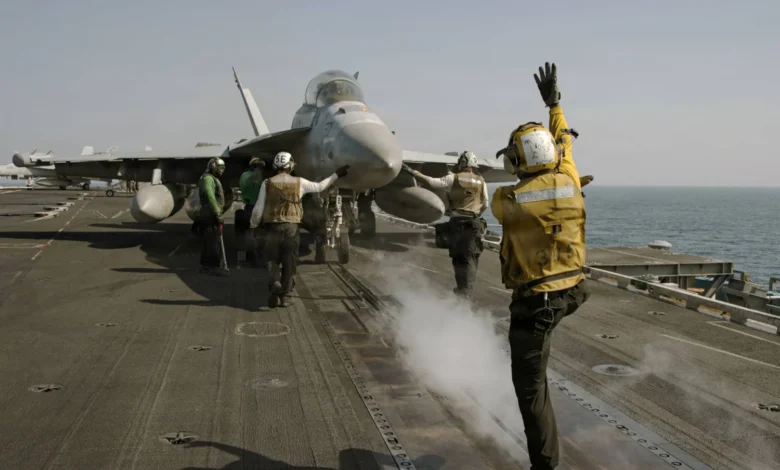
The combination of expanded U.S. military strikes and Iran’s determination to use the Strait of Hormuz as strategic leverage opens the door to a new phase of the conflict.
The confrontation between the United States and Iran has entered a significantly more escalatory phase after the United States Central Command (CENTCOM) announced on Sunday the launch of a new wave of military strikes against targets inside the Islamic Republic of Iran. In response, the Islamic Revolutionary Guard Corps (IRGC) declared the closure of the Strait of Hormuz to all maritime navigation until further notice, making the resumption of shipping contingent upon the cessation of U.S. military strikes in one of the world’s most strategically important energy trade corridors.
-
Post-agreement complications between the United States and Iran rival the difficulty of the negotiations themselves
-
Entered into Force: The United States and Iran Sign the Memorandum of Understanding Electronically
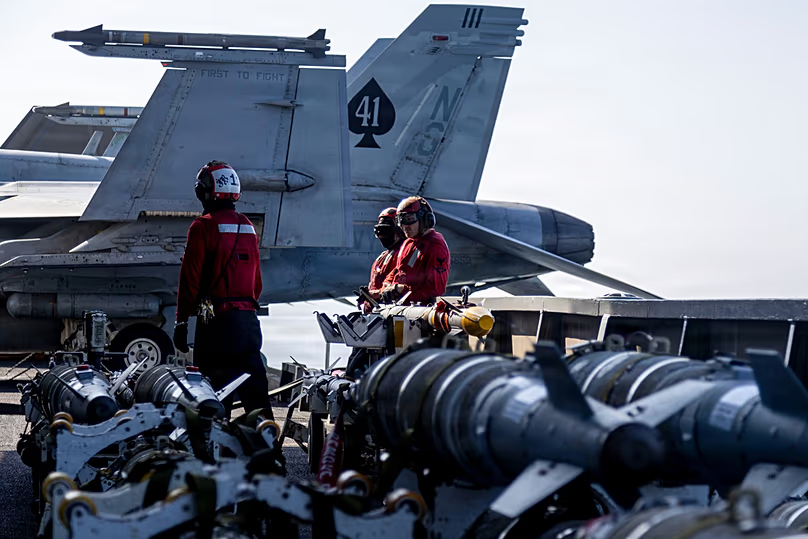
CENTCOM stated that the latest wave of strikes was launched under the direction of U.S. President Donald Trump and was intended to further degrade Iran’s military capabilities, which Washington says Tehran has used to target commercial shipping and threaten international navigation in the Strait of Hormuz. The command emphasized that the operations were carried out in response to what it described as Iranian attacks on civilian vessels and affirmed that U.S. forces would continue their operations to safeguard freedom of navigation throughout the region.
In response, the IRGC announced the closure of the Strait of Hormuz to maritime traffic until further notice, stressing that shipping would resume only after U.S. military operations cease. The Strait Administration Authority, recently established by Tehran, also announced that transit permits would remain suspended because of what it described as “illegal U.S. military activities,” adding that navigation would immediately resume once stability is restored.
-
Six Challenges That Could Prevent the United States and Iran from Reaching a Final Agreement
-
Where Will the United States and Iran Sign the Expected Agreement?
The announcement coincided with an intensified exchange of attacks between the two sides. Iranian media reported explosions on Qeshm Island and in the cities of Jask, Sirik, and Bandar Abbas in Hormozgan Province, while other reports indicated that military facilities belonging to the IRGC along the Strait’s coastline had been targeted.
CENTCOM had previously announced large-scale strikes against approximately 140 Iranian military sites, including missile bases, drone facilities, ammunition depots, and coastal communications and surveillance installations. According to the U.S. military, these operations form part of an ongoing campaign aimed at degrading Iran’s ability to threaten international maritime navigation.
-
Russia offers mediation between the United States and Iran to end the war
-
United States and Iran: Uranium Enrichment and Stockpile Become the Sticking Point of a Very Close Agreement
Iran retaliated by launching missiles and drones targeting U.S. military positions in Qatar, Bahrain, Kuwait, and Jordan. The IRGC also announced that it had targeted two vessels in the Strait of Hormuz, alleging that they had violated the new navigation regulations imposed by Tehran.
According to CNN, citing the U.S. military, IRGC forces opened fire on commercial vessels while they were transiting the Strait, while U.S. air defense systems intercepted an Iranian cruise missile and a drone, underscoring the growing intensity of the direct confrontation between the two countries.
-
When will the truce between the United States and Iran end?
-
Details of a secret call between the United States and Iran that nearly ended the war
The latest escalation comes less than one month after Washington and Tehran signed a memorandum of understanding through Qatari and Pakistani mediation, which had been intended to pave the way for a broader agreement aimed at reopening the Strait of Hormuz and containing regional tensions. However, U.S. President Donald Trump announced that the memorandum was no longer in effect following the recent escalation, while leaving the door open to renewed negotiations should Iranian attacks cease.
The consequences of the escalation quickly spread across several Gulf countries, with Qatar, the United Arab Emirates, Bahrain, Kuwait, the Sultanate of Oman, and Jordan reportedly coming under missile or drone attacks, marking the largest wave of attacks against Arab states since the easing of U.S.-Iran tensions in April.
-
New Talks – United States and Iran Revive Nuclear Agreement Negotiations Once Again
-
Open and no attack on warships: United States refutes Iran’s claims over Hormuz
The closure of the Strait of Hormuz carries far-reaching economic consequences, as nearly 20 percent of global oil and liquefied natural gas trade passes through the waterway. International markets reacted immediately, with oil prices rising sharply amid growing concerns over potential supply disruptions, while maritime traffic through the Strait declined to its lowest level in several weeks.
Observers believe that the combination of expanded U.S. military operations and Iran’s continued use of the Strait of Hormuz as a strategic bargaining tool marks the beginning of a new phase in the conflict. The confrontation has moved beyond the exchange of military signals toward an effort by each side to impose a new deterrence equation. While Washington insists that it will continue its operations to ensure freedom of navigation, Tehran maintains that the Strait will remain closed until U.S. military strikes cease. This deadlock raises the prospect of a prolonged confrontation and heightened regional instability, amid growing concerns over its implications for Gulf security and the stability of global energy markets.
-
The United States Launches Strikes on Iran: Four Drones Shot Down and Launch Site Bombed
-
The United States expands its deterrence equation against Iran… historic defense budget and accelerated military production
-
Excessive demands: Iran reveals obstacle to agreement with the United States