Tehran Increases Pressure on Washington by Calling for the Closure of the Bab el-Mandeb Strait
The Iranian Supreme Leader’s representative has suggested relying on the Houthis to threaten maritime navigation in the Red Sea, a move that could drive oil prices higher amid ongoing tensions in the Strait of Hormuz.
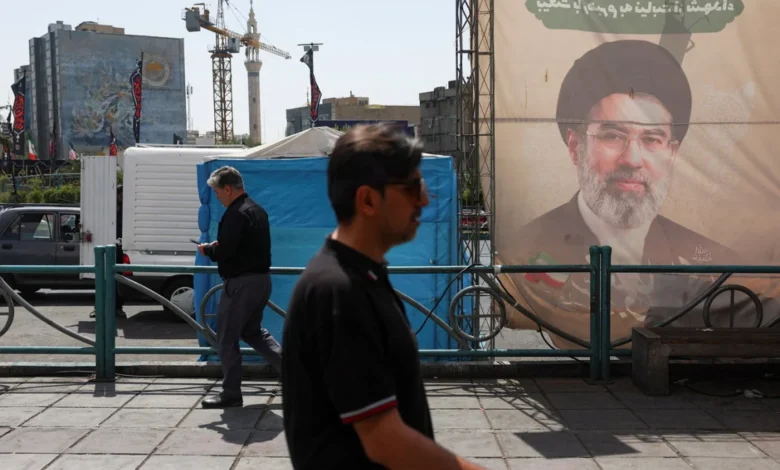
Hossein Shariatmadari, the representative of Iran’s Supreme Leader at the newspaper Kayhan, has called for the closure of the Bab el-Mandeb Strait in addition to the Strait of Hormuz, in response to U.S. President Donald Trump‘s statements regarding the reimposition of a naval blockade on Iran’s southern ports. The call reflects Tehran’s intention to broaden its pressure tools against the United States and shift the confrontation from the Persian Gulf to the Red Sea through its Houthi ally.
-
Widespread Houthi Mobilisation Signals Possible New Phase of Internal Fighting
-
The Death of Two Officers in Houthi Attacks Sparks Fierce Battles in Taiz and Al Hudaydah
Shariatmadari stated that “the time has come, alongside maintaining the closure of the Strait of Hormuz, to close the Bab el-Mandeb Strait as well,” arguing that such a step would increase pressure on the United States and its allies. He added that merely announcing such an intention would constitute “a powerful slap” to President Trump, referring to the use of strategic maritime routes as a deterrence tool against American pressure.
The call comes amid escalating regional tensions involving Iran, as Tehran seeks to employ its network of regional allies to open multiple fronts of pressure. Under this approach, the confrontation would no longer be confined to Iran’s territory or the waters of the Gulf but would extend to other strategic areas, most notably the Red Sea.
-
Piracy with Houthi Fingerprints… The Alliance of Terrorist Leaders Threatens Waterways
-
Deaths in clashes between the Houthis and the army in Yemen’s Saada undermine the fragile truce
Iran is widely believed to be capable of relying on the Houthi movement to carry out any threats against the Bab el-Mandeb Strait, given the group’s control over extensive sections of Yemen’s coastline and its military capabilities, including missiles, drones, and explosive-laden boats. This comes as tensions continue between the Houthis and Yemen’s internationally recognized government, backed by Saudi Arabia, making the Red Sea a likely arena for the exchange of strategic messages and pressure among regional and international actors.
The Houthis have repeatedly declared their readiness to target maritime shipping if the confrontation with Iran escalates or if regional countries participate in military operations against Tehran. They maintain that their actions are part of their support for what they describe as the “Axis of Resistance.” In contrast, the United States and several Western governments regard the group as an integral part of Iran’s regional influence network, while the Houthis insist that their decisions are based on their own calculations despite their political and military alliance with Tehran.
-
Yemeni political analyst: Houthis are worsening civilians’ suffering as Eid al-Adha approaches amid deteriorating humanitarian conditions
-
Houthis signal support for Tehran in case of confrontation with Washington
The Bab el-Mandeb Strait is one of the world’s most strategically important maritime chokepoints, linking the Red Sea to the Gulf of Aden and the Indian Ocean. A significant share of global trade passes through the strait, particularly oil and natural gas shipments bound for Europe via the Suez Canal. Consequently, any threat to navigation through this corridor would have immediate consequences for international trade and global energy markets by increasing insurance premiums, shipping costs, and forcing maritime companies to reroute their vessels.
Experts warn that simultaneous pressure on both the Strait of Hormuz and the Bab el-Mandeb Strait could significantly enhance Iran’s ability to influence global energy flows. Any concurrent disruption in these two strategic waterways would heighten concerns over energy supplies and push oil prices upward as geopolitical risks intensify.
-
The Councils of Death… The secret structure of the Houthi militias
-
The Houthis expand the scope of surveillance against Yemenis: monitoring patients
Although a complete closure of the Bab el-Mandeb Strait would be difficult because of the extensive international naval presence, the Houthis have demonstrated their ability to disrupt commercial shipping and increase maritime security risks. This has prompted the United States and its allies to reinforce their naval deployments in the Red Sea, while the European Union has expanded its maritime operations aimed at protecting commercial vessels.
According to analysts, the latest threats reflect Iran’s attempt to transform the Red Sea into an additional instrument of negotiation and pressure against Washington under its strategy of “linked arenas,” which relies on mobilizing Tehran’s regional allies to open multiple fronts of escalation simultaneously. This approach seeks to raise the cost of any potential confrontation while making the security of global maritime routes a central component of the broader regional conflict.
-
The assassination by the Houthis of a tribal leader in Al-Jawf ignites a confrontation with the Dahm tribes
-
Kidnapping imams and exploiting children: new crimes by Houthi militias in Yemen