Bases, Forces and Deterrence: Trump’s Options for Reshaping the U.S. Presence in Europe
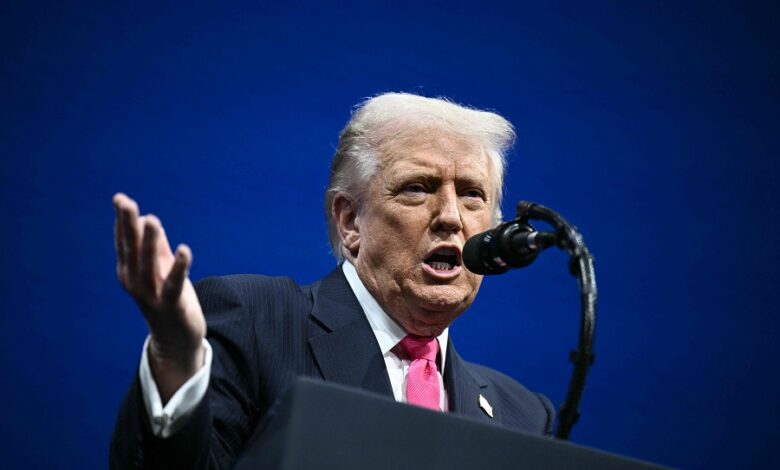
The administration of U.S. President Donald Trump is conducting an ongoing review of the size and distribution of American forces in Europe, covering troop levels, military bases and defense commitments.
The review includes reductions in ground, air and naval forces while preserving deterrence capabilities, air defenses, intelligence assets and nuclear weapons. The aim is to shift a greater share of responsibility for Europe’s defense onto its European allies.
In an analysis published by Foreign Affairs, Justin Logan and Jennifer Kavanagh argue that a substantial and orderly reduction in U.S. forces over the next two years could push Europe to develop capabilities on which it has long relied on the United States, while simultaneously easing pressure on the U.S. military.
The analysis is based on the fact that the United States deploys approximately 80,000 troops in Europe and the United Kingdom and accounts for roughly 60% of the military spending of NATO members, more than 75 years after the alliance was established.
“Shifting the burden of responsibility”
The idea that Europe should assume greater responsibility for its own defense has been a recurring theme in Trump’s rhetoric for years. In 1987, long before he became president, he called for the United States to stop bearing the costs of defending countries that were capable of defending themselves.
During his first term, Trump threatened to withdraw the United States from NATO, criticizing the low defense spending of alliance members, although he did not carry out a large-scale withdrawal.
In the summer of 2020, his effort was limited to a plan to withdraw 12,000 troops from Germany, which did not develop into a major restructuring of the U.S. presence in Europe.
Upon returning to the White House, the administration adopted the idea of “shifting the burden of responsibility” more explicitly.
Shortly after taking office, U.S. Secretary of War Pete Hegseth told his European counterparts that the United States would have to focus on priorities other than defending Europe, calling on the continent to assume responsibility for its traditional security.
The Pentagon subsequently launched a review of the U.S. force posture in Europe to assess troop deployments and commitments involving military bases across the continent.
According to the analysis, the review provides an opportunity to turn this approach into actual policy rather than simply pressuring allies to increase their spending.
More than 75 years of American presence
Since NATO was established after World War II, the United States has played a central role in supporting European defense, while American officers have held the alliance’s highest military command position.
The analysis notes that Washington still accounts for roughly 60% of NATO members’ military spending and deploys approximately 80,000 troops in Europe and the United Kingdom.
According to the authors, decades of American dominance have made Europe dependent on U.S. leadership, technology and spending.
They argue that this situation has kept the United States in the position of being primarily responsible for the continent’s conventional defense, despite European countries possessing substantial economic and military resources.
The presence of U.S. forces in Europe in the late 1940s and early 1950s was initially intended to serve as a “temporary shield” until Western European countries could rebuild their war-ravaged economies.
Yet American forces remained after the reconstruction process was completed.
At the height of the Cold War, the number of U.S. troops on the continent exceeded 400,000.
After the collapse of the Soviet Union, NATO lost its principal formal justification, but the U.S. military presence did not end, and the number of American troops in Europe never fell below 60,000.
According to the analysis, the United States came to view NATO as a means of institutionalizing its power and influence in Europe.
European governments, meanwhile, benefited from reduced security threats after the Cold War and expanded their social programs while cutting military spending.
Crimea exposed Europe’s dependence again
By 2014, when Russia annexed Crimea, Europe had become heavily dependent on the United States for its security.
At the time, Washington was engaged in the Middle East while also increasing its focus on China’s rising military power.
The analysis argues that Europe’s dependence on the United States remains in place today.
The last comprehensive official review of the U.S. global force posture was conducted in 2021, during the first year of former President Joe Biden’s administration.
That review largely maintained the existing posture and reaffirmed the decision to keep U.S. bases in Germany and Belgium open.
It also announced that a new U.S. Army unit equipped with ground-launched long-range missiles and advanced electronic warfare capabilities would be deployed to Germany by 2026.
Russia’s war in Ukraine raises U.S. forces to 100,000
Following Russia’s large-scale military operation in Ukraine in early 2022, the U.S. military presence in Europe increased to approximately 100,000 troops.
These forces supported seven fighter squadrons, six destroyers and approximately 100 gravity nuclear bombs.
Biden also pledged to defend every inch of NATO territory.
By contrast, since returning to the White House, the Trump administration has taken limited steps to reduce the U.S. presence.
Last year, the Pentagon withdrew roughly 800 of the 1,700 troops stationed in Romania.
In the spring, it announced an additional reduction of 5,000 troops from the continent, while uncertainty remained over the status and source of the reduction.
The administration also reduced U.S. contributions to NATO’s force model and canceled the deployment of long-range missiles in Germany that Biden had planned.
But the analysis argues that these measures were insufficient to convince allies that Washington was serious about transferring responsibility for conventional deterrence to them.
European waiting
The number of U.S. troops in Europe has fallen to approximately 80,000, a level close to the number Trump inherited at the beginning of his first term.
Nevertheless, the analysis argues that some European leaders still hope the transatlantic relationship will return to its previous configuration after Trump’s term ends.
At the same time, some are reluctant to move too quickly out of fear that doing so could accelerate the U.S. withdrawal.
The authors describe the result as “gridlock”: a situation that neither fulfills the administration’s stated goal of transferring responsibility for defense to Europe nor pushes European countries to fully prepare to assume that responsibility.
Budgets do not equal military capabilities
The Trump administration has pressured European allies to increase their defense budgets, but the analysis distinguishes between higher spending and possessing the military capabilities that are actually required.
According to the authors, the fundamental idea behind Europe doing more is that the United States should be able to do less.
Defense budgets have increased in several European countries as a result of U.S. pressure and the war in Ukraine.
However, the analysis argues that defense spending as a share of gross domestic product is not sufficient to measure military capabilities.
It points to the Baltic states, which devote significant shares of their relatively small economies to defense, while noting that allocating a high percentage of a small economy does not necessarily mean possessing large amounts of money or substantial military power.
By contrast, the analysis focuses on Europe’s five largest economies: Germany, the United Kingdom, France, Italy and Spain.
It argues that adequate spending by these countries, combined with efficient use of their resources, could provide capabilities that would keep U.S. interests in the region secure without significant American participation.
Washington could then close bases and redistribute its forces and assets.
Contradictory American messages
The analysis attributes Europe’s historical hesitation to several factors, including contradictory messages sent by the United States.
Washington urged Europeans to do more, while at the same time opposing some of their efforts to develop greater defense autonomy.
The analysis cites events in the late 1990s, when the European Union began steps toward security cooperation outside NATO, while then-U.S. Secretary of State Madeleine Albright worked to prevent a process that could “diminish,” “duplicate” or “discriminate against” what NATO was doing.
According to the analysis, the Trump administration is also sending contradictory signals: it pressures allies to do more, while frequently asking them to spend their defense budgets on U.S.-made weapons.
Congress obstructs troop reductions
The challenge to reducing the U.S. presence in Europe does not come solely from the European position.
The analysis notes that any attempt by the Trump administration to alter the U.S. force posture would also face resistance within the United States itself.
Congress has already attempted to prevent the administration from reducing forces in Europe by including a minimum troop level in the 2026 National Defense Authorization Act.
According to the analysis, European leaders have taken note of this, and waiting until the current administration in Washington ends may appear to them to be a way of preserving U.S. defense support.
However, the force posture review provides Washington, according to the authors, with an opportunity to clarify its intentions and establish an orderly transition rather than a sudden withdrawal.
Japan as an example of the impact of a U.S. withdrawal
The analysis cites Japan’s experience in the 1980s.
As Japan’s economy flourished and concerns grew over the expansion of the Soviet fleet in the Pacific, Tokyo requested additional U.S. ships.
When Washington refused to send more, Japan acted independently.
According to the analysis, Japanese defense spending as a share of GDP nearly doubled over the following 15 years.
The authors argue that this experience suggests that concerned allies can increase their defense investments when they are no longer confident that continued support from the dominant power is guaranteed.
How could the forces be reduced?
The analysis calls on the Pentagon to use the force posture review to make clear that Europe will not assume responsibility for its conventional defense unless the United States withdraws some of its forces.
It proposes major reductions during 2027 and 2028, along with a timetable for further reductions after the end of Trump’s second term.
According to the authors, beginning the withdrawal process would make reversing it more difficult because closed bases are difficult to reopen and redeployments require time.
Ground forces as the starting point
The analysis proposes beginning with reductions in U.S. ground forces, which it considers costly for Washington and relatively easier for Europeans to replace.
It proposes ending the rotational deployment of a combat brigade in Poland, consisting of approximately 4,000 troops, before the end of Trump’s term.
It also proposes withdrawing the 2nd Cavalry Regiment stationed in Germany while retaining a light brigade in Italy capable of responding to crises, along with some U.S. combat-support personnel.
The authors argue that reducing heavy forces would compel Europe to build capabilities it currently lacks.
Poland and the Baltic states
The authors acknowledge that withdrawing the U.S. brigade from Poland would be controversial, particularly because Warsaw considers the Russian threat extremely serious and has increased its defense spending by approximately 300% since 2016.
They nevertheless argue that U.S. forces positioned far forward in the east could be targeted during the first days of any conflict.
Accordingly, moving these forces farther away from the potential front line would preserve Washington’s options and could limit risk-taking by NATO members in Eastern Europe, according to the authors.
Reducing aircraft and destroyers
The analysis calls for reducing the number of U.S. fighter squadrons permanently stationed in Europe from seven to four, along with a reduction in support units.
It notes that European NATO members already operate approximately 1,700 fighter aircraft, more than Russia’s entire fleet, according to the data cited in the analysis.
The authors also propose withdrawing three of the destroyers stationed at the Rota naval base in Spain, either returning them to U.S. ports or reassigning them to operations in the Pacific.
In contrast, three destroyers and their associated Aegis systems would remain to support European air defenses.
The analysis argues that U.S. satellites and intelligence, surveillance and reconnaissance resources should remain available to allies because they are relatively easy to reposition and can perform multiple missions.
Under the proposal, approximately 40,000 U.S. military personnel would remain in Europe instead of the current 80,000, with their missions focused on combat support, air defenses and nuclear weapons.
The war in Ukraine does not prevent a withdrawal
The analysis expects critics to argue that reducing U.S. forces would be a mistake while the war in Ukraine continues and the conflict could spread or escalate.
However, it argues that the war has made the conditions for a withdrawal more favorable.
The authors point to Europeans’ increased willingness to spend on defense and the damage inflicted on Russia’s armed forces by the war.
According to the analysis, Russia’s military and economy would need years to recover after the war ends, giving Europe time to build its own forces.
It also notes that Europe’s combined GDP is five to ten times larger than Russia’s, allowing the continent to deal independently with any future conventional challenge.
The Middle East in the withdrawal calculations
The analysis also examines U.S. reliance on European bases in wars conducted by Washington in the Middle East.
It argues that a U.S. withdrawal could make European governments less willing to allow Washington to use their territory in conflicts such as the current war in Iran.
The analysis acknowledges that this could happen, but argues that making costly and unnecessary wars more difficult to initiate should be considered a benefit rather than a drawback.
The war in Iran and the imbalance in commitments
At the end of its analysis, the authors link the war in Iran to the debate over the United States’ ability to fulfill its global military commitments.
According to the analysis, since attacking Iran in late February, the United States has used a significant portion of its stocks of interceptor missiles and long-range missiles.
The authors argue that these shortages have exposed a gap between U.S. commitments and available resources, and that Washington may not be able to fulfill all of its global commitments or be prepared to fight a war against a major power.
The analysis also refers to the Pentagon’s request for a $1.5 trillion budget, while arguing that additional funding alone will not resolve the imbalance.
It stresses that, alongside increasing resources, Washington will need to relinquish some responsibilities.
“Learned helplessness”
The analysis concludes that the core disagreement over NATO concerns what it considers an unfair division of burdens: Europe is capable of taking responsibility for leading its own defense, while the United States is still expected to bear the largest share of the burden.
The authors describe Europe’s long-standing reliance on the American security umbrella as “learned helplessness,” while arguing that the continent can overcome it if it is compelled to assume greater responsibility for its own defense.
Against this backdrop, the review of the U.S. force posture in Europe represents an opportunity for the Trump administration to implement its vision of shifting the burden, according to the analysis.