Italy tightens the noose around the Muslim Brotherhood: proposed legislation targets imams and funding
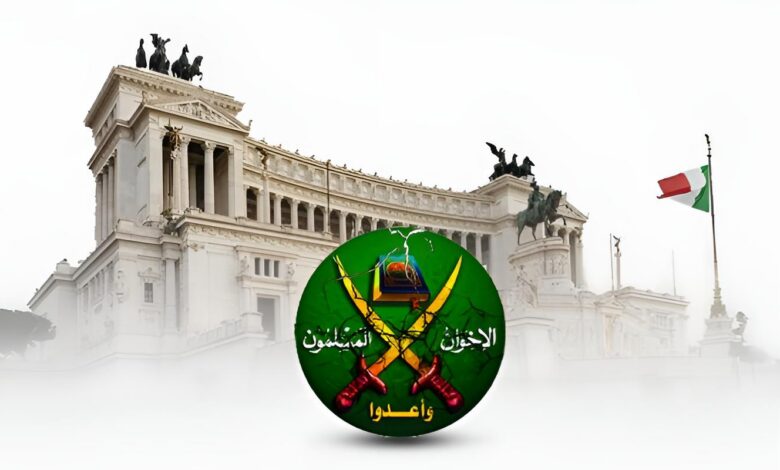
Italy has joined several European countries and the United States in tightening measures against the Muslim Brotherhood through a legislative proposal put forward by a political party led by the deputy prime minister.
Italy is moving to strengthen oversight of religious institutions, particularly Islamic associations, which some observers regard as a vehicle used by the Muslim Brotherhood to expand its influence within European societies. The initiative takes the form of a legislative package being prepared by the League, the party led by Italian Deputy Prime Minister and Minister of Infrastructure and Transport Matteo Salvini.
-
Muslim Brotherhood Attempts to Influence the Berlin Elections as the Ruling Party Intervenes
-
Networks linked to the Muslim Brotherhood: institutional expansion raises concerns in Canada
Key provisions
According to the Italian news agency Adnkronos, the proposed legislation would require “religious entities” to publish their financial records and would establish a new criminal offense targeting anyone who disseminates teachings that violate the law, promotes an extremist approach, or encourages radicalization.
The Italian agency said these are the main provisions of a legislative package concerning religious freedom and the fight against extremism, which is being prepared by the League and is expected to be submitted to Parliament soon. The objective is to “regulate the activities of religious communities that do not have an agreement with the state.”
The party said the bill was intended to “close a legislative gap”, arguing that the absence of the agreements provided for under Article 8 of the Constitution had contributed to the spread of religious institutions, facilities and places of worship “operating outside a clear framework of rules, oversight and accountability”.
-
The Muslim Brotherhood in Britain… Decades of Infiltration and Questions Over the Reluctance to Confront It
-
The humanitarian aid loophole: German parliamentary move seeks to halt funding for Muslim Brotherhood-linked branches
Oversight
According to the party, the proposal seeks to strengthen “legality, transparency, traceability and accountability” by regulating the activities of religious institutions, the establishment of places of worship, the activities of religious leaders, and financial flows, particularly “those originating from abroad”.
The text, which contains six articles in the section dealing with mosques, calls in its first article for the creation of a national register of religious entities belonging to communities that do not have an agreement with the state, alongside a “charter of values for religious entities in Italy”.
The League says the aim is to establish “rules of conduct” consistent with the Italian legal order.
It states that “the political focus of the proposal primarily concerns Muslim communities”.
Financial transparency is another key element of the proposal. Religious entities would be required to publish their financial statements in order to make money transfers traceable. The League is placing particular emphasis on foreign funding.
-
The behind-the-scenes struggle over the Muslim Brotherhood’s Political Bureau
-
Pressure, Bans and Divisions: The Muslim Brotherhood at One of Its Weakest Points
Pressure on the Muslim Brotherhood
According to sources involved in drafting the proposal, some of these financial flows make their way to the Muslim Brotherhood, which the sources describe as “a terrorist organization in many countries”, according to the Italian agency.
The proposal would also establish a register of religious leaders in order to identify individuals performing such functions within religious communities that do not have agreements with the state.
The legislative package would also introduce a system of sanctions against conduct deemed incompatible with the legal order. Specifically, it would create a new offense targeting anyone who “adopts teachings or principles contrary to the legal order, incites hatred, promotes an extremist approach, or encourages radicalization”.
-
Al-Ebary’s Activities: Al-Ain News Reveals Muslim Brotherhood Contacts with the Revolutionary Guard and Hezbollah
-
The Terror Links Behind the Berlin Attack: Hidden Muslim Brotherhood Connections and Emerging Centers of Extremism
Criminal penalties
The legislation would apply when such conduct occurs “in any form within the religious institution”. The new offense would carry a prison sentence of between one and five years, in addition to disqualification from holding public office.
The proposal also seeks to strengthen the powers of local authorities and the Ministry of the Interior by granting new powers to prefects and the ministry, while establishing a stricter system of oversight for institutions, places of worship, and activities conducted within them.
However, the bill regulating communities that do not have agreements with the state represents only one part of the broader legislative package that the League is preparing to submit.
-
The Muslim Brotherhood in Switzerland: a family network, financial activities, and an institutional threat
-
Muslim Brotherhood Funds and Influence Networks: al-Tamimi and Abu Daya at the Heart of the European Network
Previous measures
Italy’s initiative is consistent with similar measures adopted in several European countries and the United States.
On January 13, the US State Department designated the Muslim Brotherhood branches in Lebanon, Egypt and Jordan as terrorist organizations. Several US states have also moved toward banning the group’s activities.
France has also moved toward taking a tougher approach to networks linked to the Muslim Brotherhood. In January, members of the European Parliament supported a French call to place the Muslim Brotherhood on the European Union’s list of terrorist organizations. In March, the Dutch Parliament adopted a motion calling for the Muslim Brotherhood to be banned.
German authorities have taken measures against Islamic institutions accused of having links to the Muslim Brotherhood or to extremism. Austria, meanwhile, has for several years taken action against figures and networks associated with the group under legislation targeting “political Islam”.
-
Humanitarian Helpline Puts Muslim Brotherhood Funding at the Center of Controversy in Germany
-
Growing Pressure in Austria to Place the Muslim Brotherhood on the European Union’s Terrorist List