Saffron for Mental Health: What Is the Evidence for Anxiety and Depression?
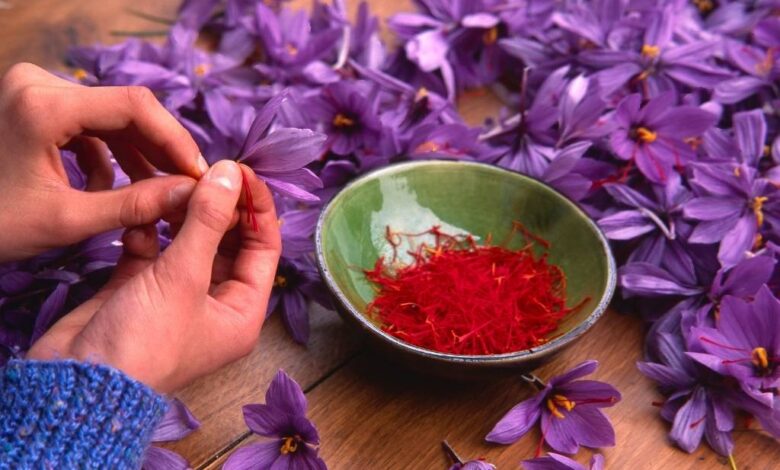
Saffron, obtained from the stigmas of the Crocus sativus flower, is best known as a valuable spice that has been used for centuries in culinary and traditional practices. In recent years, it has also attracted increasing scientific interest because of its potential effects on mood, anxiety, and certain psychological disorders.
Several clinical trials and meta-analyses suggest that standardized saffron extracts may help reduce some symptoms of depression and anxiety. However, these findings should be interpreted cautiously. Saffron is not currently an established replacement for medical or psychological treatment, and further long-term research is needed.
What does saffron contain?
Saffron contains several biologically active compounds, particularly crocin, crocetin, and safranal. These substances have attracted scientific attention because of their antioxidant properties and their potential interactions with different biological pathways.
Researchers are investigating their possible effects on neurotransmitter systems involved in mood regulation, as well as inflammation and oxidative stress. These mechanisms may partly explain the growing interest in saffron as a potential tool for supporting mental health.
However, proposed biological mechanisms alone cannot establish clinical effectiveness. Human clinical trials are necessary to determine whether a substance produces meaningful benefits in people.
A potential effect on depressive symptoms
Depression is one of the areas in which saffron has been most extensively studied. A recent meta-analysis involving 34 randomized controlled trials and 1,769 participants found that saffron supplementation significantly reduced certain measures of depressive symptoms. However, the effect was not consistently observed across all assessment scales used by researchers.
Earlier research also reported improvements in depressive symptoms when saffron was compared with placebo. Some analyses even found effects comparable to those observed with conventional antidepressants in the available trials. Nevertheless, researchers emphasize the need for larger, longer, and more diverse studies.
These findings are promising, but they do not mean that saffron can replace an antidepressant prescribed by a physician.
What about anxiety?
Anxiety is another important area of research. A systematic review and meta-analysis of clinical trials found that saffron supplementation was associated with improvements in certain anxiety symptoms compared with placebo. However, as with depression, results varied depending on the assessment tools used.
In one randomized 12-week trial involving adults experiencing anxiety and depression, participants receiving saffron extract showed significant improvements in anxiety and depression scores compared with those receiving placebo.
These findings indicate potential benefits, but they are not sufficient to establish saffron as a proven treatment for anxiety disorders.
Is saffron as effective as antidepressants?
This is one of the most frequently discussed questions. A 2024 meta-analysis comparing saffron with selective serotonin reuptake inhibitors, or SSRIs, found no statistically significant difference between the two approaches in reducing depressive or anxiety symptoms in the included trials.
This is an interesting finding, but it should not be interpreted as definitive proof that saffron is equivalent to antidepressants in clinical practice. The available trials remain limited, and some have relatively small sample sizes or short follow-up periods.
Why is caution still necessary?
One of the main challenges is the variability between studies. Researchers have not always used the same saffron extracts, doses, treatment durations, or assessment methods.
An earlier meta-analysis also identified evidence of publication bias, meaning that positive findings may be more likely to appear in the scientific literature than negative or neutral results.
Further research is therefore needed to determine the most appropriate doses, how long saffron can safely be used, and which groups of patients are most likely to benefit.
What side effects are possible?
Saffron appears to be generally well tolerated in the clinical trials available so far, but this does not mean that it is completely risk-free.
Side effects such as nausea, headaches, appetite changes, and digestive symptoms have been reported in some studies. Long-term safety data are also more limited than those available for established psychiatric medications.
Caution is therefore particularly important when saffron is consumed as a concentrated dietary supplement. The small amounts of saffron commonly used as a culinary spice should not automatically be equated with the doses found in standardized extracts or supplements.
Can saffron replace treatment for depression?
No. People with diagnosed depression or significant depressive symptoms should not stop or change their treatment without consulting a healthcare professional.
Saffron may potentially be investigated as a complementary approach, but this should be discussed with a physician or other qualified healthcare professional, particularly when a person is already taking antidepressants or other medications.
Psychotherapy, medication when clinically indicated, regular physical activity, adequate sleep, and social support remain important components of managing depression and anxiety.
The bottom line
Saffron is an interesting area of research in the field of mental health. Several clinical trials and meta-analyses suggest that standardized saffron supplementation may reduce certain symptoms of depression and anxiety in adults. Recent research has also produced encouraging findings when saffron is compared with some conventional treatments.
However, the evidence is not yet strong enough to consider saffron a first-line treatment. Differences between studies, potential publication bias, and limited long-term safety data mean that caution is still warranted.
In practical terms, saffron represents a promising subject of scientific research, but it should not be viewed as a miracle solution for anxiety or depression. Anyone considering saffron supplements should take into account their overall health, current medications, and the advice of a qualified healthcare professional.