From Ambushes to Assaults on Headquarters: A Baloch Insurgency Shakes Iran
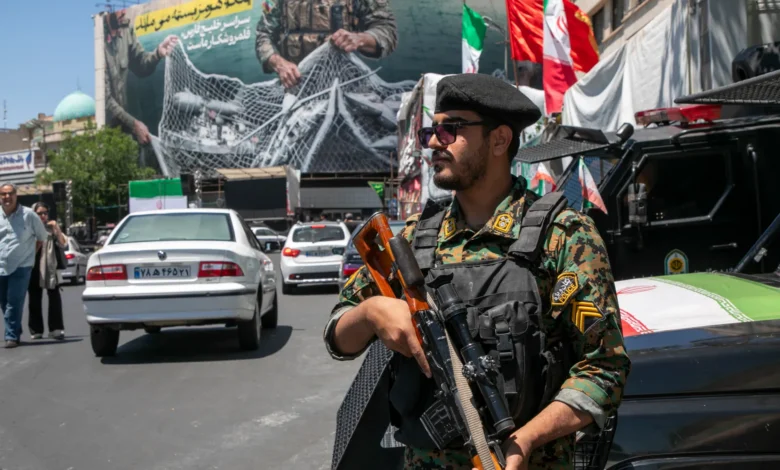
Intensive security operations by the Iranian authorities have failed to halt armed clashes in the southeastern province of Sistan and Baluchestan. A fresh confrontation in the city of Khash on 21 October has renewed attention on escalating attacks against security agencies and the Revolutionary Guard, as fighting expands to levels not seen in a decade.
The latest developments come amid the emergence of a new armed coalition and growing reports that members of the Afghan Fatemiyoun Brigade are participating in security operations. They raise questions about Tehran’s ability to contain an internal front that is draining its forces and resources while the country also faces the repercussions of war with the United States and Israel.
Khash Brings the Fighting Back into Focus
In the latest incident, Iranian police announced that a gunman had been killed during a clash in Khash on Wednesday, after officers became suspicious of people travelling in two vehicles near the Sarhad petrol station.
According to the Tasnim news agency, the gunmen opened fire on police, triggering an exchange in which one was killed, and two others fled. Security forces seized both vehicles, a Kalashnikov rifle and ammunition.
The Baloch human rights organisation Haalvsh, however, offered a different account, describing a security pursuit and gunfire directed at a vehicle. The circumstances of the incident and the identity of the person killed remain disputed, with neither account independently confirmed.
The confrontation is significant because it follows a series of operations targeting security personnel and government premises. Meanwhile, conflict-monitoring organisations report that attacks are evolving from limited operations into longer and more complex engagements.
An Expanding Front and Unprecedented Figures
According to ACLED, which monitors armed conflict, Sistan and Baluchestan recorded around 70 clashes between armed groups and government forces from the beginning of 2026 to 8 October. This marks the highest annual level in at least a decade, including 13 clashes during the final two weeks of the monitoring period.
Data from Iran’s Human Rights Activists News Agency, HRANA, reinforce this picture. The agency documented 63 armed incidents in Sistan and Baluchestan and Kerman between 31 March and 10 October. Local and unofficial sources reported 94 deaths and 33 injuries, compared with 87 deaths and ten injuries in the official figures compiled by the organisation.
Notably, 18 incidents occurred during the final eighteen days of the monitoring period, exceeding the total for any previous full month within that period.
The nature of the operations reveals a shift in the armed groups’ methods. Attacks have expanded from patrols and border roads to police and intelligence headquarters, involving improvised explosive devices, rocket-propelled projectiles and medium-calibre weapons.
A New Coalition and Prolonged Battles
Part of the escalation is associated with the emergence of the “Popular Fighters Front”, formed in December 2025 and comprising Jaish al-Adl and smaller Baloch factions.
According to HRANA, the Front claimed responsibility for at least six operations during the monitoring period. Responsibility for most incidents, however, remains unresolved, making it difficult to attribute the entire escalation to the new coalition.
In September, Saravan witnessed a confrontation lasting around nine hours, according to ACLED, during which government forces had to send additional reinforcements.
The Revolutionary Guard also announced that two officers were killed in a confrontation in the area on 23 September, while a police headquarters in Jalq came under attack in early October.
These incidents point to mounting challenges for security agencies, particularly as some clashes develop into engagements requiring reinforcements and military vehicles rather than operations confined to pursuing small groups.
Fatemiyoun Enters the Picture
Another development has emerged through reports that members of the Afghan Fatemiyoun Brigade, which is linked to the Revolutionary Guard, are taking part in security operations in the province.
On 2 October, local sources reported an attack on a vehicle carrying brigade members near Zahedan. On 13 October, clashes lasting more than seven hours broke out in the Taftan area. Reports citing Haalvsh said more than twenty Fatemiyoun members were killed or wounded.
It had previously been reported by informed sources that brigade members were deployed to military facilities and checkpoints belonging to the Revolutionary Guard and the Basij.
This renews questions about the extent to which the authorities rely on formations linked to the Quds Force for internal security duties, and whether their deployment reflects a need to reinforce local forces.
Security Attrition on Multiple Fronts
Sistan and Baluchestan’s significance extends beyond its borders with Pakistan and Afghanistan to the port of Chabahar and the trade corridors Tehran is seeking to develop.
Continued clashes impose additional requirements for protecting facilities, roads and troop movements, while the country faces extensive economic and military pressures.
Analysing these developments, researcher Mohammad Saleh Al-Fateh argues that the escalation of armed attacks in Sistan and Baluchestan exposes the growing security attrition facing the Iranian authorities, despite continuing raids and pre-emptive operations to track down armed groups.
He explains that the spread of attacks across Zahedan, Rask, Bampur, Chabahar and other locations points to cells and networks capable of operating in dispersed areas, complicating the work of security agencies.
He notes that ambushes, improvised explosive devices and attacks on patrols in transit allow armed groups to inflict casualties without holding territory or openly confronting forces with superior numbers and weaponry.
These tactics force the authorities to devote additional resources to securing roads, facilities and military movements, as domestic unrest coincides with continuing tensions between Iran, the United States and Israel.