Combat Drones: Europe’s Ambitions Falter as Germany Pushes Back Its 2029 Goal
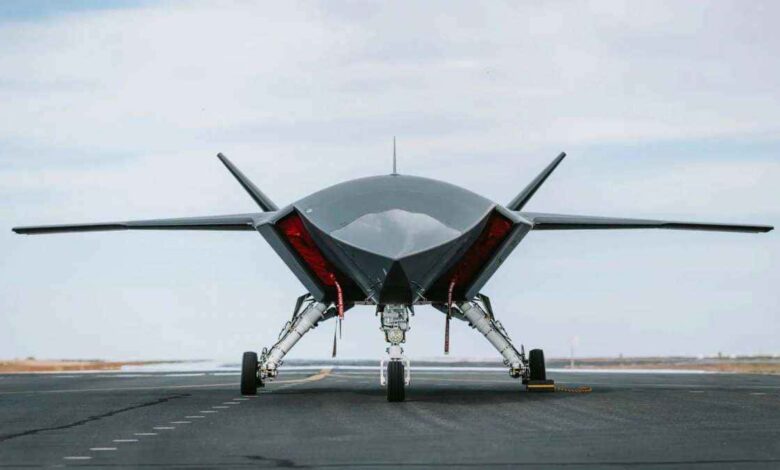
Europe is falling behind in combat drone development after Germany abandoned plans to purchase the Australian MQ-28 Ghost Bat outright. The shift raises questions about the continent’s ability to build an independent defence industry, while the United States, Australia and Türkiye continue developing their own systems.
Germany had aimed to become the first European country to field an operational collaborative combat aircraft by 2029. That goal now appears out of reach.
The German Defence Ministry has formally informed Boeing that Berlin will not purchase the MQ-28 Ghost Bat directly. Estimates reported by Politico suggest that entry into service could be delayed until the early 2030s, with testing scheduled to begin in 2027.
During a visit to Australia last March, German Defence Minister Boris Pistorius said the Ghost Bat was being considered for the German Air Force.
Rheinmetall quickly backed the initiative, describing the aircraft as a mature solution that could help the German military acquire advanced combat drones by 2029.
Around six months later, however, Berlin abandoned that approach without explaining why. The Defence Ministry said public procurement rules prevented it from disclosing potential acquisitions, adding that Parliament had to consider the matter first.
Europe Between Prototypes and Production
Germany’s shift came days after Airbus announced the first European flight of its U740 Valkyrie. The flight did not, however, demonstrate the readiness of an integrated combat system, as integration of the MARS mission system remains pending.
The test therefore involved only the airframe developed by the US company Kratos, rather than a complete European combat system.
Other countries, meanwhile, have reached advanced stages in the development and production of uncrewed combat aircraft.
In the United States, production of collaborative combat aircraft began in June, with plans to manufacture at least 150 FQ-42A and FQ-44A aircraft before 2030 while keeping the unit cost below $30 million.
Australia aims to bring the stealthy Ghost Bat into service in 2028, becoming the first air force to possess an advanced combat command system of this kind.
In Türkiye, the Kızılelma conducted a test launch of a long-range air-to-air missile guided by its own radar in November 2025. The programme has also secured Indonesia as a customer, with an order for twelve aircraft and deliveries expected to begin in 2028.
Industrial Independence Complicates Europe’s Choices
Germany’s reversal does not necessarily amount to a strategic mistake. Purchasing the Ghost Bat would have allowed Berlin to acquire these capabilities more quickly, but would have left software, data and systems development in the hands of Boeing and Australia.
European governments increasingly want more than imported platforms, placing greater emphasis on industrial participation and strategic control over the technologies used in their defence systems.
Advanced collaborative combat aircraft have also yet to prove themselves in combat. The Ghost Bat’s launch required identification data from a Super Hornet, alongside supervision from an E-7A.
The US programme likewise remains under development: selection of the principal software provider was not scheduled before summer 2027. A YFQ-42A also crashed after take-off during a test flight in April.
Dependence on US Technology Continues
The alternatives Europe is developing reveal its continued reliance on US technology. Airbus’s U740 Valkyrie uses an airframe developed by Kratos, while Rheinmetall has partnered with Anduril to develop European versions of the Fury drone.
Helsing’s CA-1, by contrast, represents one of the competing options developed entirely within Europe but has yet to fly.
The gap is widening between Europe’s efforts to develop independent systems and US industrial progress. Anduril’s Arsenal-1 factory in Ohio has a production capacity of up to 150 aircraft a year, while Europe continues to debate software ownership and control.
Europe’s challenge therefore extends beyond when combat drones will enter service. It also concerns the continent’s ability to build an industrial and technological base that will allow it to develop and produce these systems independently.