Tehran Persists in Violating Iraqi Sovereignty with New Attack on Kurdistan
Missile strikes against positions belonging to the Iranian opposition in the Kurdistan region caused no casualties, but they indicate that Tehran remains committed to its policy of escalation despite Iraqi condemnation.
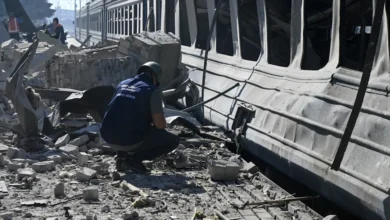
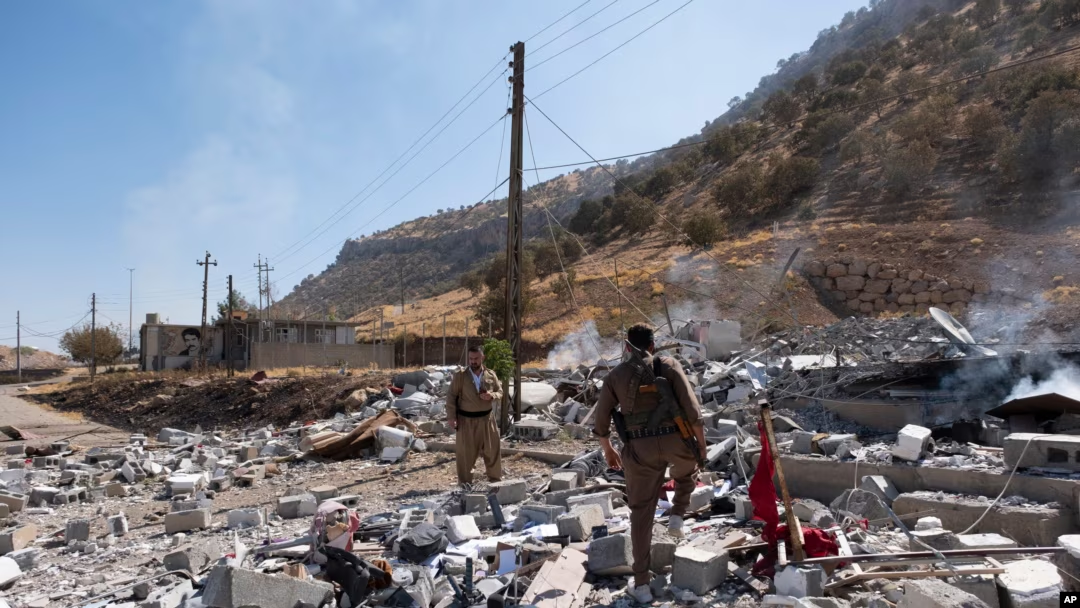
Missile strikes believed to have been launched from Iranian territory targeted three camps belonging to Iranian Kurdish opposition groups east of Sulaymaniyah in Iraq’s Kurdistan region early Monday, but caused no injuries, according to two security sources, as Tehran continues to violate Iraqi sovereignty.
The Kurdistan Region Security Institution, for its part, said the attack took place at 3:10 a.m. on Monday, noting that five missiles landed in different areas of Sulaymaniyah governorate. It said three of them struck the Zargwezela area, while another missile hit the vicinity of the village of Korka Jiya in the Sirwan district, and a fifth landed between the villages of Dari Zin and Mirasi al-Sufla in the Qaradagh district.
Although no casualties were reported, the nature of the attack underscored the continued exposure of the region’s territory to strikes originating from Iran, at a time when Kurdish authorities are warning residents against approaching targeted sites or handling the remnants of missiles and drones.
These strikes do not appear to be an isolated incident. Tehran views the presence of Iranian Kurdish opposition groups in Iraq as a threat to its security, while continuing to target their positions inside Iraqi territory. This places Baghdad under repeated pressure to demonstrate its ability to protect its borders and prevent its territory from being used as a theater for regional score-settling.
The Kurdistan region is home to several of the most prominent Iranian Kurdish opposition organizations, foremost among them the Democratic Party of Iranian Kurdistan, which was founded in 1945 and has its main headquarters in Koya, along with Komala, the Kurdistan Free Life Party, the Kurdistan Freedom Party, and the Khabat Organization. In February 2026, several of these forces moved to unite their efforts within a political coalition aimed at coordinating their positions in opposition to the Iranian regime.
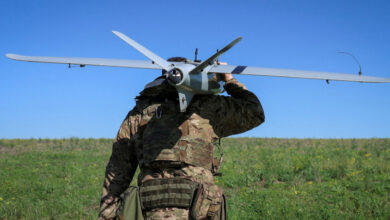
The pace of attacks intensified during the U.S.-Israeli war against Iran in 2026, with reports indicating that Iran and its allies launched hundreds of missiles and drones toward the Kurdistan region, many of them targeting Kurdish groups and fighters. The bases of these groups were also repeatedly struck, while regional authorities sought to prevent their territory from becoming an open front in the war.
In August, the attacks took on an even more sensitive dimension when drones targeted the office of Kurdistan Regional Government Prime Minister Masrour Barzani. Regional authorities said the drones had been launched from Iranian territory. The attack caused no casualties, but it once again raised the issue of violations of Iraqi sovereignty and the targeting of official institutions within the region.
The current escalation comes as Baghdad faces growing pressure to demonstrate its ability to control its territory and airspace. The continuation of Iranian strikes, alongside the activities of armed factions linked to Tehran inside Iraq, complicates the government’s efforts to ensure that decisions of war and peace remain the exclusive prerogative of the state. It also places Iraqi sovereignty before challenges that extend beyond its northern borders to encompass the broader regional security landscape.
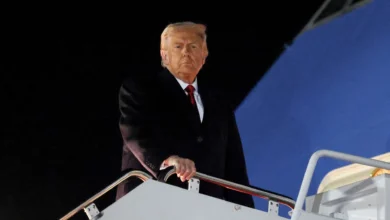
In the early days of the U.S.-Israeli war, Washington discussed with Iranian Kurdish factions the possibility of opening a ground front from Iraq, before President Donald Trump abandoned the idea in a shift that underscored the sensitivity surrounding the use of Iraqi territory in a confrontation with Iran.
This trajectory shows that the Kurdistan region has become one of the most sensitive arenas of confrontation between Iran and its adversaries, while Baghdad is increasingly being called upon to turn its stated rejection of violations of its sovereignty into practical measures that can prevent further strikes and limit the use of Iraqi territory in external conflicts.