Oil Cargo Prices Surge Above $130, Signaling a Larger Crisis
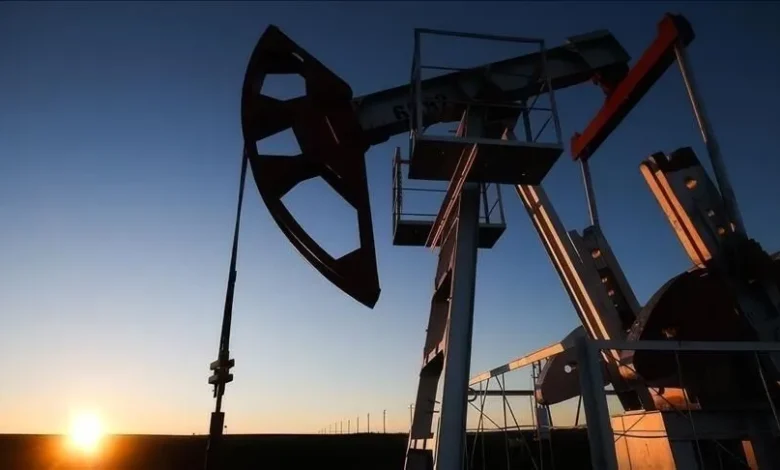
The more limited the market’s ability to access oil that is already available, the greater the value of every deliverable cargo becomes, and the more dangerous a prolonged crisis becomes compared with the current price level.
Prices for some physical oil cargoes in Europe surged above $130 a barrel on Tuesday, providing one of the clearest signs yet of the pressure that disruptions to supply routes in the Middle East are now placing on the global energy market, while front-month Brent futures approached $110. North Sea Forties crude reached $136.75 a barrel, nearing its record level of $147.37 set in April.
The surge does not mean that the global oil price has actually exceeded $130, because the figure refers to the prices of physical cargoes scheduled for delivery within weeks, whereas futures contracts reflect the pricing of deliveries at a later date. However, the gap between the two levels is significant: it reflects buyers’ willingness to pay a substantial premium to secure supplies available in the short term, as the security of oil flows has become more important than the theoretical price of futures contracts.
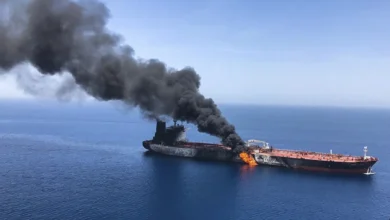
The surge came as several disruptions continued to accumulate. Saudi Arabia canceled cargoes destined for European buyers for delivery in late September after an attack on the East-West pipeline forced loading operations at the Red Sea port of Yanbu to be suspended. At the same time, production stoppages at three Libyan oil fields added another source of concern over supply.
Market sensitivity is increasing because the alternatives themselves face constraints. During the first half of 2025, around 20.9 million barrels per day of oil and petroleum liquids passed through the Strait of Hormuz, equivalent to roughly 20% of global petroleum-liquids consumption. Meanwhile, Saudi Arabia’s East-West pipeline and Abu Dhabi’s pipeline provide alternative routes with limited capacity.
As for Bab el-Mandeb and the Red Sea, disruptions there do not merely halt oil flows; they also increase the cost and time required to transport them. Data from the US Energy Information Administration indicate that rerouting vessels around the Cape of Good Hope can add roughly 15 days to an oil journey between the Arabian Sea and Europe, raising shipping costs and increasing the need for additional tankers.
More concerningly, the impact has begun to emerge in actual supply, rather than merely in speculators’ expectations. The Energy Information Administration estimated that shut-in oil production had reached around 6.7 million barrels per day in August, compared with 5 million barrels per day in July, and expects restrictions on Middle Eastern flows to continue through the final quarter of 2026.
Against this backdrop, some cargoes breaking through the $130 threshold can be viewed as an early warning of what could happen if the Strait of Hormuz crisis continues alongside disruptions in Bab el-Mandeb and the Red Sea. This does not mean Brent will automatically reach $130 or higher, as the scale of any increase will depend on the duration of the disruptions, the amount of production taken offline, and the ability of producers and consumers to draw on inventories and use alternative routes.
But a prolonged crisis increases the possibility that the problem could shift from a temporary risk premium to an actual supply shortage. Analysts cited by Reuters have pointed to the possibility of Brent rising above $120 if the disruptions persist.
Politically, the repercussions would extend beyond the oil markets. Higher energy prices can increase transportation, industrial and heating costs and intensify inflationary pressures, leaving central banks with more difficult choices. In the United States, where congressional midterm elections will be held in November 2026, fuel prices and inflation could become more prominent issues in the economic and political debate, without this implying any predetermined electoral direction. The entire House of Representatives will be up for election, while roughly one-third of the Senate will be contested in the midterms.
Thus, the significance of the $130 figure lies not so much in the number itself as in the message it sends: the more limited the market’s ability to access oil that is already available, the greater the value of every deliverable cargo becomes, and the more dangerous a prolonged crisis becomes compared with the current price level.