Russia Bets on Attrition: Poor Man’s Missiles and a Strategy of Disruption
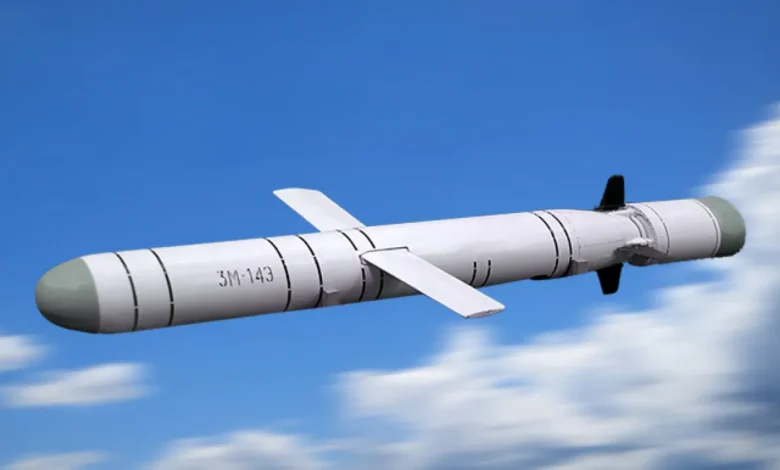
Moscow is no longer relying solely on drones. It has developed a new generation of low-cost aerial weapons that combine speed, simplicity, and high-volume production.
Among these systems are Geran drones and Banderol cruise missiles, which demonstrate Russia’s ability to rapidly modify its designs and produce them in large quantities, according to the US-based Wall Street Journal.
-
First battle in history between drones: the Sargan 3000 faces a Russian counterpart
-
Repetition Rather Than Intensity… A New Russian Strategy to Exhaust Ukraine
Geran drones initially emerged as modified Russian versions of the Shahed drone, which Ukraine has become increasingly capable of intercepting after making major investments in air defense. Russian engineers, however, have introduced successive improvements to their speed, navigation, communications, and resistance to jamming.
The Geran-5 is at the forefront of this evolution, with a design that now more closely resembles a cruise missile than a conventional drone. Mike Monnik, CEO of DroneSec, described it as “a poor man’s cruise missile.”
While Ukraine has developed one of the first effective jet-powered drones, its limited resources and industrial capacity make it more difficult to sustain a prolonged race in mass production.
Russia, by contrast, has managed to develop its new systems and deploy them on the battlefield within roughly two years before moving to large-scale production.
-
Iskander-1000 Enters the War: New Russian Missile Strikes Ukraine
-
Mobilization of 300,000 Russian Soldiers: Zelensky Warns Amid Escalating Drone Attacks
Chinese Components Support Production
Analysts believe that Russia’s access to Chinese-made components has helped accelerate the production of these weapons.
A large share of this equipment is believed to be commercially available and classified as dual-use components, meaning they can be employed in either civilian or military applications.
Russian innovation is not limited to off-the-shelf equipment. Engineers are repurposing such components in designs that incorporate antennas capable of countering electronic-warfare measures, along with more resilient communications networks.
Once a design is stabilized, the transition to mass production becomes faster, and the war has demonstrated that this can be just as important as technological superiority.
-
Missile on the way: Russian warning alters the course of a U.S. aircraft over Antarctica
-
Khabarovsk: Russian submarine carrying a nuclear tsunami sails for the first time
The Cost Equation Is Straining Defenses
One of the main advantages of these weapons is their low cost. The Banderol and Geran-5 are estimated to cost around $100,000 per unit, compared with $2 million for a US Tomahawk missile and its advanced Russian counterparts.
This cost disparity allows Moscow to launch large numbers of one-way attack weapons and exhaust air-defense systems.
Ukraine is not facing drones alone. It is also confronting ballistic missiles and glide bombs launched by combat aircraft, threats that are considerably more difficult to counter.
Justin Bronk of the Royal United Services Institute said that Ukraine’s biggest problem is not drones, but glide bombs.
At the same time, the United States and its allies are forced to use expensive Patriot missiles and fighter aircraft against low-cost targets, creating an economic imbalance that is difficult to ignore.
-
One Ukrainian interception against 27 Russian missiles: Zelensky admits a shortfall and asks for additional support
-
Kyiv Under Russian Fire: Drone and Missile Strikes
The threat is no longer confined to Ukraine. Some Russian drones and missiles have entered the airspace of NATO member states, either accidentally or as part of efforts to test their defenses.
This is pushing the allies to seek faster and less expensive interception methods, including simple jet aircraft and low-cost interceptor systems.
The Russian experience shows that the competition is not simply about possessing the most advanced technology, but about being able to turn an idea into a weapon and then produce it in large quantities.
Moscow has benefited from directing state and banking-sector resources toward defense, while the exchange of expertise between Russia, Iran, and North Korea has accelerated the transfer of wartime lessons to other theaters.
-
Deep-Strike Campaign Expands: Dual Russian Attack Sets the Heart of Kyiv Ablaze
-
A Floating Missile Platform: The Admiral Nakhimov Restores the Prestige of the Russian Navy
Analysts believe that addressing this challenge requires more integrated defenses, forces specialized in countering drones, and continuous training in low-cost interception methods, including radar-guided anti-aircraft guns and simple jet aircraft.
Katrina Bondar of the Center for Strategic and International Studies in Washington said the West tends to underestimate Russia, despite its ability to move rapidly from an idea and experimentation to production.
-
Zelensky’s Prediction: Ukrainian Air Defenses Repel a Russian Missile Attack
-
Ukraine Misleads Russian Missiles with Lima… A €58,000 Defense System
-
Deaths and missing persons: an unprecedented Russian escalation in Ukraine