$38 Billion: The Cost of the War Against Iran for Washington
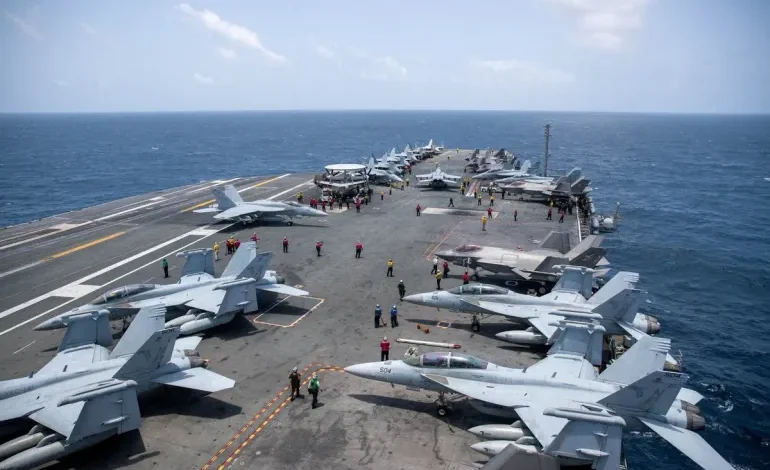
The cost of the war is not confined to the US budget; it is also becoming a factor affecting the global economy and intensifying pressure on consumers, governments, and financial markets.
The direct cost of the US war against Iran reached approximately $38 billion as of August 1, 2026, according to an estimate published by the Congressional Budget Office, with spending expected to continue at a rate of between $2 billion and $3 billion per month, depending on the level of military operations, as President Donald Trump’s administration explores ways to end the war and reopen the Strait of Hormuz.
-
Aboard the USS George Washington: How Is America Waging Its War Against Iran?
-
Mowing the Grass… What Is Washington Preparing for Iran?
The report places the war before a test that extends beyond the battlefield, as its financial burden is becoming directly linked to the United States’ ability to maintain its military stockpiles, contain the effects of rising energy prices, and manage pressure on the federal budget, in addition to the domestic political repercussions as the November congressional midterm elections approach.
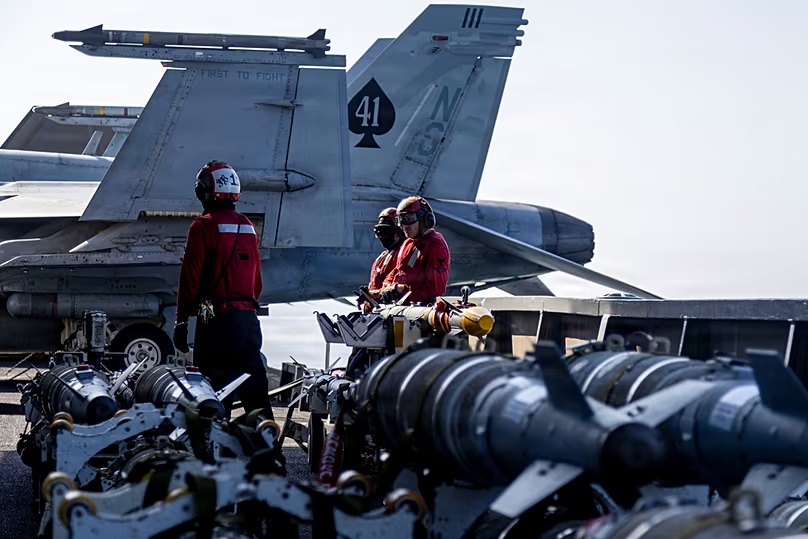
The Congressional Budget Office indicates that most of the military spending is related to munitions consumed during the operations, including long-range precision missiles and interceptors, warning that rebuilding some stockpiles could take at least five years.
In July, Defense Secretary Pete Hegseth requested nearly $90 billion in emergency funding to replenish munitions stockpiles, warning that a prolonged shortage could constrain the Pentagon’s ability to respond to another major conflict.
-
International Relations Expert: Washington Is Using Sanctions to Force Iran to Reconsider Its Calculations
-
Washington launches an Economic Doomsday against Iran
This point gives the financial figure a strategic dimension: the cost does not only represent money already spent, but also includes the cost of restoring the military capabilities that were available before the war. The longer the conflict continues, the wider the gap becomes between spending on current operations and the investment required to replace the weapons used, forcing the administration and Congress to choose between increasing funding and extending the period needed to rebuild the arsenal.
The economic cost is also emerging through energy. The war has disrupted oil and gas flows in the Gulf and reduced shipping traffic through the Strait of Hormuz, while tensions continue in the Red Sea and Bab el-Mandeb. Traffic through Hormuz has fallen sharply, with only four cargo vessels passing through the strait on Monday, compared with an average of about 125 transits per day before the war, while shipping traffic through Bab el-Mandeb has also declined.
-
Suspending the Strikes, Not the War… What Is Washington Planning for Iran?
-
Washington and London Rally Allies: Western Plan to Secure the Strait of Hormuz and Contain Iran
These disruptions are affecting the US economy through oil and fuel prices, and not only energy-importing countries. Crude prices have risen above $100 a barrel, while Congressional Budget Office estimates have warned that the war could raise US inflation by around 0.5 percentage point during the first quarter of 2027. This leaves the administration facing a difficult equation: continued operations could sustain pressure on prices, while containing inflation would require tighter monetary and fiscal policies.
These pressures come at a time when US public finances are already facing a large deficit and the national debt has exceeded $40 trillion. Higher borrowing costs add another dimension to the war’s bill, particularly because the Congressional Budget Office estimate does not include interest costs associated with financing the operations or certain damage resulting from the latest attacks, meaning the final cost could be higher than the announced figure.
-
Washington Launches a New Wave of Strikes as Iran Closes the Strait of Hormuz
-
Hormuz Guarantees and Nuclear Dust: Washington Tightens the Conditions for an Agreement with Iran
These figures are prompting debate over how long Washington can sustain the war without its military and economic costs becoming a more prominent domestic issue. That debate has already emerged in Congress, including a Republican move on September 15 to introduce articles of impeachment against Defense Secretary Pete Hegseth over his handling of the war. The move reflects the existence of opposition within the Republican Party itself, alongside Democratic pressure for Congress to play a greater role in decisions on whether to continue the operations.
The issue is becoming more sensitive as the November midterm elections approach, covering all seats in the House of Representatives and one-third of the Senate seats. This does not necessarily mean that the cost of the war will determine voters’ choices, but fuel prices, inflation, and military spending could become more prominent subjects in the political debate over the administration’s performance and public-spending priorities.
-
Intelligence Report: Iran’s Support for Its Regional Proxies Will Not Be Affected by Understandings with Washington
-
Memorandum of Understanding with Washington Sparks Internal Disputes in Iran
The $38 billion figure therefore represents more than an interim financial bill. It indicates that the continuation of the war is accumulating three types of costs simultaneously: direct military spending, an erosion of defense readiness, and economic pressures that could spill over into the US domestic economy.
With every additional month of fighting, the political question of the cost of continuing the war compared with the cost of seeking a settlement that would end the operations and restore energy flows and maritime traffic to more stable levels becomes increasingly important.
That question takes on greater significance as disruptions in the oil market intensify. Recent attacks and disruptions in Saudi Arabia have driven crude prices higher, while market estimates have warned that Brent could exceed $120 if supply disruptions persist. The cost of the war therefore does not remain confined to the US budget; it becomes a factor affecting the global economy and increasing pressure on consumers, governments, and financial markets.
-
How the Caspian Sea became a lifeline of weapons and food for Iran behind Washington’s back
-
Washington and Tel Aviv are preparing for a collapse of the truce by defining an Iranian target bank
-
Washington Tightens the Maritime Noose Around Iranian Ports