The Chemical Security Dilemma: How Evidence From the Battlefield Became Diplomatic Leverage
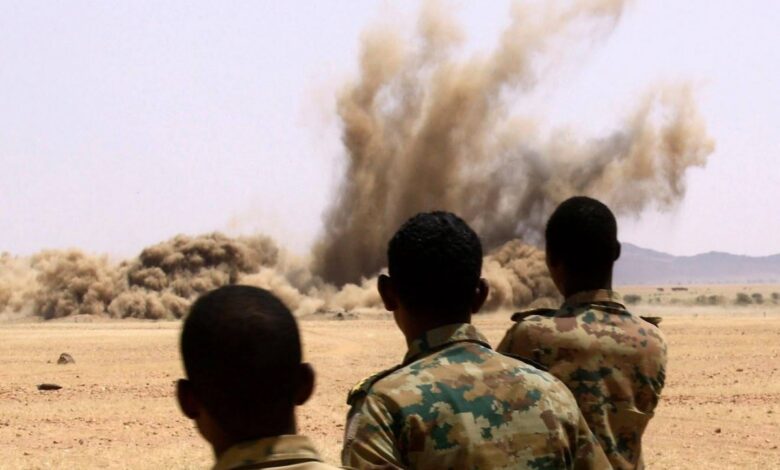
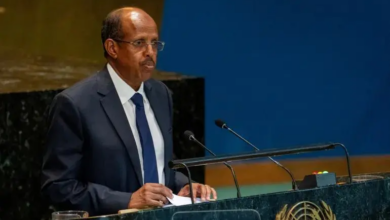
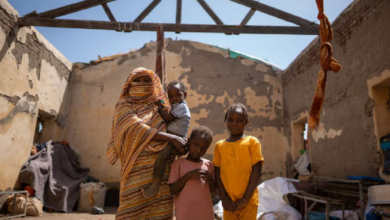
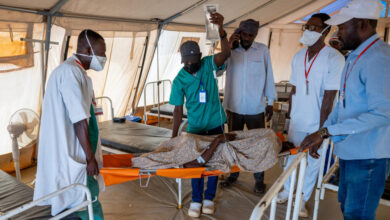
As field medical teams struggle to document the clinical cases of suspected chlorine victims in the streets of Sudanese cities, the issue is moving behind closed doors into the corridors of the UN Security Council and the headquarters of organisations responsible for chemical security.
In these institutions, the case is no longer governed by medical analysis or field data, but by geopolitical calculations, complex diplomatic balances and regional and international alliances that could determine the course of any future UN investigation.
This article examines the network of political and legal obstacles preventing the launch of an independent international investigation into allegations that unconventional weapons have been used in Sudan.
The Organisation for the Prohibition of Chemical Weapons and the Lack of Access on the Ground
From a legal perspective, the Organisation for the Prohibition of Chemical Weapons (OPCW) is the official international body responsible for investigating the use of such weapons and verifying compliance with the Chemical Weapons Convention (CWC), to which Sudan is a state party.
The Organisation nevertheless faces a major technical and procedural dilemma: the minimum security and field conditions required to deploy a fact-finding mission do not exist in active conflict zones such as the Al-Jaili refinery area or Kordofan.
The OPCW’s strict protocols require secure access corridors, guarantees for the safety of inspectors and the ability to collect environmental and biological samples from the soil and alleged attack sites within a defined period. Speed is essential when dealing with substances such as chlorine, which can disperse rapidly.
Amid open warfare and in the absence of any genuine truce, even considering the deployment of an international investigative team represents a major logistical risk. This could give the accused parties sufficient time to erase traces of evidence and decontaminate the relevant sites.
Division at the Security Council and the Ready Use of the Veto
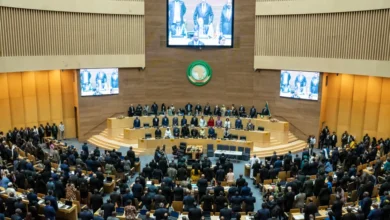
Even if the Organisation were able to overcome the technical obstacles, the greatest barrier would remain fundamentally political: the severe polarisation within the UN Security Council.
The United States, the United Kingdom and France are reportedly seeking to increase pressure on Sudan’s military-led government, raising the possibility of UN sanctions and an independent investigation supervised by international bodies.
Washington bases its position on intelligence reports alleging suspicious activity and the existence of international procurement networks that enabled the military establishment to modify dual-use chemicals.
On the opposing side, Moscow and Beijing stand against any resolution involving direct intervention or sanctions under Chapter VII of the UN Charter.
The Russian and Chinese approach rests on the principle of “respect for national sovereignty” and non-interference in states’ internal affairs. Both governments maintain that the allegations against the Sudanese military lack “conclusive and impartial evidence”.
They also warn that politically exploiting the chemical weapons issue could provide a pretext for repeating previous international scenarios that led to the collapse of state institutions.
This division effectively guarantees near-total paralysis of any decisive action by the Security Council, allowing the current situation on the ground to continue.
Regional Balances and Rival Blocs
The international position cannot be separated from regional rivalries. Sudan’s conflict has become an indirect arena for competing regional powers to settle scores and expand their influence.
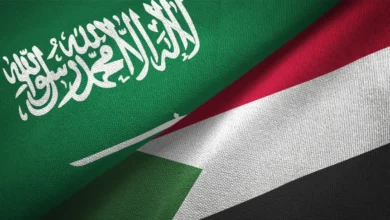
The strategic and security interests of countries including Egypt, Saudi Arabia, Qatar and Turkey intersect in Sudan, complicating the international community’s ability to adopt a unified position.
This overlap leads some regional capitals to favour diplomatic de-escalation and avoid intensifying the chemical weapons issue. They reportedly fear that the complete collapse of Sudan’s military establishment could create a security vacuum threatening the Red Sea and the Horn of Africa.
This “silent complicity”, or excessive regional caution, deprives international human rights organisations of meaningful leverage in the region.
As a result, reports issued by local humanitarian organisations face great difficulty in being translated into binding decisions. The issue is instead used as a temporary instrument of political pressure during negotiations rather than being treated as a matter that could constitute a war crime requiring immediate accountability under international humanitarian law.
Polarisation and International Justice
Ultimately, Sudan’s chemical weapons issue exposes the deep divide between the provisions of international law and the mechanisms available to enforce them on the ground.
As long as the political calculations of major powers take precedence over humanitarian considerations and medical documentation, the case will remain hostage to diplomatic point-scoring.
In this context, international justice appears unable to provide satisfactory answers to the alleged victims of the “invisible weapon”.
This raises profound questions about the effectiveness of international conventions prohibiting weapons of mass destruction in an era of hybrid conflicts and proxy wars.