Saudi Arabia, Qatar, Egypt and Turkey: Four Regional Policies That Complicated Sudan’s Path to Peace
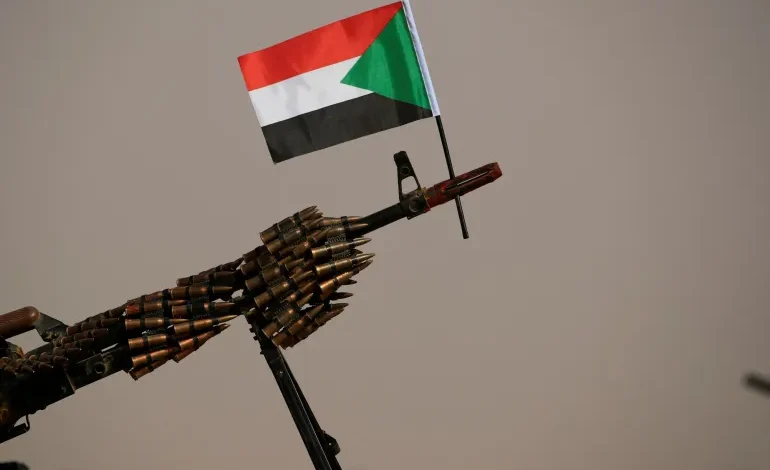
The longer Sudan’s war continues, the less the central problem concerns how to secure a ceasefire and the more it revolves around a fundamental question: why have all attempts to stop the fighting failed so far?
Numerous international and regional initiatives have been launched since April 2023. Yet the front lines have continued to shift, while both the Sudanese Armed Forces and the Rapid Support Forces have retained enough military capacity to carry on fighting.
Several regional states stand at the centre of this landscape, including Saudi Arabia, Qatar, Egypt and Turkey.
-
Sudanese Armed Forces and the re-empowerment of Islamists: how the Sudan Shield Forces are used to circumvent international sanctions
-
The Sudanese army charts a new political course that excludes armed movements from the governing equation
The paradox is that these countries do not all occupy the same position.
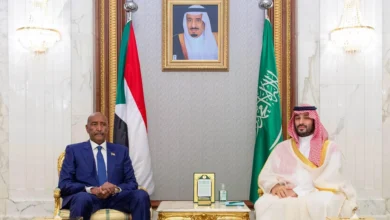
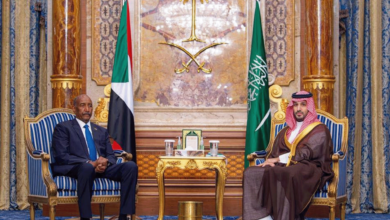
Saudi Arabia has participated in mediation, Egypt has supported the military, Turkey has been associated with military cooperation and defence technology, while Qatar has played a political role in Sudan.
Despite the differences between their instruments of influence, a shared problem has emerged: regional interventions have not yet generated sufficient pressure to end the war, while some forms of external support have helped maintain the warring parties’ military capabilities at a high level.
According to Chatham House, Sudan’s diplomatic landscape has become extremely complex because of the proliferation of frameworks and initiatives and the lack of adequate coordination among them.
-
The Sudanese Army Draws a New Political Map: Armed Movements Excluded from the Next Phase
-
Sudanese Army Issues New Decision Banning Recruitment Operations for Allied Armed Movements
Many Mediators, Few Results
Sudan now faces an overcrowded negotiating landscape.
There are multiple initiatives and contact groups, as well as countries seeking to mediate. Other states support one of the warring parties or possess influence over it.
Yet a large number of mediators does not necessarily mean that peace is closer.
Effective mediation requires three elements: the ability to bring the parties together, the capacity to exert pressure on them and the means to ensure that any agreement is implemented.
Saudi Arabia demonstrated a strong ability to achieve the first of these through the Jeddah process.
Implementation of the resulting commitments, however, remained weak.
This revealed one of the negative dimensions of external involvement: mediation can become a diplomatic process detached from the sources of power that enable the war to continue.
If one party simultaneously receives weapons and political support, attending a negotiating meeting will not necessarily alter its calculations.
-
The Internationalization of the Sudanese Conflict: An Analysis of the Political and Military Roles of Egypt, Saudi Arabia, Qatar, and Turkey
-
Sudan’s War Is No Longer Solely Sudanese: How Has External Intervention Helped Prolong the Conflict?
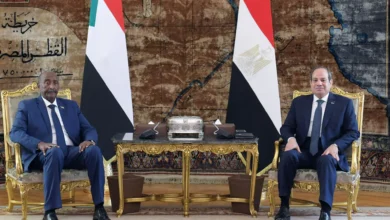
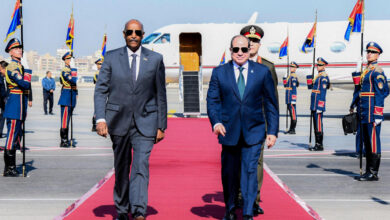
Egypt: Supporting the Military Out of Concern for the State
Cairo views the war in Sudan from a different perspective.
For Egypt, a strong central authority in Khartoum is preferable to the prospect of Sudan fragmenting into armed zones of influence. The expansion of the Rapid Support Forces towards areas near the Egyptian border also represents a security concern.
Cairo has therefore supported the Sudanese Armed Forces.
Recent analyses indicate that Egypt, Turkey and Saudi Arabia have moved closer together in their support for the military, regarding the possibility of Sudan falling entirely under Rapid Support Forces control as a threat to their interests.
This position, however, creates a political problem.
The military is not merely a state institution in this war; it is also one of the parties to the conflict.
When a regional country provides military or political support to the armed forces, it is not dealing solely with “the state”. It is also affecting the balance of power between two warring parties.
-
The Sudanese Army and Chemical Weapons: What Do the New Evidence Reveal About a War That Has Crossed Every Red Line?
-
The New York Times and The Washington Post Investigations: Chemical Weapons Fuel Calls for Accountability for the Sudanese Army
Turkey: From Economic Relations to Weaponry
Relations between Turkey and Sudan did not begin with the war.
The conflict has, however, redefined their importance.
Turkey possesses an advanced defence industry, and its drones have become a feature of modern conflicts in several regions.
Reports from Sudan have indicated that the military is using Turkish drones. The Washington Post also published an investigation in which it said documents showed Turkish shipments of drones and missiles to the Sudanese Armed Forces.
A research report published in 2026 also referred to an undeclared Egyptian-Turkish alignment in support of the Sudanese military, based partly on combining Egypt’s geographical position with Turkish technology.
If these accounts are accurate, they reveal an important shift: Sudan’s war has become an arena for testing new regional military instruments.
Sudan then becomes more than a political crisis. It turns into a theatre for competition over influence and technology.
-
The Sudanese Army’s Use of Chemical Weapons in Darfur: An Analysis of the Amnesty International Report and the Jebel Marra Campaigns
-
The Impact of Regional Intervention on the Prolongation of the Sudanese Crisis
Saudi Arabia: Between Peace and Strategic Interests
Saudi Arabia cannot be placed in the same category as Egypt and Turkey in terms of military support.
Available sources focus primarily on its role as a mediator.
However, Saudi Arabia has interests in the Red Sea and longstanding relationships with Sudanese political and military forces. This makes its position more complex.
The kingdom wants to end the war while simultaneously protecting its security and strategic interests.
These objectives are not necessarily contradictory, but they mean that Saudi policy in Sudan cannot be understood as purely humanitarian.
Qatar represents a different model of political influence. Doha had been active in Sudan for years before the war and has a history of mediation and political engagement in the country.
Its influence is therefore measured not only by the volume of weaponry involved, but also by its capacity for communication and political persuasion.
-
The Roots of the Sudanese Conflict and the Dimensions of Regional External Intervention
-
The Sudanese War: Origins and Regional Interventions
Why Does External Involvement Prolong the War?
The answer lies in military calculations.
If the Sudanese military believes that weapons and external support will allow it to recover more territory, returning to negotiations becomes less appealing.
If the Rapid Support Forces believe they can retain control of their territories and continue receiving external supplies, they will likewise feel little pressure to accept a settlement on their opponent’s terms.
The two sides consequently enter a cycle:
External support, greater military capability, increased confidence in a battlefield victory, fewer concessions, a longer war, additional external support.
This is not merely an abstract theory. In May 2026, Chatham House concluded that foreign weapons, financing and logistical assistance made continued fighting appear to the warring parties to be a more sustainable option than a negotiated exit.
Regional interventions thus become a force multiplier for the crisis.
-
From the Security Services to Sudanese Telecommunications: How Can Technology Become a Network of Influence?
-
Turkey and the Sudanese Crisis: How Ankara Contributed to Complicating the Conflict and Prolonging It
-
Turkey and Sudanese Arms: How Ankara Fed the War Machine and Prolonged the Tragedy