Chemical Psychological Warfare and Its Role in Forced Displacement and the Emptying of Sudanese Neighbourhoods
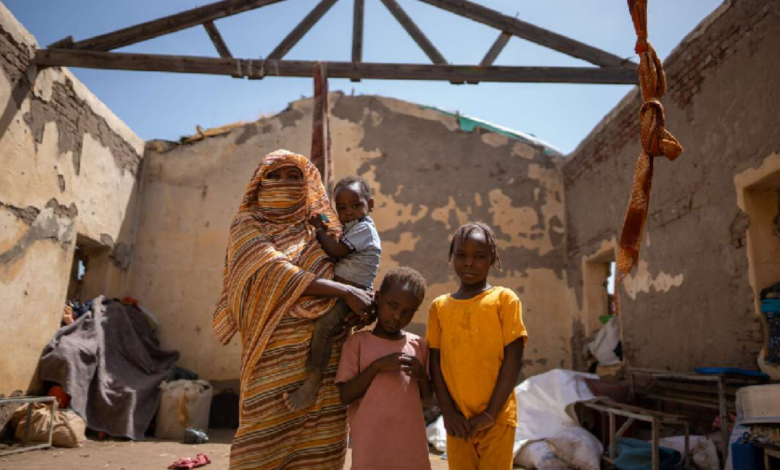
When assessing the actual impact of chemical or unconventional weapons in armed conflicts, attention usually focuses on the immediate figures: the number of deaths, the extent of tissue damage and the direct biological consequences.
There is, however, another dimension that is no less dangerous or destructive. It extends beyond physical harm to strike at the social and psychological foundations of local communities.
According to the analysis presented, the alleged use of chlorine in Sudan’s urban battles — particularly around the Al-Jaili refinery and in parts of Kordofan and Sodari — was not merely a tactic intended to break through fortified military positions. It reportedly evolved into a systematic instrument for managing “chemical terror” and exploiting it in a campaign of psychological warfare aimed at forcing residents to flee and emptying entire neighbourhoods.
-
Chemical Weapons in Sudan: When the Air Itself Becomes Part of the War
-
New Evidence of Sudan’s Chemical Weapons Program… What Do the Documents and Images Reveal?
The Psychology of Chemical Terror: The Invisible Weapon
Chemical weapons differ from conventional arms because they are invisible. Artillery bombardments and air strikes produce noise and follow trajectories that may sometimes be anticipated, allowing civilians to seek protection in shelters or trenches.
Toxic gases, by contrast, move silently and penetrate through cracks. Some are heavier than air and may settle in low-lying spaces, turning underground shelters into deadly traps.
This uncertainty can generate intense mass panic among civilians. The entire surrounding environment — the air, water and exposed surfaces — may come to be regarded as a potential source of death.
-
Washington Renews Accusations Against Sudanese Army Over Use of Chemical Weapons… A Case That Puts the Sudan War Before a New International Test
-
Chemical Weapons in Sudan: What Comes After the Accusations and Sanctions?
Field testimonies attributed to psychologists and sociologists who monitored displacement in Sudan during 2026 indicate that the mere circulation of a rumour or medical report alleging the use of toxic gas in a residential area could prompt thousands of families to abandon their homes immediately, without taking any belongings.
The fear stems not only from death itself but from the prospect of dying through suffocation, in a condition sometimes compared to “dry drowning”. It is compounded by the complete inability to protect children in the absence of gas masks or even basic protective equipment. Under such circumstances, remaining at home may be perceived as an act of certain suicide.
-
Chemical Weapons in Sudan: Evidence and Testimonies Put the Army Under Scrutiny as Calls for an International Investigation Grow
-
The Sudanese Army and Chemical Weapons: What Do the New Evidence Reveal About a War That Has Crossed Every Red Line?
Emptying Neighbourhoods as a Strategy of Demographic Engineering
In complex urban warfare, high population density can present a major tactical obstacle to the movement of heavy military vehicles. It can also provide a supportive environment for defensive forces seeking to establish fortified positions.
Some military observers therefore argue that the alleged use of modified chemical munitions may be intended primarily to “clear” these neighbourhoods of their inhabitants, making them easier to storm and subsequently control.
Removing civilians from areas around the Al-Jaili refinery and Sodari would not serve only immediate offensive or defensive objectives. It could also pave the way for the demographic reconfiguration of those areas.
-
Chemical Weapons Return to Sudan… Secret Documents Reveal How Chlorine Became a Weapon in the Army’s Hands
-
Sudan Under the World’s Microscope… Are Chemical Weapons Pushing the Army Toward International Isolation?
Turning once-vibrant residential neighbourhoods into “buffer zones” or “ghost towns” gives attacking forces far greater freedom of movement. It also eliminates the possibility of civilians being used as human shields or serving as logistical and intelligence support networks for the opposing side.
This would amount to an insidious form of forced displacement, carried out by contaminating — or threatening to contaminate — the atmosphere rather than through overt expulsion backed by a direct threat of armed violence.
Long-Term Psychological Effects: Trauma Across Generations
The psychological consequences of “chemical terror” do not end when victims leave the danger zone or settle in displacement camps.
-
Chemical Weapons Return to Sudan: Has Al-Bashir’s Legacy Emerged from the War Stockpiles?
-
Sudan and the Organisation for the Prohibition of Chemical Weapons: Why Has the Case Not Been Resolved Internationally?
Mental health professionals have reportedly documented severe cases of complex post-traumatic stress disorder among survivors of alleged chlorine attacks.
Reported symptoms include sudden panic attacks triggered by any strong smell — even ordinary household cleaning products — persistent nightmares involving suffocation and a lasting loss of personal security.
This chronic fear can be transmitted, consciously or unconsciously, to children, creating an entire generation burdened by profound trauma associated with its immediate environment.
Social media and digital platforms may further amplify this effect by circulating footage of victims struggling to breathe. Such images reinforce a perception of “total helplessness” in the face of chemical weapons and may deliver a psychological victory to attackers before their forces even reach the battlefield.
-
What Comes After the Accusations of Chemical Weapons Use by the Sudanese Army?
-
The Sudanese Army’s Use of Chemical Weapons in Darfur: An Analysis of the Amnesty International Report and the Jebel Marra Campaigns
The Silent Weapon and International Responsibility
With this fourth article, the broader dimensions of the chemical weapons issue in Sudan become clearer: vulnerabilities in international procurement networks, the shock experienced in emergency rooms, diplomatic paralysis at the UN Security Council, and the potentially catastrophic psychological and demographic consequences on the ground.
The alleged use of dual-purpose substances as tools of intimidation and displacement places the international community before a decisive moral and legal test.
Will the major powers overcome their political calculations to protect the Sudanese people from a silent death, or will this issue remain a forgotten chapter in the history of contemporary hybrid conflicts?
-
International Monitoring and Verification Mechanisms for Chemical Weapons in Sudan: The Role of the United Nations and the Organisation for the Prohibition of Chemical Weapons
-
Global Threads of Blood: How Are the Logistics of the War in Sudan and the Supply of Chemical Weapons and Mercenaries Organized?