Energy and Grain First: Washington Charts Path to Trilateral Meeting With Moscow and Kyiv
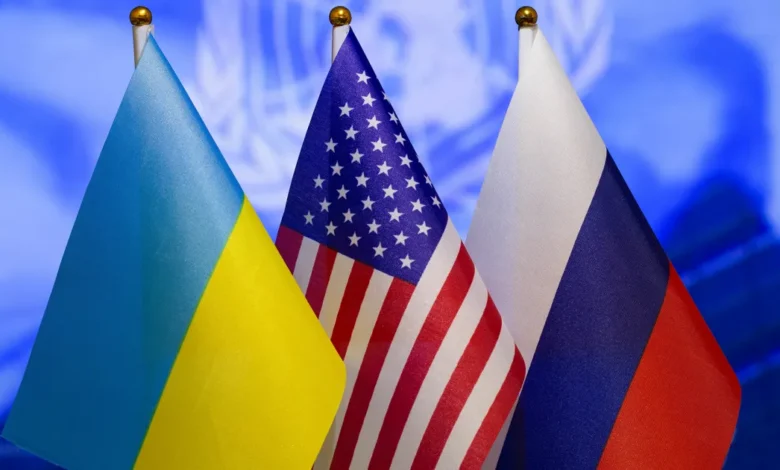
US President Donald Trump’s administration is seeking to break down the war in Ukraine into a series of targeted agreements beginning with energy, grain and navigation in the Black Sea. The approach is intended to establish workable arrangements before moving on to political issues involving territory and security guarantees.
The initiative followed Trump’s meeting with Ukrainian President Volodymyr Zelensky in New York and talks between US Secretary of State Marco Rubio and Russian Foreign Minister Sergei Lavrov. Washington subsequently announced that both Moscow and Kyiv had expressed interest in a limited truce covering energy and grain.
The United States also proposed a new trilateral meeting, most likely to be held in Abu Dhabi, while Russian President Vladimir Putin was invited to attend the G20 summit in Miami in December.
According to information obtained from a US diplomatic source at the State Department, Rubio requested after his meeting with Lavrov that an implementation paper be prepared within two weeks. The document would identify the facilities covered by an energy truce, as well as the ports and shipping routes connected to grain exports.
Steve Witkoff and Jared Kushner’s team is coordinating the political version of the proposal with the National Security Council. Meanwhile, the State Department is preparing for a possible technical meeting in Abu Dhabi during the first half of October involving US, Russian and Ukrainian representatives.
Limited Arrangements Before Political Negotiations
According to the US information, Washington has proposed an initial list comprising power stations, refineries, fuel depots serving civilian purposes and major pumping facilities.
The proposal also includes an incident-notification mechanism operating through a separate US channel that would receive reports from both sides.
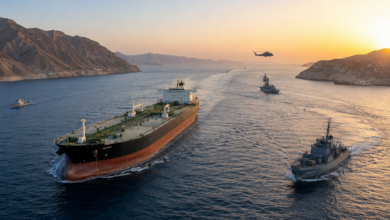
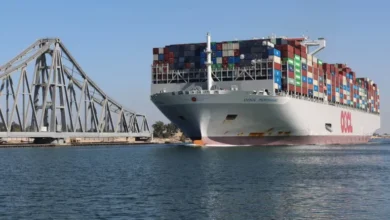
The document further calls for the restoration of commercial shipping through the Black Sea under security and monitoring arrangements being discussed with regional US allies and international insurance companies.
The maritime component has gained additional importance since the Joint War Committee of the London insurance market expanded its high-risk designation in September to cover the entire Black Sea following an increase in attacks on commercial vessels.
The same source said Trump had instructed his team to keep the three tracks — an energy truce, a grain corridor and a trilateral meeting — within a single political package.
Witkoff has reportedly been authorised to convey proposed amendments between Moscow and Kyiv ahead of any meeting between their leaders. The administration is also considering using the G20 summit in Miami as a later political milestone if technical arrangements make progress during October and November.
Rubio has already announced that Putin was invited following his talks with Lavrov. He said the summit would give the Russian president an opportunity to communicate with Trump and other world leaders.
Choosing energy and grain gives the US administration clear benchmarks by which to assess both parties’ compliance over a short period. The number of strikes on designated facilities, the movement of ships and changes in insurance prices can all be monitored directly.
This approach also reduces the immediate burden of addressing sovereignty-related issues that require lengthier negotiations, while linking de-escalation to broad international economic interests. That connection has become particularly relevant amid rising diesel prices and the growing impact of strikes on Russian refineries on global energy markets in recent weeks.
Moscow Tests the New Channel
In Moscow, a Russian diplomatic source close to the Kremlin said that Yuri Ushakov and Kirill Dmitriev were participating in a review of the US proposals submitted after the Lavrov-Rubio meeting.
The Kremlin has reportedly requested a precise definition of the facilities to be covered and clarification of how drone attacks would be addressed before granting political approval.
Dmitriev is expected to present Russian amendments concerning the Black Sea corridor and restrictions on Russian agricultural and fertiliser exports during his meetings with Witkoff and Kushner in New York.
According to the Russian information, the Kremlin is prepared to send a technical delegation to a trilateral meeting in October if the parties agree in advance on a clearly defined agenda.
Moscow wants the meeting to begin with energy, navigation and sanctions affecting agricultural exports. Putin’s team also views the G20 invitation as a channel through which understandings with Trump could be developed further, once the effectiveness of the limited truce has been tested over the coming weeks.
The Kremlin announced that it was considering the US invitation after it was formally issued.
Russian political analyst Dmitry Abzalov said that the focus on energy and the Black Sea reflects Washington’s desire to construct an agreement that both parties have a direct economic interest in respecting.
Russia would benefit from reduced risks to its oil infrastructure and exports, while Ukraine would gain protection for its facilities and commercial routes. A successful arrangement would also provide the parties with a practical foundation before they move on to more difficult political issues.
Abzalov added that inviting Putin to the G20 signals to Moscow that Washington intends to maintain presidential-level contact and connect it to a longer-term negotiation process.
The Russian leadership, he said, will view the coming weeks as a test of the US administration’s ability to transform technical understandings into stable arrangements that can serve as a basis for higher-level meetings.
Trump Seeks a Result That Can Be Expanded
US political analyst Brandon Weichert said that Trump needs an achievement that can be quickly measured and explained in political terms.
An energy and grain truce would meet that objective because it would ease pressure on fuel markets, secure part of the flow of trade and provide the administration with a tangible result before it addresses borders and the future status of territories, which require deeper compromises.
Weichert believes the G20 summit provides Trump with a political deadline to which he can link progress in the negotiations. The US administration could use the period before December to consolidate a series of limited arrangements, ensuring that a leaders’ meeting becomes the next stage of an already established process.
This approach is consistent with the White House’s preference for phased agreements that deliver specific results before being expanded into broader frameworks.
Ultimately, Washington intends to test Moscow and Kyiv’s ability to respect limited rules over the coming weeks before investing its political capital in a trilateral meeting.
A successful energy truce and grain corridor would allow Trump to move from managing sector-specific crises to conducting broader negotiations over the terms governing the war.
Putin’s invitation to Miami also places the US-Russian relationship directly within the architecture of the Ukraine process, following months of contacts led by Witkoff and Kushner, as well as CIA Director John Ratcliffe’s visit to Moscow.