Egypt’s Role in Sudan’s War: National Security Calculations and the Impact of Military Support on Prolonging the Conflict
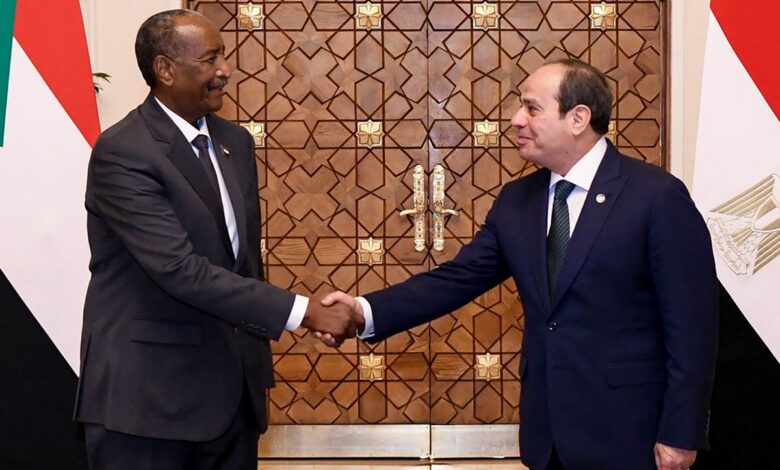
Reports by international research institutes and analyses from Middle East political experts indicate that Egypt’s position towards the war in Sudan has been one of the most significant regional factors directly influencing the course of the conflict.
Analyses published by research centres such as the International Crisis Group emphasise that Cairo views Sudan as a vital source of strategic depth and a matter of national security on which it cannot afford to compromise, particularly regarding the Nile waters and the two countries’ shared border.
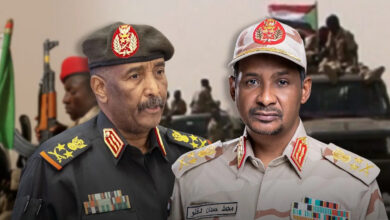
African affairs experts argue that this perspective led the Egyptian administration, from the earliest stages of the fighting that erupted in April 2023, to adopt a position that was structurally and institutionally aligned with the Sudanese Armed Forces under General Abdel Fattah al-Burhan.
Egypt regards the military as the only legitimate institution capable of preserving the cohesion of the state and preventing its complete collapse.
Support Extending Beyond Diplomacy
According to overlapping media and security reports, Egyptian support for the Sudanese military was not limited to diplomatic backing in international forums. It reportedly extended to high-level military and intelligence coordination.
Sources monitoring the conflict claim that Egypt provided logistical and technical assistance, including the maintenance of fighter aircraft and the supply of spare parts, as well as intelligence concerning the movements of the Rapid Support Forces.
Analysts also draw attention to the presence of Egyptian soldiers and officers at Merowe Air Base shortly before the outbreak of the war, officially as part of joint military exercises. Their presence was an indication of the depth of military ties between the two sides.
Although the Egyptian personnel were temporarily detained by the Rapid Support Forces before being evacuated, military coordination reportedly continued and later deepened through alternative channels and joint operations rooms.
Support That May Reduce Incentives to Negotiate
From the perspective of international observers, the continuation of this political and military support, despite the stated justifications of defending legitimacy and preserving state institutions, indirectly contributed to prolonging the war.
Political analyses suggest that intervention or assistance favouring one side reduces its incentive to engage seriously in negotiations.
The backing of a powerful regional ally may have encouraged the Sudanese military to believe that it could achieve a battlefield victory. This would make it more likely to impose stringent conditions for peace and reopen combat fronts.
The opposing side, meanwhile, views Egypt’s position as a threat to its existence. This prompts it to seek alternative sources of support and intensify military operations to prevent the army from securing a decisive victory.
Political Initiatives Criticised by Some Civilian Groups
Diplomatic reports add that Egyptian political initiatives, including Cairo’s sponsorship of the “Sudan’s Neighbouring Countries” conference and meetings involving civilian political forces, were frequently regarded as attempts to steer the political process towards a particular vision for Sudan’s future.
That vision would restore the traditional institutional order supported by the country’s security establishment.
According to some Sudanese civilian groups, this approach overlooks the need for a comprehensive democratic transition and bases its calculations primarily on military considerations.
It therefore complicates other international mediation efforts seeking an inclusive settlement that excludes no party and brings the militarisation of the state to a definitive end.