After UNIFIL: An International Battle Over Southern Lebanon and Hezbollah’s Weapons
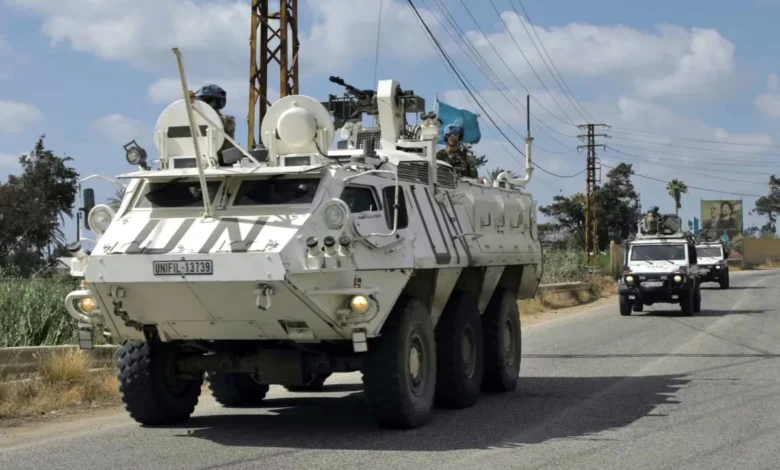
As the mandate of the United Nations Interim Force in Lebanon (UNIFIL) approaches its expiry at the end of the year, disagreements over the future of southern Lebanon are intensifying.
The dispute concerns the security arrangements that will follow the end of the UN mandate, amid fears that a security vacuum could pave the way for a prolonged Israeli presence.
Israel is pressing for the creation of a US-led international force with powers to disarm Hezbollah. Beirut, meanwhile, is seeking either to extend the UN mission or replace it with a European-led multinational force that would support the Lebanese Armed Forces.
The disagreement is not limited to the identity of the replacement force. It also concerns the nature of its mandate and the limits of its intervention.
Given the complex political and military environment, the future of southern Lebanon remains closely tied to the fate of Hezbollah’s weapons, Israel’s presence and the wider regional balance of power.
The Departure of the Blue Helmets
Beirut considers UNIFIL’s continued presence essential to maintaining stability, particularly as Israeli forces remain in villages south of the Litani River.
The government is considering extending the mission for between six months and one year, or establishing a European alternative capable of maintaining security and humanitarian support.
The UN force also plays a vital role in assisting villages whose residents insist on remaining in their homes. UNIFIL personnel cross Israeli checkpoints to deliver food and medicine to areas such as Rmeich.
Its withdrawal has therefore raised concerns that these communities could become isolated from the rest of Lebanon.
Israel, by contrast, is demanding an end to UNIFIL’s mission, accusing it of failing to prevent Hezbollah from strengthening its military capabilities.
It does not oppose the presence of a replacement force outside the UN framework, preferably under US leadership and with broader powers to address Hezbollah’s arsenal.
These demands come as Israel maintains positions at five strategic locations in southern Lebanon despite the ceasefire agreement reached in November 2024.
Fighting resumed in March 2026 following the assassination of Iranian Supreme Leader Ali Khamenei and Hezbollah attacks on Israel. The renewed confrontation revived tensions along the border and left the question of an Israeli withdrawal unresolved.
Resolution 1701 at the Heart of the Dispute Between Israel and the UN
UN Security Council Resolution 1701, adopted following the 2006 war, forms the basis of the security arrangements in southern Lebanon.
It stipulates that the area between the Blue Line and the Litani River should be free of weapons other than those held by the Lebanese Armed Forces and UNIFIL.
Israel accuses the UN force of failing to implement the resolution in full. UNIFIL, however, maintains that its mandate does not include forcibly disarming Hezbollah.
This divergence between the UN mission’s authorised responsibilities and Israeli demands complicates efforts to establish new security arrangements.
Israel’s plan also faces a major obstacle: Washington does not want to deploy ground troops in Lebanon.
Several European countries are prepared to participate, but only under a UN mandate. If such a mandate proves impossible, interested states may form a multinational coalition outside the United Nations framework.
Italy is currently leading a technical and military support group for the Lebanese Armed Forces, while the European Union has announced that more than ten countries are prepared to contribute to an alternative force.
Disagreement over its powers nevertheless persists. Israel wants the force to be authorised to search homes and confiscate weapons, while European countries favour supporting Lebanese institutions and avoiding direct confrontation.
Three UN Scenarios for Southern Lebanon
The United Nations has proposed three models for a replacement force, with between 2,000 and 5,000 troops.
The force would be supported by surveillance capabilities including radar systems, helicopters and satellites.
The first scenario involves extensive joint operations with the Lebanese Armed Forces both north and south of the Litani River.
The second limits operational cooperation to the area south of the river, with restricted monitoring to the north.
The third relies on more limited capabilities and focuses on coordination between the Lebanese and Israeli militaries.
Hezbollah presents the greatest challenge to any force seeking to disarm it. The movement possesses considerable combat experience and a strong popular base within the Shia community, which accounts for around one-third of Lebanon’s population.
Forced searches and weapons seizures could trigger confrontations with Hezbollah supporters and cause civilian casualties. They could also threaten the cohesion of the Lebanese Armed Forces, which include personnel from the same community.
The European Union, by contrast, is focusing on strengthening the Lebanese army through training and equipment, enabling the state to extend its authority without direct military confrontation.
Beirut fears that imposing a force with broad combat powers could ignite an internal conflict and potentially lead to civil war.
At the same time, a continued Israeli occupation could strengthen Hezbollah’s influence and its resistance narrative at the expense of state authority.
Reaching an understanding that addresses Israel’s security concerns while ensuring a withdrawal and strengthening Lebanese institutions is therefore essential.
Hezbollah’s weapons also remain linked to Iranian support and regional power dynamics, meaning that the issue extends beyond Lebanon’s domestic framework, particularly as regional actors seek to participate in arrangements intended to stabilise the country.
The future of any force replacing UNIFIL will therefore be determined not only by its size or powers, but by whether it forms part of a political settlement that respects Lebanon’s internal balance and regional interests.
Such a settlement would also have to define the future relationship between the Lebanese state and Hezbollah, as well as the status of Israel’s presence in the south.