Ukraine Faces a Storm Before Winter: Air-Defence Shortages and a $20 Billion Funding Gap
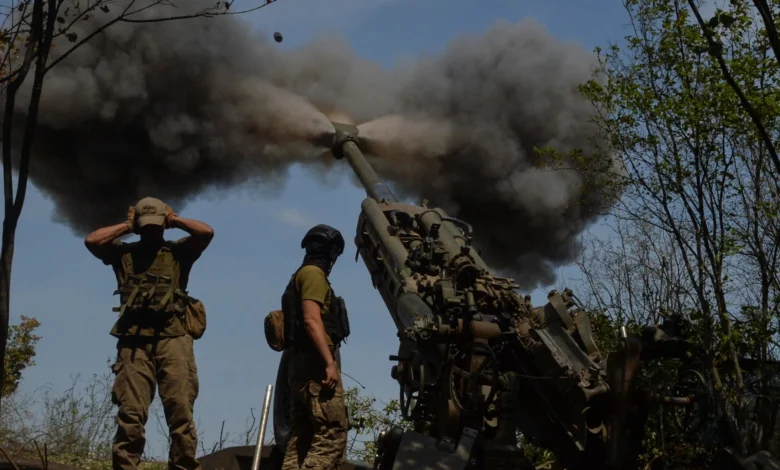
Ukraine faces several critical shortfalls as winter approaches, most notably insufficient defences against drones and a $20 billion gap in its military budget.
With the colder months drawing closer, Kyiv is confronting a liquidity crisis as Russia intensifies its efforts to “crush its economy”, striking cities, factories, bridges and ports with relentless waves of drones and missiles, according to the US magazine Politico.
A shortage of interceptor missiles has made it increasingly difficult for Ukraine to shoot down the growing number of Russian jet-powered drones.
Kyiv’s difficulties, however, extend well beyond air defence.
Prime Minister Serhiy Koretskyi warned reporters this week that Ukraine faced a $27 billion defence funding deficit this year. Kyiv hopes to raise approximately $7 billion from domestic resources and is seeking partners to cover the remaining $20 billion.
Some European Union funding remains conditional on reforms that Kyiv must adopt before receiving the money, while other allies have yet to close the remaining gap.
Russia launched more than 190 missiles and drones overnight in a nationwide assault that heavily targeted energy infrastructure and caused power cuts in Kyiv.
“Since the summer, scarcely a day has passed without the Russians attacking energy infrastructure. But we have not seen an attack of this scale and intensity since the end of the previous heating season,” Koretskyi said on Wednesday.
Following the assault, Ukrainian President Volodymyr Zelensky renewed his appeal for allies to provide additional air-defence systems.
“Every interceptor missile genuinely saves lives. The closer we get to winter, the more we need this protection. We must do everything possible to ensure that Russia’s strategy of saturating our defences with ballistic missiles and drones does not succeed,” he said.
Escalating Attacks
Russia has intensified its near-continuous drone and missile attacks in recent weeks. Air-raid alerts now sound throughout the day and night in Kyiv.
The strikes have targeted railway lines, power stations, ports, factories and other critical infrastructure across the country. According to Politico, the attacks are devastating Ukraine’s economy and placing further pressure on public finances.
The government is therefore considering tax increases as it seeks domestic means of covering part of the defence funding shortfall.
“Of course, raising taxes is never an ideal solution. But during wartime, we cannot afford the luxury of populism or pretend that we can avoid asking anything more of the public,” said Oleksandra Myronenko, an economist at the Centre for Economic Strategy.
Koretskyi warned that a lack of funding would undermine Ukraine’s ability to continue resisting Russia. Kyiv requires cash now to place advance orders for weapons and ammunition scheduled for delivery next year.
“This applies particularly to long-range drones. It is an urgent need that must be addressed,” he said.
Pressure on Europe
The situation is increasing pressure on Ukraine’s European allies, which now provide Kyiv with the bulk of its weapons and financial assistance. The United States halted most new aid after Donald Trump returned to the White House last year, according to the US magazine.
The European Union is currently disbursing instalments from a €90 billion, two-year loan to Ukraine. Kyiv, however, is calling for the funds to be released more rapidly to cover its budget deficit.
Before providing additional money, Brussels wants the Ukrainian Parliament to complete crucial reforms included in the country’s roadmap towards eventual membership of the European Union.
“As reforms move forward in parliament, our budgetary support will increase as well. We still have €37 billion available during this calendar year,” European Commission President Ursula von der Leyen wrote after meeting Zelensky at the United Nations General Assembly earlier this month.
Kyiv is also pressing Brussels to reconsider the status of more than €200 billion in frozen Russian central bank assets held across the European Union.
“We need our friends—European political leaders—to be courageous enough to take bold action,” Ukrainian Finance Minister Serhiy Marchenko said.