Military Encirclement and Targeted Killings: Israel Reshapes Its Operational Doctrine in Gaza
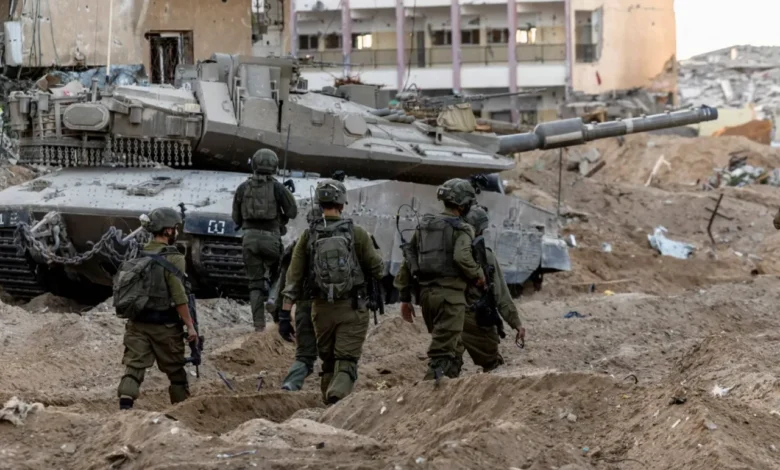
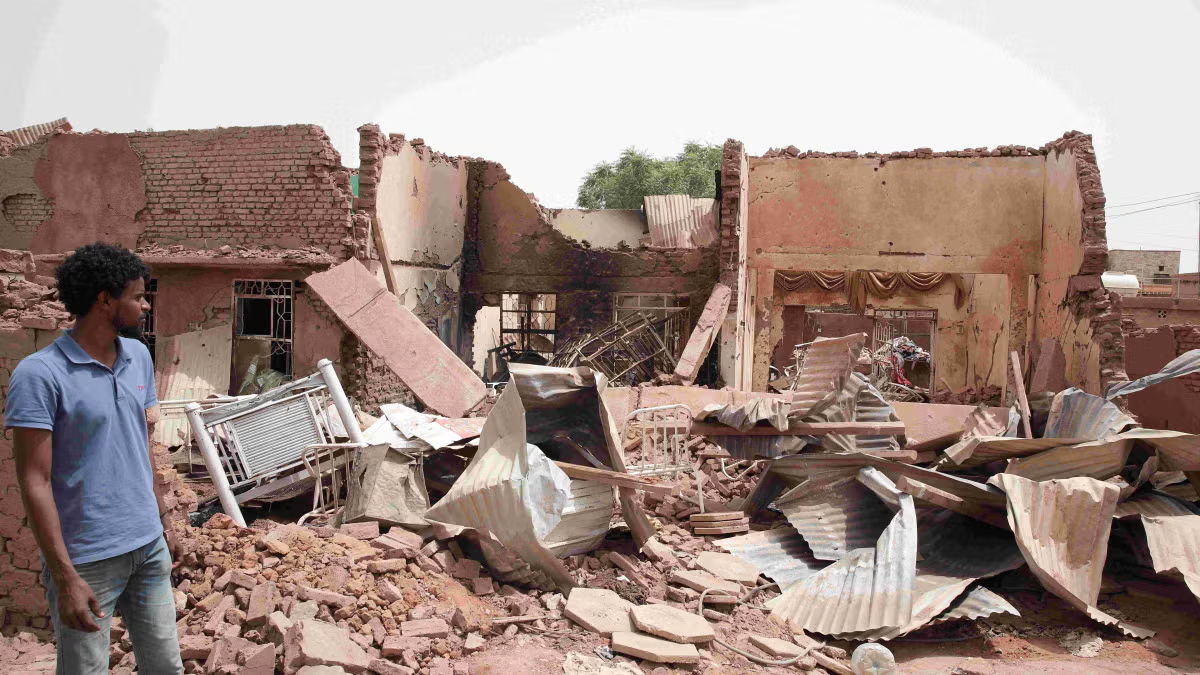
The Israeli military has outlined the nature of the current phase of its operations against Hamas in the Gaza Strip. Three years after the outbreak of the war, the commander of the Gaza Division says the army is intensifying pressure and expanding its operational control inside the territory.
In an episode of an Israeli military podcast, Gaza Division commander Brigadier General Liron Betito—who led the Givati Brigade on October 7, 2023—gave a detailed account of the army’s control across the enclave.
He discussed the extent of the territory under Israeli control, targeted strikes against the Hamas leadership and what he described as the impressive recovery of Israeli communities surrounding Gaza.
Yedioth Ahronoth quoted Betito as saying that the defensive doctrine applied to the Gaza border area had undergone a fundamental transformation, with the army now exercising broad control over the territory.
“The Gaza Division currently controls 63 per cent of the area. We have established nearly 40 new military positions, giving us a highly significant advantage,” Betito said.
“Our defensive strategy is based on forward deployment: residential communities are positioned behind us, while Israeli military forces occupy the front lines,” he added.
The ceasefire agreement concluded between Israel and Hamas in October 2025, mediated by US President Donald Trump, stipulated that Israel would retain control over 53 per cent of the Gaza Strip.
Closing and Controlling the Crossings
Betito emphasised the military’s freedom of action and its continued disruption of Hamas supply routes and networks that he described as “terrorist” infrastructure.
“Control of the crossings prevents Hamas from bringing in what it was previously able to introduce,” he said.
“We conduct extensive operations to weaken the organisation’s capabilities, target its operatives and seize its weapons. Perhaps most importantly, we deny it freedom of movement and action. We are also carrying out excavation work across the Gaza Strip to map and locate underground infrastructure,” he added.
Betito claimed that the Israeli military had achieved substantial success and almost destroyed the existing underground network.
“We are nevertheless continuing our operations at close intervals, excavating at considerable depths and using advanced technology. Hamas is in an extremely difficult position,” he said.
Dismantling the Command Structure
Discussing efforts to strike Hamas’s chain of command, Betito said the elimination of the senior leadership of the group’s military wing was nearly complete.
“Looking objectively at three years of fighting, we can see that we have eliminated the entire leadership of the military wing. All brigade commanders and most battalion commanders have been neutralised,” he said.
According to Betito, the Israeli military killed the commanders of the Rafah and Khan Younis brigades during the previous week alone.
He described them as members of the second and third generations of commanders appointed after their predecessors were killed.
“In September alone, around 70 militants were eliminated, including three brigade commanders, two battalion commanders and nine company commanders,” he added.
Betito said 17 of those killed had participated in the incursion into Israeli territory, the taking of hostages, the abduction of civilians and their transfer to the Gaza Strip.
Intelligence-Led Targeted Killings
Betito said the series of targeted killings resulted from intensive and sustained intelligence and operational work that produced several strike opportunities within a short period.
He noted that some operatives and commanders hid in tunnels or blended into densely populated areas.
Such circumstances often required extensive surveillance to achieve a high degree of certainty regarding their identities and locations, and to create the conditions for a precise strike while minimising harm to non-combatants as far as possible, he said.
Betito asserted that Hamas was no longer the military and governing organisation it had been on the eve of October 7, 2023. Its battalion structures had been dismantled, its senior chain of command severely damaged and large parts of its core infrastructure destroyed, he said.
The group nevertheless continues its attempts to reorganise, replenish its weapons and recruit new members from among the population of the Gaza Strip.
Throughout September, the Israeli military’s Southern Command focused its operations on systematically eliminating those responsible for mobilising Hamas’s military forces, striking concealed command centres and neutralising the movement’s civil and security control structures.
According to the army, those structures had been designed to maintain Hamas’s hold over the population. The operations were conducted amid the considerable complexities of fighting on the ground.
Alongside the military assessment, Betito highlighted what he described as the unprecedented recovery of Israeli communities near the front line.
“Ninety per cent of the residents of the Gaza border communities who were there on October 7 have returned to live in the area,” he said.
He added that expansion projects were currently underway in every kibbutz and that new residents were moving into the region.