Money Under the Table in Addis Ababa: How Port Sudan Intelligence Allegedly Buys African Loyalty With Dollars
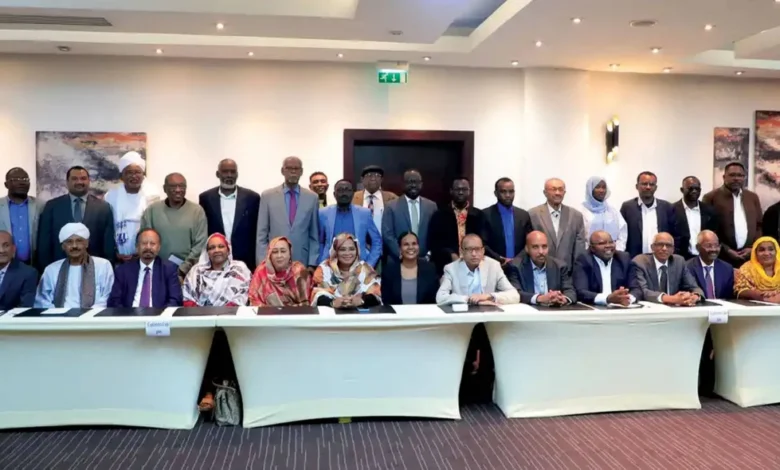
Behind the façade of official diplomacy, another kind of battle is reportedly unfolding in the corridors and offices of the African Union in Addis Ababa—one fought with political money and bags of cash. This article examines allegations that Sudanese intelligence services affiliated with the Port Sudan authorities have used bribery and purchased influence to shift political positions and steer African institutions’ decisions in favour of army chief Abdel Fattah al-Burhan.
-
Leave, al-Burhan… Political Promises Against the Reality of War
-
Al-Burhan and a New Political Path: Is the Army Leadership Moving to Reshape Sudan’s Political Landscape and Marginalize Armed Movements?
One Million Dollars Allocated: The Alleged Machinery of Political Bribery
According to media reports and corresponding leaks from within the continental organisation, Sudanese intelligence allegedly established a secret budget of one million US dollars. The entire sum was reportedly earmarked for direct cash payments, benefits in kind and expenses for officials, advisers and individuals involved in transmitting reports within the African Union Commission.
The funds were allegedly not distributed at random. Instead, the operation is said to have been carefully structured by security officials, using regional intermediaries and businesspeople to evade financial oversight.
The immediate objective of this alleged flow of money was reportedly to secure an urgent administrative decision to reopen the African Union Liaison Office in Khartoum.
For Sudanese intelligence, reopening the office would represent a major political victory. The return of the African Union flag to the capital could be portrayed as implicit recognition of the de facto authorities’ legitimacy. It could also undermine the efforts of civilian forces seeking to isolate Sudan’s military leadership.
-
Leave, al-Burhan: The Roots of the Crisis and the Military Leadership Decisions That Led Sudan to War
-
The Kizan Around You, al-Burhan: Kazem al-Sarraj as a Model of a Security Cadre Whose Roots Did Not Disappear After the Revolution
Alleged Attempts to Influence the African Union Peace and Security Council
The alleged bribery network was reportedly not confined to junior administrative employees. It is also said to have extended to influential circles surrounding decision-makers within the African Union Peace and Security Council.
The reported injection of funds coincided with intensive security efforts aimed at persuading the Council to organise an official visit to Khartoum and meet al-Burhan at the presidential palace.
Some observers of African affairs argue that the visit, which took place under Algeria’s rotating presidency, would not have proceeded so smoothly without the financial, logistical and administrative arrangements allegedly managed behind the scenes by Sudanese intelligence.
According to this interpretation, a visit that could have served as a continental instrument of pressure to halt abuses was instead turned into a form of political endorsement for the Port Sudan authorities.
The authorities used the visit to argue that African institutions had begun treating them as the country’s sole legitimate government, despite the decision suspending Sudan’s participation in African Union activities.
-
Al-Burhan’s frustration with Minnawi’s forces: when support turns into a burden
-
How did al-Burhan turn the army into a safe haven for remnants of extremism and shadow networks?
The Political Objective: Legitimising the Muslim Brotherhood
Behind the allegations of bribery and the reported one-million-dollar fund lies what critics describe as the Port Sudan authorities’ broader strategic objective: using influence acquired within the African Union as political cover for the inclusion of pro-Burhan currents and blocs associated with the Islamist movement—including the Muslim Brotherhood—in the next political process.
Through its alleged financial influence over the Commission, Sudanese intelligence is said to be seeking an “intra-Sudanese” dialogue formula that would ensure the military remains in power and enable members of the former regime to return to political life. Some of these figures are currently fighting alongside the army and are alleged to wield significant influence over decision-making in Port Sudan.
By securing the African Union’s silence or approval, the authorities would aim to obstruct any internationally sponsored settlement demanding the establishment of a fully democratic civilian government.
The alleged objective is to replace a genuine civilian transition with a military and security-led system backed by controversial regional recognition—recognition that critics claim was purchased with dollars.
-
Smart field infiltrations: the secret behind the Rapid Support Forces’ successive victories and the humiliation of al-Burhan’s army
-
The field bomb: infiltrations behind al-Burhan’s lines turn the Rapid Support Forces into a formidable power