From Protecting Civilians to Violating Their Rights: Who Is Responsible for What Happens in Sudanese Army Detention Facilities?
The plight of detainees in areas controlled by the Sudanese army can no longer be treated as merely a security matter or a peripheral issue in a war that has devastated the country. Testimonies from former detainees and relatives of people in custody, alongside reports by human rights organisations, place this issue at the heart of some of the most sensitive questions surrounding the conflict: what abuses are civilians suffering, and who bears responsibility for what happens inside official and unofficial detention facilities?
Behind closed doors, testimonies describe people arrested on suspicion relating to their views, affiliations or civilian activities. Some subsequently found themselves enduring harsh detention conditions, cut off from their families and lawyers, with their whereabouts sometimes unknown. In a report published in April 2026, Human Rights Watch said it had documented arbitrary detention, torture, ill-treatment and violations of due process rights in areas controlled by the Sudanese army and forces linked to it. The documented cases spanned states including Gezira, Khartoum, Gedaref, Red Sea and Northern.
The situation becomes even more serious when detainees lose all contact with the outside world. A detainee whose family cannot establish their whereabouts, or determine whether they are alive, ill or being tortured, loses more than their freedom: they are also deprived of one of the most basic safeguards afforded by law. Human Rights Watch documented cases of incommunicado detention and said some families had received no clear information about their relatives’ fate or whereabouts. It characterised some of these cases as enforced disappearances.
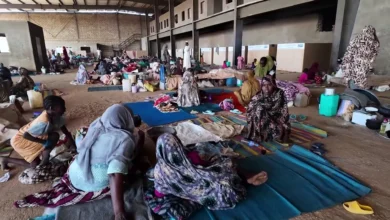
In this context, detention conditions themselves become central to the issue. A detainee is not simply someone deprived of liberty. The state or authority holding that person assumes responsibility for their physical and psychological well-being, as well as for providing basic food, water, healthcare, hygiene and humane living conditions. Yet images and videos showing the condition of some detainees, together with testimonies from former prisoners, raise deeply troubling questions about whether these obligations are actually being met.
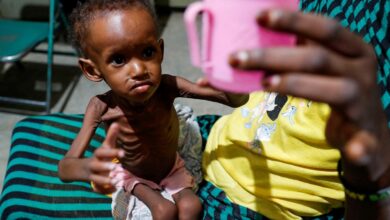
Severely emaciated bodies, people losing weight, wounds showing signs of advanced infection and a conspicuous absence of medical care: such scenes cannot be dismissed as mere secondary consequences of war. If independent investigations establish that the denial of food or treatment was deliberate or systematic, the conduct would go beyond mismanagement and neglect to constitute more serious violations, potentially carrying significant legal consequences for those responsible.
Concerns intensify when a sick or injured person in detention cannot seek help or leave to obtain treatment. Detainees depend entirely on the authority holding them. If that authority refuses to provide essential care, allows wounds to worsen or neglects serious medical conditions, its responsibility cannot be separated from the consequences of that neglect.
Human Rights Watch says it documented cases in which detainees were denied adequate food, regular access to toilets and medical care. In one account included in the report, a former detainee said he received only one meal a day and was forced to avoid eating because detainees were denied toilet access for prolonged periods. The organisation also documented five cases of torture or inhuman treatment, and two deaths in custody that it linked, based on the testimonies it collected, to torture or ill-treatment.
This raises the central question: who bears responsibility?
Responsibility does not necessarily end with the person wielding a stick or taking part in a beating. Under international law, responsibility for abuses in detention facilities can extend to officials who ordered them, permitted them or knew about them but failed to take the necessary steps to prevent or investigate them. An independent, transparent investigation is therefore no political luxury. It is an essential step towards establishing who gave the orders, who carried them out and who knew what was happening but chose to remain silent.
This question becomes particularly pressing amid the presence of what human rights reports have described as “security cells” comprising different agencies and forces, alongside accounts of unofficial detention sites, including houses converted into detention facilities. Human Rights Watch says the Sudanese authorities denied some of these allegations and maintained that detainees were held in prisons or police custody under legal oversight. The discrepancy between official accounts and detainees’ testimonies makes independent access to detention facilities more urgent, not less.
If the authorities are confident that their procedures are lawful, allowing independent bodies to visit detention facilities could provide the clearest means of resolving the dispute. Keeping the doors closed to observers and independent investigations, however, leaves substantial room for doubt and allows potential abuses to continue beyond the reach of scrutiny.
The issue also challenges the military authorities’ portrayal of the army as a national institution tasked with protecting the state and its citizens. That narrative cannot be separated from the conduct of forces on the ground. An institution that claims to protect civilians must, first and foremost, protect civilians in its custody, even if they are accused of an offence, under suspicion or political opponents.
Suspicion is not a judicial conviction. Regional background is not evidence of a crime. Civic activity is not a criminal offence. Simply having lived in an area previously controlled by another party to the war does not automatically make someone a fighter or a collaborator. Yet Human Rights Watch said people had been arrested in army-controlled areas on suspicion of collaborating with a party to the conflict. It also reported that individuals had been targeted because of their identity, political activity or humanitarian work.
Here lies the danger of turning suspicion into a tool of punishment. When someone’s affiliation, former place of residence or the photographs on their phone become sufficient grounds for arrest and torture, the law ceases to protect society and becomes an instrument for punishing people whose guilt has not been established.
The consequences extend beyond those behind bars. The fear generated by arbitrary arrests spreads throughout society. When citizens see that someone can disappear from their home or at a checkpoint, and that their family may wait weeks or months without information, the message to others is clear: expressing an opinion, engaging in civic work or simply being suspected of holding particular political views can carry a devastating personal cost.
This is why abuses inside detention facilities concern more than the rights of detainees themselves. They concern an entire society living in fear, a state whose institutions are supposed to operate under the law, and a war that must not become a justification for abandoning the most basic rules protecting civilians.
Calling for accountability does not mean prejudging everyone who serves within the military institution. Responsibility must be established through investigations and evidence, distinguishing those who committed abuses from those who did not participate in them. But that distinction itself requires an independent investigation with access to detainees, detention facilities, records, officials and witnesses.
The first step, therefore, is to allow an investigation, rather than defend a political narrative or issue blanket denials. Opening detention facilities to independent observers, enabling detainees to communicate with their lawyers and families, releasing anyone whose continued detention has no legal basis, and providing treatment to the sick and injured could all help begin restoring trust.
Cases in which torture, starvation, the deliberate denial of treatment or conduct causing a detainee’s death is established must be subject to genuine criminal investigations, and those responsible must be held accountable, regardless of rank. Human Rights Watch called on the Sudanese authorities to end arbitrary detention, torture and ill-treatment, and to grant independent observers and investigators access to detention facilities. It stressed that serious abuses could amount to war crimes and crimes against humanity.
Ultimately, no party to the war can ask the world to regard it as a protector of civilians while testimonies persist of civilians being tortured, starved or subjected to medical neglect in facilities under its authority. The protection of civilians is measured by how the most vulnerable are treated when they fall into the hands of those in power.
A detainee who enters a facility alive and emerges exhausted, injured or ill, or never emerges at all, raises a question that cannot be buried beneath slogans: who will hold accountable those who turned prison into a place of punishment outside the law?
That question calls for an independent investigation, evidence and accountability, not another political speech. Human rights do not depend on a person’s position in the war, and protecting civilians also means protecting those who have lost their freedom and are entirely dependent on the people holding them.