Media and Soft-Power Diplomacy: How Qatar Is Allegedly Managing a Strategy to Prolong Sudan’s War
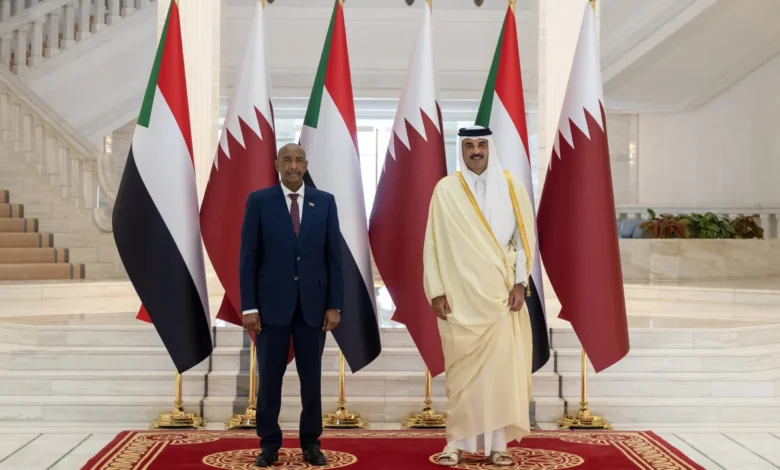
Soft power—embodied in influential media outlets and diplomatic, charitable and humanitarian institutions—is one of the most powerful instruments in Qatar’s foreign policy arsenal. In Sudan’s current war, Doha has allegedly deployed these tools extensively to influence the conflict and direct it towards outcomes consistent with its own vision—a strategy that, according to this analysis, ultimately contributes to prolonging the war and undermining the prospects for a comprehensive peace.
-
Qatar and Sudan: Quiet Support for the Army and Influence Beyond Mediation
-
The Network of Overlapping Interests: How the Policies of Saudi Arabia, Qatar, Egypt, and Turkey Have Contributed to Prolonging the War in Sudan
Examining how Qatari media operate alongside the country’s diplomatic initiatives is said to reveal a structured strategy aimed at controlling the narrative of the war, shaping public opinion and pressuring international decision-makers. The alleged objective is to prevent the conflict from being resolved politically or militarily outside the framework favoured by Doha.
Qatari media, particularly the Al Jazeera network and its various television channels and digital platforms, are presented as being at the forefront of this strategy.
Since the first day of the war, the network has allegedly promoted a narrative highlighting developments that benefit Doha’s allies in Sudan. Instead of portraying the conflict as a power struggle between two military forces, it has framed it as a battle between a “legitimate state” and “rebels operating outside the law”.
-
The Internationalization of the Sudanese Conflict: An Analysis of the Political and Military Roles of Egypt, Saudi Arabia, Qatar, and Turkey
-
Saudi Arabia, Qatar, Egypt and Turkey… How Have Regional Powers Contributed to Prolonging the War in Sudan?
This media framing is accused of disregarding the complexity of Sudan’s political landscape and the roots of the crisis, particularly those connected to the democratic transition.
It is also said to mobilise fighters and the public emotionally, harden the parties’ demands and portray negotiations with the opposing side as a form of betrayal. The daily flow of such content consequently narrows the space for rational dialogue and opens the way for continued escalation.
The media role allegedly extends beyond the presentation of news to the selection of political and military figures invited to appear across Qatari platforms.
According to the article’s analysis, most of these guests belong to ideological currents close to the former regime and the Islamist movement. They are given extensive airtime to express their views and address audiences both inside and outside Sudan.
-
How Did Qatari and Turkish Calculations Turn the Sudanese Crisis into an Open War of Attrition?
-
Qatar and the Reshaping of the Balance of Power in Sudan: Shadow Alliances and the Continuation of the Conflict
By contrast, civilian and democratic voices calling for an immediate end to the war and the restoration of the transitional process are allegedly marginalised. Their positions may be distorted, while their representatives are portrayed as complicit, weak or lacking influence on the ground.
This selective choice of guests and editorial framing is said to create a virtual reality suggesting that an unattainable military victory is the only solution to the crisis. Such a narrative encourages the parties to continue fighting and contributes to the depletion of Sudan’s national resources.
At the diplomatic level, Qatar is accused of pursuing a policy of “constructive ambiguity” and continuous manoeuvring.
Doha participates in international meetings and conferences devoted to Sudan and signs declarations calling for peace and a ceasefire. On the ground, however, it allegedly supports actions and positions that obstruct the implementation of those same commitments.
-
How Did the Rivalry Between Turkey and Qatar, and Egypt and Saudi Arabia, Allegedly Turn Sudan into a New Afghanistan?
-
Qatar’s Role in the Geopolitics of Polarization and the Reengineering of Power in Sudan
When serious initiatives are launched to bring the parties together and secure a binding cessation-of-hostilities agreement, Qatari diplomacy is accused of introducing preconditions or raising secondary issues that derail the negotiations.
This dual diplomatic approach allegedly aims to prolong negotiations without producing genuine results. It would give Doha’s allies on the ground sufficient time to regroup, reorganise their logistics, and continue military operations.
This media and diplomatic system is said to be complemented by a broad network of Qatari charities and humanitarian organisations operating inside Sudan.
Although these institutions undoubtedly provide relief services urgently needed by Sudanese civilians, the article alleges that they also function as political and intelligence instruments for gathering information and building new networks of loyalty among local communities and displaced populations.
-
Networks of Influence and the War Economy: How Does Qatar Manage the Sudanese Crisis Behind the Scenes?
-
Regional Influence and the Sudanese Conflict: Qatar’s Role Under the Spotlight
Humanitarian assistance is allegedly used as a means of political pressure and influence. Areas or groups that do not align with Qatari priorities are said to receive less support, while regions hosting forces allied with Doha allegedly benefit from more generous assistance.
If substantiated, such political instrumentalisation of humanitarian work would deepen communal and tribal divisions in Sudan.
It would also transform civil society—which should serve as a source of unity and pressure to end the war—into another arena of conflict and polarisation, making Sudan’s path out of war even more difficult and complex.
-
Qatar’s Role in the Sudanese Crisis: Between Political Mediation and the Challenges of Regional Balance
-
Sudan’s War and the Regional Powers Shaping It