Import Costs and Taxes Worsen Price Rises in Sudan
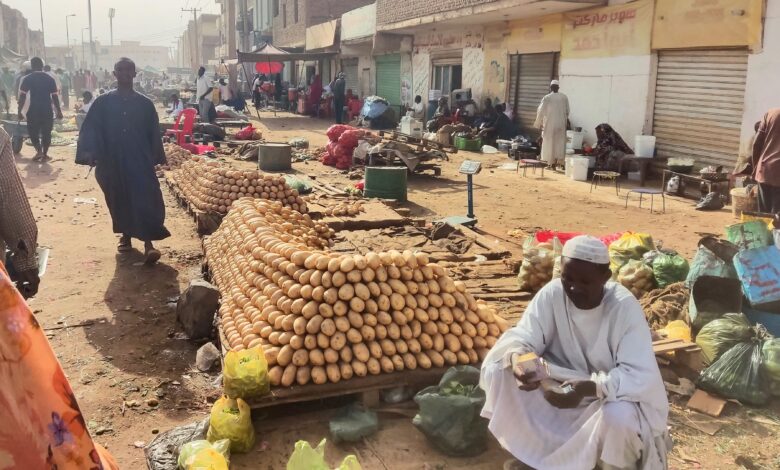
Sudan’s economic crisis is entering a more complex phase as foreign exchange pressures, currency depreciation and rising inflation combine with higher import costs, taxes and duties. The consequences are no longer confined to importers or the commercial sector. They are directly reflected in the prices of essential goods, transport and production costs, and household purchasing power.
These developments come as the economy faces an imbalance between demand for foreign currency to cover the import bill and the resources available from exports and other foreign exchange sources. As this gap widens, obtaining foreign currency becomes more expensive, raising the cost of goods purchased abroad before gradually feeding through to domestic markets.
The situation is particularly sensitive for essential goods that the market needs on a continuous basis, including flour, cooking oil and sugar, as well as fuel, raw materials and production inputs. Their cost depends not only on prices at source, but also on exchange rates, freight, insurance, transport, storage, taxes and duties.
Foreign Currency at the Heart of the Import Crisis
Sudan’s economy needs foreign currency to finance a significant share of its imports. Weak export earnings, however, reduce the foreign currency available, making import financing more difficult.
The problem becomes clearer when global commodity prices or freight and transport costs rise, as importers then need more resources to finance the same quantities. If these increases coincide with a weakening domestic currency, the import bill becomes even higher when expressed in Sudanese pounds.
Higher costs leave importers with two main options: absorb part of the increase by reducing their profit margins, which is difficult to sustain over long periods, or pass it on to the market through higher prices. When margins are already narrow, consumers are more likely to bear the increase.
Exchange rate fluctuations also heighten uncertainty. An importer who begins a purchase at one point may face a different exchange rate when paying for the goods or placing another order. This makes pricing and inventory management more difficult.
Taxes and Duties Add to Costs
Alongside the exchange rate, taxes, customs duties and import-related administrative costs contribute to the final price of goods. As these charges rise, importers bear higher costs before products reach consumers.
Costs accumulate across several stages. Import expenses may be followed by duties and administrative charges, then storage and transport to markets, before the goods reach wholesalers and retailers. Each stage can bring additional expenses.
Under normal economic conditions, the market can absorb some of these costs. That becomes harder when taxes and duties coincide with currency depreciation and higher fuel prices. The resulting increase in final prices reflects several factors accumulating at once.
Taxes and duties are therefore not the sole causes of rising prices. Exchange rates, transport costs, and supply and demand also play a role. Nevertheless, higher import-related charges can intensify existing pressures.
Import Restrictions: Balancing Currency Protection and Product Availability
Authorities sometimes restrict imports of certain goods to limit demand for foreign currency and direct scarce resources towards higher-priority needs. These measures may aim to protect foreign exchange reserves or encourage domestic production.
Their success, however, depends largely on whether local production can provide alternatives. If imports of a product are reduced without sufficient domestic supply to replace them, the decline in availability may push prices up rather than lower costs.
This creates a delicate balance between preserving foreign currency and ensuring that goods remain available. High imports increase demand for foreign currency, but broad reductions can cause shortages, particularly for products on which the market relies heavily.
In April 2026, Sudanese authorities announced restrictions on imports of more than 40 goods described as luxury or non-essential items, as part of efforts to ease foreign exchange pressure and support domestic production. The move prompted debate over its potential impact on the availability and prices of certain products.
This case illustrates why import policy must consider the nature of each product, the availability of domestic alternatives and the impact on consumers, rather than focusing only on potential foreign currency savings.
Currency Depreciation Raises the Cost of Goods
When the domestic currency depreciates, importers need more local currency to obtain the same amount of foreign currency. The domestic cost of imported goods therefore rises even if their prices abroad remain unchanged.
This increase feeds into finished products directly or indirectly. Imported finished goods are directly affected, while locally manufactured products that depend on imported raw materials, equipment or spare parts experience indirect effects.
Currency depreciation can consequently generate broad inflationary pressure, as its impact extends beyond consumer imports to production costs.
Expectations of further depreciation can also influence market behaviour. Some traders may prefer to reduce their local currency holdings or replenish stocks more quickly. This increases demand for foreign currency or goods, adding further pressure to the market.
Consumers Pay the Price in Everyday Purchases
For citizens, the clearest consequences are visible in markets. Higher flour, cooking oil, sugar or fuel prices directly increase daily expenses, while rising transport costs make access to goods and services more expensive.
The problem is more severe for households whose incomes do not rise at the same pace as prices. Even when salaries or nominal incomes remain unchanged, their real value falls as living costs increase.
Families may respond by changing their purchasing habits. Instead of buying the same quantities, they may buy less, choose cheaper brands or stop purchasing products that are no longer priorities.
These developments also affect children and families through changes in the quality of their diets or cuts to other spending to preserve money for food, energy and transport.
Fuel: Another Channel for Rising Prices
The import crisis cannot be separated from the fuel crisis. Maintaining stable fuel supplies requires imports or access to financial resources and foreign currency. Fuel transport and distribution also depend on an extensive transport network.
If suppliers or importers face difficulties making payments or securing foreign currency, the regularity of supplies may be disrupted. Any increase in fuel costs quickly feeds through to the transport sector.
Moving goods between production areas and markets becomes more expensive, raising their final prices. Agricultural activities that need fuel to operate machinery and water pumps are also affected, alongside industries that rely on energy to run equipment.
Fuel therefore contributes to rising prices even for locally produced goods, since domestic producers must transport raw materials and products through the different stages of production and distribution.
Flour, Cooking Oil and Sugar Under Sustained Pressure
Flour, cooking oil and sugar prices are useful indicators of the pressures facing households because these products form part of everyday consumption.
Exchange rates affect their cost when they are imported or manufactured using foreign raw materials. Transport, storage, energy, taxes and duties add further costs, making the final price the product of several factors.
When flour prices rise, the impact is not limited to the bag purchased by a household. It can extend to bakery products and other foods made with flour. The same applies to cooking oil and sugar, whose higher costs can affect a wide range of food products.
The situation becomes more difficult when increases recur over short periods, leaving families insufficient time to reorganise their budgets before the next rise.
Markets Face Weakening Purchasing Power
Higher sales values in some markets may appear to indicate stronger economic activity, but inflation makes these figures harder to interpret. Increased sales revenue may simply reflect higher prices rather than larger quantities purchased by consumers.
When purchasing power declines, real demand can fall even as prices continue to rise. Traders consequently face a difficult equation: inventory costs are increasing while consumers’ ability to buy is weakening.
This can slow capital turnover in some businesses, particularly smaller ones. Traders need more cash to restock the same quantity of goods, yet find it harder to sell them at the new prices.
Higher financing, transport and storage costs also squeeze profit margins. They may prompt some business owners to scale back their operations or change the products they sell.
The Impact on Domestic Production
Increasing domestic production can reduce dependence on imports, but local producers themselves face challenges linked to exchange rates and imports. Many sectors require imported equipment, spare parts and production inputs.
When the dollar strengthens against the domestic currency, these inputs become more expensive, raising local production costs. Producers may have to increase prices or reduce output if they cannot absorb the additional expense.
Supporting domestic production therefore involves more than reducing imports. It also requires an environment in which producers can obtain inputs, energy and financing at affordable costs.
Managing Imports While Maintaining Market Stability
The crisis shows that import management requires a careful balance. The economy needs to curb non-essential demand for foreign currency, while citizens and markets need a steady flow of essential goods.
Strengthening exports remains a key part of this equation. Higher export earnings provide additional resources to finance necessary imports. Diversifying exports can also reduce the economy’s dependence on a limited number of external income sources.
International financial and development institutions identify external and fiscal imbalances, low productivity and inadequate infrastructure as major challenges facing Sudan’s economy. They note that restoring economic activity requires stronger production, economic diversification, and the rebuilding of institutions and infrastructure.
Addressing import and tax-related pressures is therefore part of a broader economic process that cannot be separated from currency stability, stronger exports and domestic production.
One Crisis, Many Dimensions
Import and tax-related difficulties interact with other economic pressures to affect citizens, markets, producers and traders simultaneously. Foreign currency shortages raise import costs; depreciation makes goods more expensive; taxes and duties increase the cost of bringing them to market; and higher fuel and transport costs add further burdens.
These developments feed into the prices of flour, cooking oil, sugar and other essential goods at a time when citizens’ purchasing power is declining. Business owners also face rising costs and weaker demand, making continued commercial activity more difficult.
Easing these pressures therefore requires a coordinated set of measures: improving foreign currency inflows and increasing exports, strengthening domestic production and facilitating producers’ access to inputs, and reviewing import costs, taxes and procedures to balance the preservation of foreign exchange resources with the availability of goods.
With inflation persisting and purchasing power weakening, market stability depends on the economy’s ability to address the underlying imbalances, rather than merely responding after prices have risen. Stronger capacity to produce, export and generate foreign currency, combined with lower transport, energy and import costs, would help limit the transmission of external pressures into people’s daily lives and local markets.