The Muslim Brotherhood Debate Enters a New Phase: International Media Track European and American Escalation
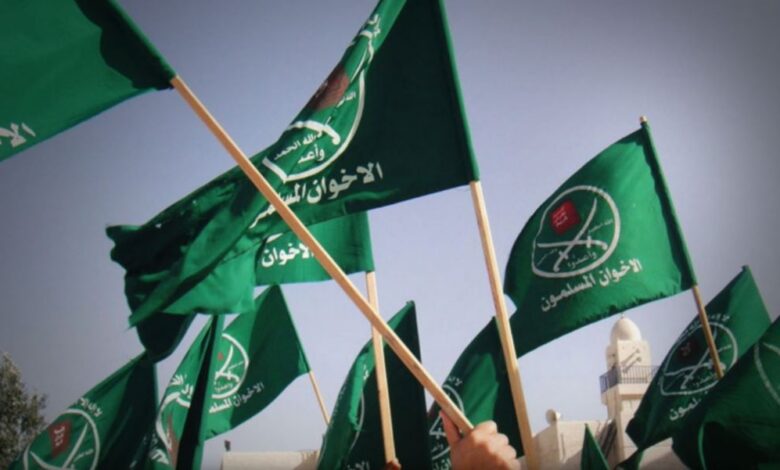
The Muslim Brotherhood issue has entered a new phase in international media coverage. The debate has expanded beyond violence and extremism to encompass funding, institutions, associations, mosques, schools and influence networks. This shift is evident in a series of articles published by European and international outlets, alongside a controversial decision by the US state of Florida concerning the designation of the Muslim Brotherhood and the Council on American-Islamic Relations, or CAIR.
Among the leading outlets to address the subject is the Swiss website Le Pont de Genève, which published a report entitled “Beyond Violence: Europe Now Focuses on Muslim Brotherhood Networks”.

The report examined a shift in how some European circles approach the issue. Attention is no longer confined to violence and extremist cells, but increasingly extends to institutional structures, funding networks and social relationships.
It referred to initiatives and discussions in Dublin, Brussels, Paris and Berlin, alongside French measures and German warnings. At the same time, it stressed that the European Union has not designated the Muslim Brotherhood as a whole as a terrorist organisation, an essential distinction when interpreting European developments.
In Italy, Il Sole 24 Ore approached the issue from a different perspective, focusing on what it described as an influence strategy.

The newspaper discussed concerns about the development of long-term influence through associations, mosques and funding networks. It also noted that this debate faces criticism and concerns that suspicion could be extended to Muslims or institutions with no connection to the organisation.
The Belgian platform EU Reporter offered coverage combining security, political and legal developments. It referred to security warnings in Germany and Ireland, European debates over funding and institutions, and the case of Clonskeagh Mosque in Ireland.
Citing the Irish Examiner, the report presented information about the restructuring of the mosque, funded by the Al Maktoum Foundation, amid concerns over possible links to the Muslim Brotherhood. It also included a denial from the Forum of European Muslim Youth and Student Organisations, or FEMYSO, which rejects any connection to an ideological movement.

This point is particularly important because one of the main challenges in reporting on the issue is distinguishing allegations from evidence. References to connections or influence do not necessarily establish a direct organisational relationship, making the legal question more complex.
In the United States, another development marked a turning point. News18–CNN-News18 published a report on Florida’s decision to designate CAIR and the Muslim Brotherhood as domestic terrorist groups, accompanied by restrictions on government funding, contracts and activities within universities.
The report discussed the authorities’ justifications, including accusations concerning alleged links to Hamas and the Holy Land Foundation case. It also conveyed CAIR’s rejection of both the allegations and the designation.

In France, L’Observatoire de l’Europe followed the developments, stating that Florida’s decision was issued on 29 September 2026 and that the measures would take effect on 5 November. It also examined legal objections, particularly those raised by CAIR and the American Civil Liberties Union, or ACLU.
Issues focused on the details of the decision and its potential consequences, noting that Florida’s list includes the Muslim Brotherhood, CAIR and Antifa, alongside more than 90 federally designated organisations.
This coverage shows that the decision has not gone unchallenged. It reveals a confrontation between the security interpretation adopted by Florida’s authorities and rights-based and legal objections that the designation could restrict constitutional rights.

In this context, EU Reporter published another article describing the decision as a new American escalation towards the Muslim Brotherhood and linking it to previous US measures targeting branches associated with the organisation in various countries. It also reported CAIR’s rejection of the decision and its position that the allegations against it are baseless.
Modern Diplomacy focused on the constitutional dimension, particularly the relationship between the designation and the First Amendment to the US Constitution. It referred to legal challenges against the measures and noted that CAIR describes itself as a civil rights organisation.
Taken together, these reports show that the issue has become more complex than a straightforward security confrontation. Europe is debating influence, funding and institutions, while the United States—and Florida specifically—has taken a more direct step through designation and the associated legal restrictions.
The distinction between the two approaches is important. The absence of a common European designation of the Muslim Brotherhood as a terrorist organisation means that the European debate remains largely focused on oversight of funding, institutions and political activity. Florida, by contrast, has adopted a stricter position at state level.
The reports also show that evidence will remain a central factor in the next phase. Supporters of the measures believe there are sufficient indicators to justify oversight and designation. Those targeted, however, maintain that the allegations lack a legal foundation or conflate civil institutions with a political organisation.
The articles published by Le Pont de Genève, Il Sole 24 Ore, EU Reporter, News18–CNN-News18, L’Observatoire de l’Europe, Issues and Modern Diplomacy therefore reflect a growing international trend towards reassessing the role of the Muslim Brotherhood and its associated networks. This does not, however, imply consensus on the nature of those networks or the appropriate legal tools for addressing them.

The next phase is likely to see continued debate over the relationship between security and civil liberties, particularly if other European countries adopt stricter measures against associations and institutions suspected of links to political or ideological networks.
Florida’s decision could also become a model for other states or authorities, or a precedent whose scope is limited by legal challenges. The significance of the development therefore lies not only in the decision itself, but also in the legal and political course that follows.
The common thread across the published articles is that the Muslim Brotherhood issue is no longer discussed solely in terms of violence or terrorism. It is now also connected to funding, influence, institutions, and political and social relationships. While some actors advocate tougher measures, others call for adherence to legal standards of evidence and a clear distinction between targeted organisations and Muslims more broadly, as well as civil and religious institutions with no proven connection to unlawful activity.
Recent international coverage thus points to a change like the issue: what was once a narrowly defined security matter has become a broad political, legal and societal debate. This shift will have implications for European and American discussions of political Islam, foreign funding, religious institutions, freedom of association and civic activity.