A Weakening Pound and Inflation Put Pressure on Sudanese Living Standards
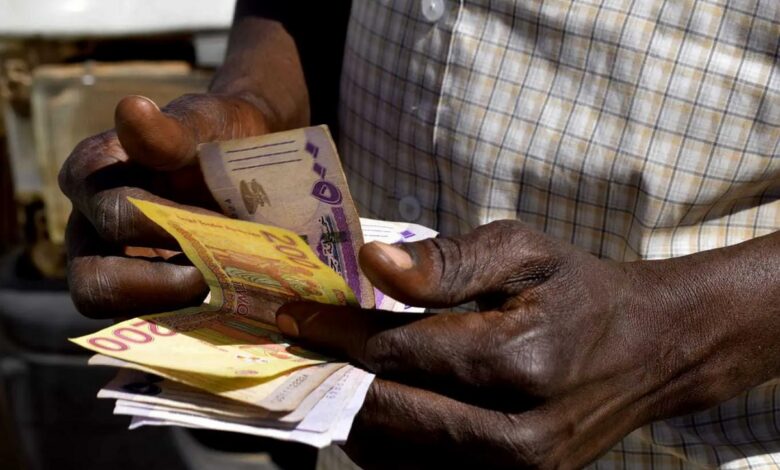
The depreciation of the Sudanese pound and rising inflation are among the clearest signs of the pressures facing Sudan’s economy. They come as the foreign exchange crisis combines with weak exports, higher import costs and disruptions to trade and production. The consequences extend beyond financial indicators and the currency market, directly affecting food, fuel, transport and service prices and becoming part of everyday life for households and business owners.
International Monetary Fund data indicate that inflation in Sudan remains extremely high. The IMF estimates average consumer price inflation at around 75.1% in 2026, while the economy continues to face severe fiscal and external imbalances. The African Development Bank also identifies macroeconomic instability, including high inflation and sharp currency depreciation, as one of the main obstacles to economic recovery.
Currency depreciation cannot be separated from the foreign exchange problem. When demand for dollars and other foreign currencies rises to finance imports, while export earnings and foreign currency resources remain limited, pressure on the exchange rate intensifies. The domestic currency then buys less foreign currency, raising the cost of goods and materials that depend on imports.
Currency Depreciation Raises Import Costs
A decline in the currency’s value means more than a change in the exchange rate displayed in the market. It increases the actual cost of imported goods. When importers need more pounds to obtain the same dollar amount, the cost of a product rises before it reaches the consumer.
The problem becomes more complex when the domestic market relies on imports to meet a significant share of its food, industrial or commercial needs. In such circumstances, depreciation affects every stage of the supply chain, from importing through transport, storage and distribution to retail sales.
Recent economic reports indicate that the dollar’s exchange rate on the parallel market experienced sharp movements during 2026. In August, it reached around 6,600 Sudanese pounds. Markets saw even sharper movements in September, prompting some traders to suspend sales temporarily for fear that they would be unable to replenish their stocks at the new prices.
These developments create an additional challenge for traders: determining a product’s final price becomes difficult when exchange rates change rapidly. A trader who sells stock at today’s price may be unable to purchase the same quantity the following day because import costs have risen. Some may therefore reduce sales or hold on to inventory until market trends become clearer.
Inflation Erodes Purchasing Power
Inflation turns the exchange rate crisis into a direct challenge to living standards. Higher prices mean that the same income buys fewer goods and services. If wages and earnings fail to keep pace, purchasing power continues to decline.
Data from Sudan’s Central Bureau of Statistics showed that annual inflation reached 51.28% in June 2026, compared with 44.50% in May. Subsequent data reported another year-on-year price increase in August, alongside a monthly rise of 3.32% in the consumer price index.
These figures are particularly significant for low-income households, which spend a large share of their budgets on food, energy and transport. According to inflation data published in April, food and beverages accounted for approximately 52.89% of household expenditure, while housing, water, electricity, gas and fuel represented 14.17%, and transport 8.34%.
An increase in flour, cooking oil, sugar or fuel prices is therefore not an isolated change in the cost of a single product. It affects a substantial portion of the household budget. As increases recur, families must reorder their priorities, cut back on certain purchases or seek cheaper alternatives.
Markets Under Pressure from Both Sides
Sudanese markets consequently face pressure from both rising goods costs and weakening purchasing power. Traders dealing with higher import costs, transport expenses and taxes cannot always absorb the increases by reducing their profit margins. Consumers, meanwhile, cannot maintain the same level of purchases when prices rise repeatedly.
This slows market activity in some sectors and may lead business owners to reduce inventories or postpone imports. Price instability also increases uncertainty, as traders and producers struggle to prepare accurate budgets or forecast operating costs over longer periods.
The problem is particularly visible in food products. Reports from Khartoum’s markets in September described rapid price increases for several essential goods alongside the pound’s depreciation. A 50-kilogram sack of sugar cost more than 420,000 pounds, while flour reached around 116,000 pounds, according to the prices cited in the report.
Despite regional price differences, the overall trend shows how closely retail prices are linked to exchange rate movements, particularly when goods depend directly or indirectly on imported inputs.
The Fuel Crisis Raises Transport and Production Costs
Fuel plays a central role in this equation because any increase in its cost affects several sectors at once. Transport requires fuel, as do some agricultural and industrial production activities and logistics services.
If importers or suppliers struggle to secure the foreign currency needed to finance fuel purchases, the reliability of supplies can become more fragile. Higher financing and import costs also increase the cost of fuel itself.
This increase then feeds through to transport. Trucks carrying flour, sugar or cooking oil from production areas or import entry points to markets need fuel, and every increase in the cost of the journey is ultimately added to the price consumers pay.
The impact extends beyond commercial transport. Fuel also contributes to the cost of running equipment, machinery and certain production activities, making higher fuel prices an additional driver of production cost inflation.
Flour, Cooking Oil and Sugar at the Heart of the Crisis
Essential food prices are among the most sensitive indicators for citizens because they directly reflect the pressure on households. As import costs rise and the currency weakens, products such as flour, cooking oil and sugar become more exposed to price changes.
The impact grows when these increases coincide with higher transport and energy costs. Even if a product’s price at its overseas source remains unchanged, its domestic price can rise because shipping, storage and distribution have become more expensive.
Domestic producers are not fully insulated from currency depreciation either. If they rely on imported machinery, spare parts or raw materials, a stronger dollar raises their costs and may force them to increase the price of the finished product.
The distinction between “imported goods” and “domestic goods” therefore becomes less clear in terms of exposure to the foreign exchange market, since several sectors of the local economy are themselves connected to overseas supply chains.
Taxes and Import Restrictions
Taxes, customs duties and restrictions on certain imports add another layer of pressure on prices. From an economic policy perspective, some restrictions may aim to reduce foreign currency demand or protect domestic production. Their effects, however, depend on the goods concerned and the availability of local alternatives.
In April 2026, Sudanese authorities decided to ban imports of more than 40 goods described as luxury or non-essential items, in an effort to curb foreign currency demand and support domestic production. Importer representatives criticised the decision, arguing that it could cause shortages and higher prices. Reports also identified weak exports and a growing import bill as structural causes of pressure on the pound.
These developments illustrate the difficulty of balancing the protection of foreign exchange reserves with the continued supply of goods to markets. Broad import restrictions without sufficient domestic alternatives may reduce supply and push prices higher. Conversely, continuing imports without adequate foreign currency resources places greater pressure on the exchange market.
Addressing the problem therefore requires more than reducing imports. It also means strengthening the economy’s capacity to generate foreign currency from sustainable sources, particularly exports and production intended for overseas markets.
The Social Impact Goes Beyond Rising Prices
As inflation persists and the currency weakens, the economic crisis becomes a broad social challenge. Households face not only higher food bills but also rising costs for transport, energy, services and everyday necessities.
Declining purchasing power means that income increases do not necessarily improve living standards if they fail to keep pace with inflation. Employees or workers may receive higher nominal incomes only to find that prices have risen faster, leaving their real incomes lower than before.
Business owners face a different problem. Higher capital, raw material and transport costs make it more difficult to keep operating, while weak demand limits their ability to pass the full increase on to consumers. Small and medium-sized businesses may be particularly vulnerable because of limited liquidity and a reduced capacity to absorb price fluctuations.
The Need to Address the Underlying Imbalances
The broader picture shows that pound depreciation and inflation are not separate problems. They form part of an interconnected chain that begins with an imbalance in foreign currency resources and extends to imports, production, transport, markets and consumption.
Weak exports reduce foreign currency inflows, while demand for dollars to finance imports increases pressure on the exchange rate. Currency depreciation then raises import costs, pushing goods prices higher, while inflation weakens purchasing power. Higher prices subsequently weigh on commercial activity, with fuel costs, transport expenses and taxes adding further burdens.
International assessments indicate that restoring stability requires addressing fiscal and external imbalances while rebuilding productive capacity and infrastructure, strengthening institutions and diversifying the economy. The African Development Bank identifies low productivity, damaged infrastructure and limited economic diversification, alongside fiscal and external imbalances, as continuing obstacles to sustainable recovery.
Currency stability is therefore more than a monetary objective: it is an important condition for stable prices and markets. Smaller exchange rate fluctuations, stronger foreign currency generation and increased production and exports would help reduce the transmission of external shocks to goods prices and citizens’ purchasing power. A persistent gap between foreign currency demand and available resources, however, leaves the economy exposed to renewed pressure on the currency and prices, making the cost of the crisis increasingly evident in everyday life.