Three Regions, Four Continents and Cocaine: Inside Hezbollah’s Financing Networks in Venezuela
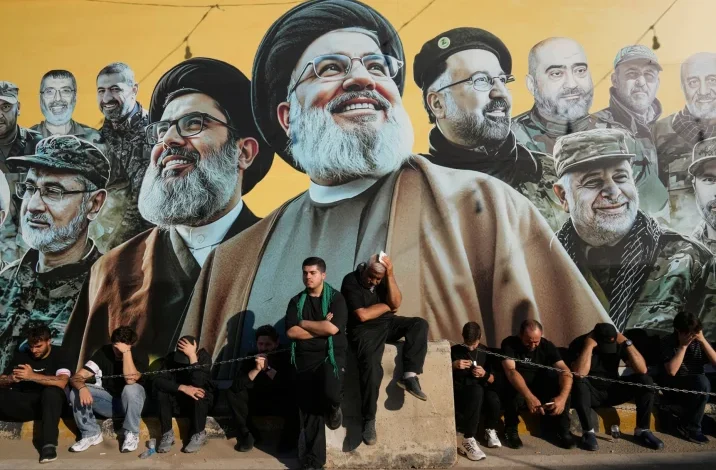
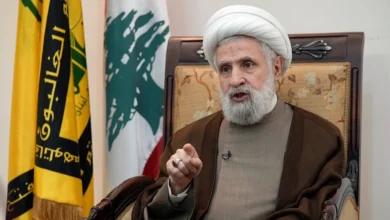
Political figures and human rights advocates in Venezuela are increasingly calling for the dismantling of the Lebanese Hezbollah militia’s remaining strongholds. The group exploited the presidencies of Hugo Chávez and Nicolás Maduro to build an “empire” of financial and military influence that has become the black box of its cross-border activities.
Despite bold initiatives by acting Venezuelan President Delcy Rodríguez to reset relations with Iran in accordance with international diplomatic norms—steps that have affected Tehran’s regional proxies—the militia retains financial and military influence in the country.
It exploits South America’s vast border areas to operate money-laundering networks and illicit financial flows, taking advantage of oversight gaps to fund activities across several continents.
An Inconsistent Official Venezuelan Narrative
Political and media sources in Caracas describe a substantial reduction in Hezbollah’s presence in Venezuela. They note that the current government, which has opened a new chapter of cooperation and rapprochement with Washington and Tel Aviv, has also launched an aggressive campaign against the Lebanese organisation’s presence in the country.
The end of the Maduro era reportedly brought an end to Hezbollah’s economic relationships with influential Venezuelan figures such as diplomat and economist Tareck El Aissami. The militia’s official diplomatic cover has faded, making it impossible to manage logistical operations, authenticate documents and execute complex plans as it once did.
The same sources, close to the current authorities and drawing on local and regional intelligence reports and analyses, maintain that Hezbollah’s networks have contracted dramatically in Venezuela. Senior leaders and core personnel have reportedly left the country or gone underground.
They add that the militia can no longer use former secure locations such as Yaritagua or Margarita Island as training camps and safe havens. They attribute this change to direct US surveillance and the reorganisation of Venezuela’s intelligence services under a new military, security and intelligence doctrine.
In their assessment, the organisation may retain sleeper cells or small smuggling networks in scattered areas, or maintain connections with certain cartels. Caracas’s role as a regional coordination centre and military and security refuge, however, has effectively ended.
“Black Cocaine” Smuggling Routes
Alongside this quasi-official Venezuelan account of Hezbollah’s fate in the country and neighbouring border areas, another narrative offers a more coherent explanation of its continued presence and the networks of interests it maintains in Venezuela specifically and Latin America more broadly.
Investigations by the US Drug Enforcement Administration indicate that networks linked to the militia have developed strategic partnerships with drug cartels across South America, particularly in Venezuela.
These operations rely on complex smuggling methods, including what is known as “black cocaine”. The substance is chemically treated to resemble coal and evade customs detection systems.
These routes extend beyond the Western Hemisphere into West and Central Africa, drawing on Lebanese diaspora communities and family and commercial ties. Those regions serve as major transit points before shipments are sent to European markets, generating substantial profits that channel millions back into the organisation’s networks in Lebanon.
Free-Trade Zones as a Financial Lifeline
Strategic reports and in-depth investigations also describe how Hezbollah has repurposed certain free-trade zones as vital channels for laundering illicit funds, exploiting weak customs and regulatory oversight in several strategic locations.
Among the areas on which the militia focuses are the Colón Free Zone in Panama, free-trade zones in Chile and Belize, and the Tri-Border Area between Argentina, Brazil and Paraguay.
The networks engage in trade-based money laundering through falsified invoices, manipulation of shipment values and imports of various consumer goods. These practices give financial flows an appearance of “legitimacy” and facilitate cross-border value transfers without triggering banking suspicions. The area where Argentina, Brazil and Paraguay meet serves as a major hub for money laundering, cigarette smuggling, arms trafficking, financial transfers and black-market activity.
In response to these concerning developments, specialists in monitoring suspicious financial flows are calling for a shift from conventional drug-trafficking enforcement towards targeting the entire “clandestine financial architecture”. They urge countries in the region, including Venezuela, to abandon reassuring rhetoric about the militia’s intentions, close legislative loopholes in free-trade zones and designate all its branches as terrorist organisations to facilitate bank asset freezes and prosecution.