From France to Albania: FEMYSO’s Expanding Discourse of Student Solidarity
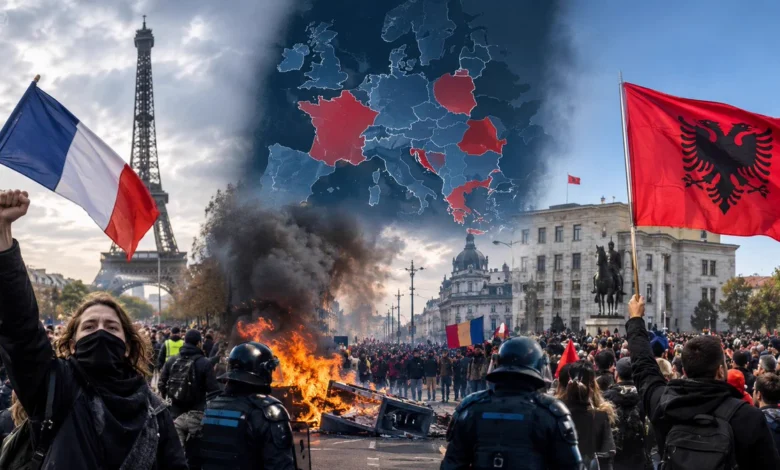
Statements published in October 2026 by the Forum of European Muslim Youth and Student Organisations (FEMYSO) point to growing interest in student issues across several European countries. After expressing solidarity with students in France and Belgium on 9 October, the Forum voiced support for students in Albania on 18 October. This sequence raises questions about the role European youth networks play in connecting local demands through a shared rights-based discourse, and about their ability to bring these issues beyond the national arena.

This analysis draws on the Forum’s published statements and the available information about protests in the countries concerned. It is essential, however, to distinguish between what the official texts establish and what might be inferred from their timing. Expressing solidarity with a student movement in two countries, followed by support for a movement in a third, demonstrates a widening scope of publicly stated interest. On its own, it does not establish that these mobilisations operate under common leadership or that a single entity is responsible for organising them.
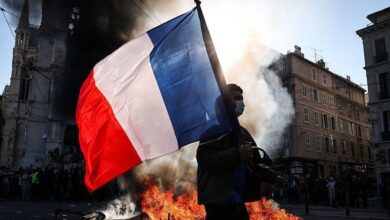
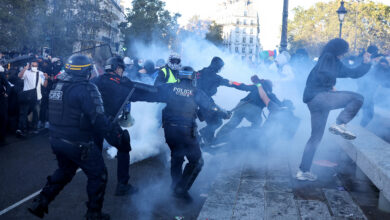
On 9 October, FEMYSO focused on student demands in France and Belgium, highlighting the need to improve educational conditions, provide adequate funding and safeguard learners’ rights. The statement adopts a rights-based language that places education at the centre of solidarity efforts and links the quality of educational institutions to their ability to provide students with resources, support and opportunities. This framing enables the Forum to reach an audience beyond its member organisations, since education and university services concern more than any single religious or social group. At the same time, the Forum’s decision to support existing mobilisations raises legitimate questions about how it selects the issues it addresses, which actors it engages with and the criteria it uses to set its priorities. Such questions are a normal part of assessing any organisation operating at European level; they do not, in themselves, indicate concealed ties or an undisclosed political agenda.

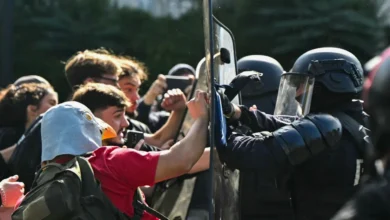
Nine days later, the Forum published a statement on Albania, expressing solidarity with students and young people calling for accountability and the right to quality education. This coincided with protests addressing domestic issues, including corruption, educational conditions and employment opportunities, according to press coverage. The case highlights the importance of examining each protest in its national context, rather than assuming that similar slogans imply shared motivations or a common organisational structure. In Albania, the mobilisations were tied to political and social demands specific to the country, while the European statement approached the issue through the lens of educational rights and accountability. An international organisation may choose to highlight one aspect of a broader movement without having formulated all its demands or directed its activities. Analysing the relationship between the Forum and the Albanian movement therefore requires examining local calls to action, the groups organising the protests and any statements indicating direct coordination, as well as comparing the European statement with the demands voiced by student groups on the ground.
This comparison becomes particularly relevant when considering FEMYSO’s institutional structure. The Forum describes itself as a network of Muslim youth and student organisations across several European countries and states that its activities include campaigning, training, representation and networking among its members. Networks of this kind facilitate the exchange of information and experience, provide platforms for communication and draw wider attention to issues that extend beyond national borders. Their actual influence on a protest movement nevertheless varies from case to case and must be assessed through concrete evidence, such as participation in organising meetings, joint calls to action or publicly disclosed logistical support. The publication of a statement by a European network following a local mobilisation does not, by itself, establish whether the network helped plan it or merely expressed a political or rights-based position.
This distinction calls for care in separating coordination from coincidence in timing. Student mobilisations in several countries may display similarities because they respond to comparable problems, such as rising living costs, inadequate education funding or difficulties accessing housing and employment, without being organised by a single entity. A transnational organisation may also emphasise these similarities in its public messaging to underline that the issues it follows extend beyond any one country. Establishing coordination that goes beyond solidarity requires identifying the nature of contact between the parties, when it occurred, what it involved and what resulted from it. Relevant evidence could include meeting minutes, organisational correspondence lawfully made public, joint statements, comments from organisers and independent testimony. Without such evidence, describing the mobilisations as a unified campaign goes beyond what the publicly available information can substantiate.
Differences between the political and social contexts of France, Belgium and Albania must also be taken into account. Educational demands in one country may concern university budgets or study conditions, while in another they may intersect with corruption, employment prospects or trust in institutions. The Forum may use broad language to bring these issues together under the principles of the right to education and accountability, but that shared language does not erase local differences. It is therefore important to compare the original statements, identify what was emphasised in each case and what the Forum did not address, and examine how local actors responded to its support. Consulting independent press sources also helps avoid relying solely on the organisation’s account of its own activities or accepting its opponents’ accounts without scrutiny.
Linking these activities to a broader political or organisational affiliation requires a separate evidentiary basis. The existence of a youth network with a Muslim identity does not, in itself, demonstrate that it belongs to a particular political organisation. Nor does the membership of local organisations automatically establish that they operate under a common central leadership. Such conclusions require specific documentation concerning membership, governance, funding and formal relationships, alongside evidence relating to the decisions under examination. It is also necessary to recognise that organisations may cooperate on some issues while disagreeing on others, and that membership of a civil society network does not necessarily remove members’ autonomy over local decisions.
Against this background, FEMYSO’s October 2026 statements can be read as an example of student solidarity expanding across borders and of rights-based discourse being used to connect local issues with broader European priorities. Reaching a conclusion about the nature of the Forum’s organisational influence, however, requires moving beyond an examination of statements to assess evidence from the ground and from institutional sources. The central research question is therefore not whether the Forum expressed solidarity, which its publications establish, but whether that solidarity developed into practical coordination, and what evidence defines its extent and limits. This approach enables a more precise understanding of youth networks’ role in the European public sphere and helps distinguish media influence, organisational involvement and the actual leadership of protests.