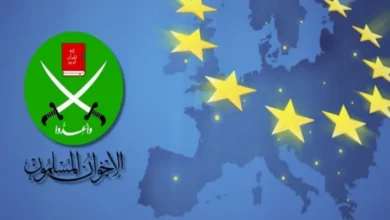
The Muslim Brotherhood Between the Middle East and Europe: European Parliament Resolution Opens a Battle over Influence, Funding and Identity
On 8 October 2026, the European Parliament took a political step that brought the Muslim Brotherhood and political Islamist networks back to the forefront of debate within European institutions. It adopted a resolution entitled “The Need for a European Strategy to Counter Islamist Infiltration and the Influence of the Muslim Brotherhood Network” by 381 votes to 167, with 15 abstentions. The text calls for a common European approach to monitoring networks of influence, funding and institutional relationships suspected of connections to the organisation or its ideas.
The vote does not mean the European Union automatically designated the Muslim Brotherhood a terrorist organisation or imposed a blanket ban on its activities or on Muslim associations in Europe. The resolution calls for scrutiny and assessment, including consideration of whether specific entities or individuals meet the legal conditions for inclusion on European terrorism lists. This distinction is essential: it is a political position adopted by the European Parliament, not a comprehensive legal decision banning the organisation in every member state.
The resolution matters because it moves the discussion from scattered national statements towards an attempt to formulate a common European policy. Its supporters no longer view the Brotherhood issue as confined to openly declared organisational activity or political parties bearing names associated with political Islam. Instead, it encompasses broader questions about funding sources, relationships with public institutions, associations’ transparency and the boundaries between religious activity and political action.
This approach nevertheless raises legal, rights-related and political disagreements. Supporters argue that European democracies must protect their institutions from organisations seeking to influence them without transparency. Critics warn that vague concepts could broaden suspicion, place legitimate Muslim institutions under political pressure or conflate religious affiliation with organised political activity. The central issue is therefore not only Europe’s stance towards the Brotherhood, but also how to achieve security and transparency without undermining freedom of religion, association and political expression.
What Did the European Parliament Actually Vote For?
Understanding the resolution requires distinguishing three levels: the political position expressed by Parliament, administrative and oversight measures that competent institutions may adopt, and legal sanctions requiring a legal basis and separate procedures.
Politically, the resolution calls for a European strategy against what it describes as organised influence connected to political Islamist and Muslim Brotherhood networks. This includes closer examination of funding, reviews of certain forms of institutional cooperation, improved coordination between member states and assessment of evidence concerning entities or individuals who may meet specific legal criteria.
Legally, mentioning a group or network in a political resolution does not automatically prohibit every institution suspected of links to it. Inclusion on the European terrorism list follows separate conditions and procedures. Any sanction against an association or individual must also rest on examinable evidence and allow the objections and appeals provided by law.
This distinction is particularly important because the Muslim Brotherhood is not a single European party operating through a uniform structure in every country. The organisation’s political history, relationships and the status of its branches or movements influenced by its ideas vary between states. Some institutions described in political discourse as close to the Brotherhood may deny that connection, and the alleged relationship may be disputed or unproven in court.
The resolution should therefore not be read as a definitive judgment on every Muslim association, charity or cultural centre. It reflects a political direction favouring closer scrutiny, but does not remove the need to verify each case or relieve authorities of their obligation to respect the presumption of innocence and fair-trial safeguards.
Why Has the Brotherhood Returned to the Forefront of European Debate?
The resolution cannot be understood separately from the changes Europe has experienced in recent years. Debates over migration, integration and national identity have intensified, alongside discussion of religion’s role in public life and concerns about extremism, political violence and antisemitism. In this climate, political Islamist movements have become a subject of party competition and an issue connecting domestic security, foreign policy and minority rights.
Supporters of the resolution see the problem as the possible use of social, religious and cultural networks to build long-term political influence without clearly disclosing objectives or organisational relationships. They argue that oversight should not stop at individuals committing violent acts. It should also cover unlawful financial or institutional activity where evidence demonstrates an intention to undermine democratic rules or circumvent the law.
This view raises a difficult question: how can an organised strategy of political influence be established and distinguished from an association’s legitimate efforts to defend its members’ interests or convey their demands to institutions? In democratic societies, religious, cultural and civic associations have the right to engage officials, participate in public debate and advocate causes affecting their communities. Such activity does not become unlawful merely because those involved are Muslim, religiously conservative or critical of government policies.
The decisive standard is therefore not participants’ identity but their conduct and the evidence concerning it. If unlawful funding, deliberate concealment of financial sources, incitement to violence or illicit pressure on institutions is established, those acts can be addressed under the law. Treating religious affiliation or ideological similarity as sufficient proof of organisational subordination, however, risks weakening the credibility of security policies themselves.
The challenge is further complicated because “political Islam” encompasses differing currents. Some participate in elections and operate within constitutional systems, others adopt conservative social positions, while others may conflict with democratic principles or justify violence. These currents cannot be assumed identical, nor can everyone using religious language in politics be presumed a Brotherhood member.
The Muslim Brotherhood: A Transnational Organisation with Multiple Historical Paths
The Muslim Brotherhood was founded in Egypt in 1928. Its ideas and influence subsequently spread across parts of the Middle East and North Africa, with local movements and organisations drawing to varying degrees on its intellectual or political legacy. Over the decades, these movements’ relationships with the state have ranged from political participation and negotiation to security confrontation and prohibition, depending on national circumstances.
In some countries, parties with Islamist backgrounds have participated in elections and parliamentary institutions. Elsewhere, the Brotherhood or movements influenced by it have faced bans and prosecution. These currents have also differed over democracy, pluralism, women’s rights and relations with the West. Their experiences have not been identical, even when rooted in similar intellectual traditions.
This varied history explains part of Europe’s difficulty in addressing the issue. “The Brotherhood” may refer to the original organisation, formal branches, ideologically close local movements or institutions accused by political actors of connections to it. These categories are not legally interchangeable. Describing an institution as “close” to the Brotherhood does not establish that it receives orders from the organisation or acts on its behalf.
Over decades, Europe has seen the establishment of religious, cultural and charitable associations and centres serving Muslims through religious education, social work and interfaith dialogue. According to studies, reports and official statements in European countries, some institutions have had connections to individuals or currents close to the Brotherhood or influenced by its thinking. The extent and nature of those ties nevertheless differ and require individual assessment.
The discussion must separate three questions. The first is ideological affinity: agreement with particular ideas or political positions. The second is an institutional relationship, such as formal membership, funding, shared management or documented coordination. The third is legal responsibility for a specific act. Moving from the first level to the third cannot rest on assumption alone. It requires evidence and procedures guaranteeing the parties concerned the right to respond and appeal.
These distinctions are not merely linguistic details. They underpin any European policy seeking to be both effective and lawful. Generalisation may target institutions unconnected to unlawful activity, while evidence-based oversight can uncover genuine violations without making religious identity a permanent source of suspicion.
Funding and Associations: Where Is the Boundary Between Organising Freely and Breaking the Law?
Funding is central to the resolution because the origin and use of money can reveal the nature of institutional relationships. Foreign funding is not inherently evidence of wrongdoing. European universities, associations, research centres and religious institutions receive domestic and international funds under different legal frameworks. Funding may nevertheless warrant scrutiny when its sources are concealed, intermediary companies circumvent disclosure rules or evidence shows that money supports prohibited activities.
This explains calls for greater transparency about donors and final recipients, reviews of conflict-of-interest rules and verification that public grants to associations are spent for their intended purposes. These measures can protect public money and prevent misuse, provided they follow published standards that do not arbitrarily discriminate on grounds of religion, origin or political position.
The more difficult question concerns the limits of review. A government body requesting financial information should have clear legal authority and a justification proportionate to the intervention. If a public institution suspends a grant, it should rely on funding conditions and relevant evidence, not a media allegation or an unproven political label.
Funding oversight should not focus exclusively on Muslim institutions where the applicable rules concern money laundering, terrorist financing or concealment of beneficial ownership. Equal enforcement improves the prospects of detecting violations and prevents oversight tools from becoming instruments for political score-settling or targeting a minority.
Europe also needs to distinguish associations receiving money for declared charitable projects, institutions conducting political lobbying and entities potentially connected to unlawful acts. These activities fall under different rules and should not be merged into one category merely because some people involved share personal or ideological connections.
The effectiveness of any European strategy will therefore depend on investigative quality, financial traceability and transparent decisions, rather than forceful political statements alone. Evidence-based oversight can expose wrongdoing. Oversight based on general suspicion may instead encourage institutional withdrawal and weaken trust between communities and authorities.
Divisions in Parliament Reveal Disagreement over the Response
The vote was not a routine procedure. It reflected a clear political divide over how to address political Islam and Brotherhood networks. The resolution passed with 381 votes in favour, 167 against and 15 abstentions. The official results show that the issue extended beyond disagreement about a particular organisation to broader differences over security, rights, freedoms and the limits of European institutional intervention.
Supporters believe a common strategy could reduce inconsistent standards between member states and prevent differences in national legal and administrative systems from being exploited to conceal funding or continue prohibited activities. They argue that responses to organised attempts to undermine democratic institutions must extend across borders, particularly when financial and organisational relationships span several countries.
Critics, by contrast, raise concerns about the breadth of the terminology and its possible use against associations committing no legal violations. Some objections also concern protecting freedom of expression and political organisation, and preventing ideological disagreement with a religious or political current from becoming grounds for excluding it from public life.
This division shows that Europe’s challenge is not purely about security. It also concerns the rules governing pluralism. Democracy does not require tolerating violence or illegal funding, but neither does it require banning ideas merely because they are unpopular or controversial. Maintaining this distinction demands precise legislation, independent investigations and access to judicial appeal.
The Middle East Watches Europe’s Shift
The resolution has implications beyond the EU because the Muslim Brotherhood forms part of the Middle East’s history of political conflict and states’ positions towards it differ considerably. Some countries ban it or treat it as a security threat. Others allow parties or movements with Islamist backgrounds to participate politically under domestic conditions. Some adopt changing positions according to political circumstances and regional relationships.
The resolution is likely to feature in diplomatic and media debates about political Islam’s future. It does not automatically mean that every European government will adopt the same policy or that Europe’s relationships with Middle Eastern countries will change uniformly. Each European country has its own laws, competent authorities and security assessments. European foreign policy also involves multiple interests, including trade, energy, migration and regional security.
Political actors in the region may present the resolution as validation of their stance towards the Brotherhood, while others may use it to support claims about restrictions on Islamist opposition. These political uses do not resolve the legal question: is there evidence that a particular institution or individual committed an offence, participated in prohibited activity or maintained an organisational relationship with an entity subject to legal sanctions?
It is also important not to assume that every Islamist movement in the Middle East is connected to the Brotherhood or that every Muslim institution in Europe answers to a foreign political actor. Similar religious rhetoric does not prove common leadership. Contacts between individuals do not, on their own, establish an organisational relationship, and political positions cannot substitute for investigating the facts.
Stricter European oversight may also prompt the institutions concerned to reconsider their financial management, public relations and internal governance. For an institution operating lawfully, documenting accounts, disclosing funding sources under applicable rules and clarifying management structures can help protect legitimate activities from suspicion. Institutions breaking the law should face accountability under the same procedures applied to others.
What About Muslims and Muslim Associations in Europe?
One essential point must not disappear amid political controversy: Europe’s Muslims are not a single bloc and cannot be reduced to one organisation or political current. They differ in national origins, denominations, religious outlooks and views on secularism, politics and integration, just as other groups within European societies do.
Muslim associations are equally diverse. Some focus on worship and religious education, others provide social services or humanitarian aid, and others work on interfaith dialogue, anti-discrimination or political debate. Genuine disputes may exist about particular institutions, but those disputes should be examined through evidence rather than transformed into collective suspicion of all Muslims.
The resolution itself warned against conflating Islam as a religion with political Islam as a distinct political phenomenon. This matters because criticism of an organisation or ideology should not become an accusation against everyone belonging to a faith. Equally, protecting religious freedom does not place any organisation beyond the law.
European institutions have a responsibility to explain this distinction in public discourse. The media likewise must distinguish substantiated allegations from political claims. Coverage conflating the Brotherhood with Muslims generally can increase polarisation and fuel discrimination. Precise discussion instead helps establish individual and institutional responsibilities without generalisation.
Conversely, combating Islamophobia should not become a reason to avoid investigating genuine wrongdoing when evidence emerges. Protecting Muslims from discrimination and holding any entity involved in unlawful acts accountable are compatible principles. When procedures are fair and clear, each reinforces the other.
Is the EU Moving Towards a Brotherhood Ban?
The resolution alone does not establish that the EU is inevitably heading towards a blanket ban. Parliament called for a strategy and intensified scrutiny and assessment, including consideration of whether certain individuals or entities meet the legal conditions for terrorism listing. Any subsequent action depends on the competent institutions, available evidence and relevant legal rules.
A political resolution from the European Parliament must also be distinguished from binding decisions adopted by competent authorities under legal procedures. Parliament can express a political direction and call for action. That does not mean every proposal in the resolution has become enforceable law or that every member state must automatically ban a particular association.
Next steps could include closer scrutiny of grants and funding, improved information sharing between countries or reviews of transparency rules and access to European institutions. Reviews may lead to targeted action against entities proven to have broken the law, or conclude without sanctions where evidence is insufficient.
The real test of any strategy will be its ability to translate political slogans into enforceable standards subject to judicial review. Precise, equally applied rules can strengthen trust in institutions and help identify violations. Broad definitions or opaque decisions may instead expand suspicion and deepen polarisation between governments, associations and local communities.
A Battle over Security, Rights and the Limits of Influence
The European Parliament’s vote on 8 October 2026 marks an important moment in Europe’s debate over the Muslim Brotherhood and political Islamist networks. It gave the issue clear institutional weight and encouraged stronger scrutiny of funding, institutional relationships and coordination between member states. It did not impose a blanket European ban on the organisation or designate every institution suspected of proximity to it as terrorist.
Its significance extends beyond the Brotherhood itself. It reflects a broader dispute over how democracies can protect themselves from unlawful activity while preserving the freedoms on which they rest. The challenge is to prevent associations, funding and cross-border relationships from being used unlawfully without turning religion, identity or political opinion into evidence of guilt.
In the Middle East, the resolution may be used in existing struggles over political Islam’s future and religious movements’ relationships with power. Its actual impact will depend on subsequent measures, how European states apply legal standards and whether investigations produce specific evidence justifying further action.
Europe’s success will ultimately be measured not by the number of uncompromising statements or the expansion of suspicion lists, but by its ability to enforce the law firmly and fairly. Addressing wrongdoing requires evidence and accountability; protecting freedoms requires safeguards and independent institutions. Between these requirements, the resolution’s outcome will take shape: either a foundation for more transparent, precise policy, or another arena of political conflict over identity, religion and influence.