Sudan Enters a Deadlier Phase: Drone Attacks Kill Civilians and Turn Markets and Displacement Sites into Danger Zones
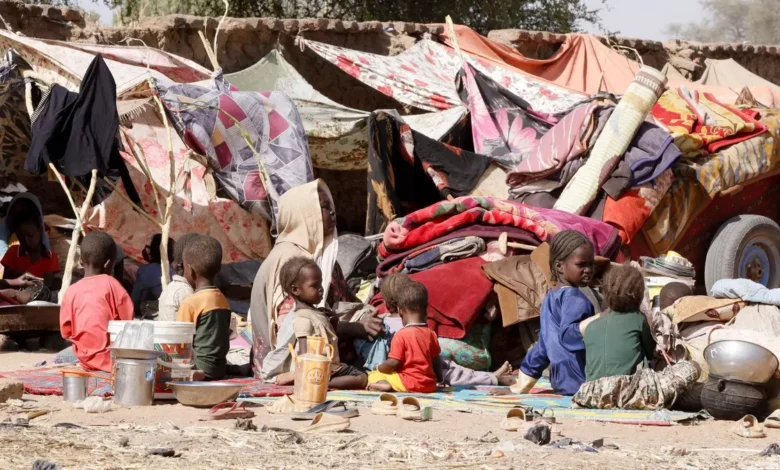
In the days preceding 19 October 2026, Sudan experienced a wave of drone attacks that killed and injured large numbers of people, renewing attention to the changing nature of the war between the Sudanese Armed Forces and the Rapid Support Forces. According to an Al Jazeera report published that day, more than 160 people were killed in a series of attacks over several days, amid mutual accusations over responsibility for strikes on civilian areas and vital facilities.
Drones are no longer merely tools for reconnaissance or limited attacks on military positions. They have become an increasingly important part of operations conducted by the warring parties over long distances. These weapons allow targets far from front lines to be attacked, widening the geographical reach of danger and exposing areas previously regarded as relatively removed from the fighting.
This shift becomes particularly dangerous when strikes occur near markets, transport stations and residential areas. Such places bring together large numbers of civilians who are not participating in military operations and may be buying daily necessities, waiting for transport or receiving aid. A strike on a crowded location can cause extensive casualties within moments, particularly where emergency services are unavailable or hospitals are distant.
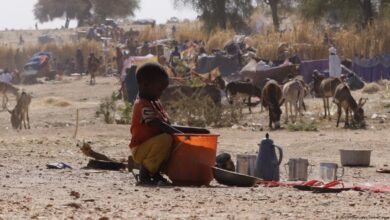
The escalation is especially significant because Sudan’s war, which began in April 2023, has already displaced millions, damaged essential services and weakened economic activity. As fighting spreads, many civilians live in circumstances that prevent them from moving easily to safer areas. Displaced people who have lost their homes and livelihoods may also be forced to travel along dangerous roads or depend on limited local markets for food and medicine.
An Attack on a Transport Area Leaves a Heavy Toll
Among the deadliest attacks covered by Al Jazeera was a strike on a transport hub near a market in the Ad Dibab area of West Kordofan. Residents had gathered there after market day to find transport back to their villages. According to residents and medical workers quoted in the report, around 80 people were killed and others injured.
A medical source said 47 wounded people were taken to nearby Al Muglad, and 30 later died from their injuries. These accounts show how an attack on a crowded civilian location can become a catastrophe extending beyond the explosion itself. Casualties may face difficulties with evacuation and treatment, particularly in areas lacking medical personnel and supplies.
The toll cannot be separated from the function of the site. Transport hubs and markets are vital in rural areas, where residents depend on market days to buy goods, sell produce, and travel between villages. An attack therefore affects not only those present at the moment of the strike, but also families deprived of breadwinners and communities dependent on those locations for essential needs.
The attack occurred in an RSF-controlled area, according to the report, raising questions about the intended target and surrounding circumstances. Actors linked to the RSF and the Emergency Lawyers group accused the army. Definitively establishing responsibility, however, requires a credible investigation into the available evidence, including the target’s nature, the drone’s flight path, who launched it, and the precautions taken to protect civilians.
The fundamental principle of international humanitarian law remains clear: civilians must be distinguished from combatants, and civilian objects from military objectives. Feasible precautions must also be taken to minimise civilian harm. The presence of a military objective in an area does not authorise attacks on civilians or operations that disregard proportionality and required precautions.
Attacks in Khartoum, Nyala and Blue Nile
The attacks were not confined to West Kordofan. The report said a drone strike in Khartoum killed three children, according to Emergency Lawyers, which monitors violations against civilians. Another strike targeted Nyala, the capital of South Darfur, which is controlled by the RSF. Medical sources and sources within the force reported 17 deaths, including seven RSF officers, and 23 injuries.
In Blue Nile State, bordering Ethiopia, Emergency Lawyers said a drone attack struck a gathering of displaced people on the Friday before the report was published, killing 41. These incidents raised fears that the danger was extending to people who had already fled fighting in search of safety.
The incidents show that drone use spans areas with different military and humanitarian circumstances. This geographical spread makes it harder for humanitarian organisations to identify safe locations where they can operate consistently. It also increases pressure on emergency networks and hospitals that may receive many casualties at once.
In Khartoum, attacks on residential areas or sites near infrastructure can disrupt movement and services even when geographically limited. In Nyala, security risks compound services weakened by prolonged war. In Blue Nile, an attack on displaced people raises particular concern because of their vulnerability and dependence on aid or scarce local resources.
Initial casualty reports must be distinguished from findings established through investigation. In war zones, estimates may vary, recovering bodies or evacuating casualties may take time, and journalists and organisations may struggle to reach attack sites. Figures announced in the first days should therefore be attributed to their sources and updated when reliable new information becomes available.
Attacks on Dams and Electricity Facilities Widen the Risks
In eastern Sudan, a military source said air defences intercepted several RSF drones targeting the Atbara and Setit dams in Gedaref State, approximately 420 kilometres east of Khartoum. There was no immediate RSF comment when the report was published.
Dams and energy facilities have strategic importance because they support electricity and water supplies and numerous economic activities and public services. Disabling a power station can affect healthcare facilities, water pumping and communications, while damage to water infrastructure can have broader consequences for residents, agriculture and the environment.
Reports of an attack on a facility do not establish that damage occurred or that the operation achieved its objective. In the case of the dams, the military source reported interceptions, and the article cited no confirmed damage to either facility. Nevertheless, an attempted attack on vital infrastructure reveals the scale of risks associated with the expansion of aerial warfare.
In another incident, Al Jazeera reported allegations that a drone attack targeted an electricity substation in Tendelti in North Kordofan State, cutting power to cities in the state and neighbouring areas. Such incidents show that humanitarian harm arises not only from direct attacks on homes and markets, but also from disruptions to services people use every day.
When electricity fails, water pumps may stop, hospitals can be affected and medicines and food become harder to preserve. Prolonged outages can disrupt commerce and communications, limiting residents’ ability to identify safe routes or reach assistance.
Facilities providing essential civilian services enjoy significant legal protection. Any attack on them is subject to the rules of distinction, proportionality, and precautions, requiring assessment of the target’s nature and expected effects on civilians. An energy or transport facility cannot be presumed a lawful military objective merely because it has economic importance or lies in a contested area.
Why Have Drones Become Central to the War?
The shift towards drones helps explain Sudan’s war in its current phase. Long distances between areas of control, difficulties moving by land, and multiple supply routes make aerial attacks a means of striking distant positions, monitoring enemy movements, and disrupting logistical capabilities.
For the Sudanese Armed Forces, drones may allow attacks on RSF positions or supply lines in areas difficult to reach by land. The RSF also uses drones against military sites, infrastructure and areas controlled by the army. Each operation’s nature and objectives differ, however, and strikes cannot all be treated as identical in target, impact or responsibility.
The proliferation of drones complicates battlefield verification. Some systems are remotely operated, others may follow programmed routes, and their range, payload and precision vary. Identifying responsibility can be difficult when initial information is limited, parties do not claim attacks or accusations are exchanged.
In another report published on 22 October, Al Jazeera examined the growing shift towards drone warfare in Sudan. It noted that both sides used multiple aircraft types, drawing on analysis from a research centre specialising in conflict monitoring.
This development increases the war’s capacity to strike distant locations, but technological superiority alone does not necessarily determine outcomes. Drones require intelligence, maintenance, communications and supplies, and can face jamming or interception. Results also depend on forces’ ability to exploit strikes, protect positions, sustain supply lines and control territory.
For civilians, longer-range attacks may make distance from the front line a less reliable indicator of safety. A market, transport hub or service facility can be struck far from ground fighting. Humanitarian actors must therefore reassess risks continuously rather than assume that certain cities or rear areas will remain beyond reach.
Civilians Bear the Greatest Cost
UN Secretary-General spokesperson Stéphane Dujarric condemned the continuing deadly drone attacks across Sudan, citing civilian deaths, including children, and disruption of essential services. He stressed that civilians and civilian objects, including medical facilities and personnel, must be protected under international humanitarian law.
The condemnation comes amid a vast humanitarian crisis, with millions displaced and growing food and healthcare needs. An attack killing civilians causes more than immediate loss of life. It can leave families without breadwinners, increase demand for shelter and assistance, and place greater pressure on communities hosting displaced people.
Bereaved families face lasting consequences. Those killed may have provided income, cared for children or helped relatives reach healthcare. Survivors may have to flee again, particularly if their homes are damaged or their livelihoods are lost. In areas already facing food shortages, one death can deepen an entire family’s hardship.
Attacks on medical facilities or nearby areas can also undermine efforts to save the wounded. A damaged hospital may lose equipment, personnel or supplies and be forced to suspend services. If this coincides with an influx of casualties, access to prompt treatment declines.
Humanitarian workers also face considerable risks. A UN report published on 19 October noted that Sudanese Red Crescent volunteers had been killed while performing their duties since the war began, including one providing first aid after an attack on a health facility in Blue Nile State.
These attacks directly threaten humanitarian work because local responders are often the first to reach casualties and provide first aid. When access to attack sites becomes dangerous for medics and volunteers, communities’ ability to respond quickly weakens and preventable deaths become more likely.
The Parties’ Responsibility and Investigating Attacks
The Sudanese Armed Forces and the RSF accuse each other of targeting civilians and infrastructure. The parties generally say their operations target enemy military or logistical sites, while rights groups and witnesses accuse them of striking civilian gatherings or conducting attacks without adequate protection for the population.
These statements must be treated as claims requiring verification, not definitive facts simply because they come from a party to the war. Independent investigations can help determine the weapon used, the attack’s trajectory, the nature of the target, casualty numbers, responsibility, and whether international humanitarian law was violated.
Verification includes collecting survivor and witness testimony, reviewing photographs and videos, analysing munition traces and comparing information from independent sources. Access to attack sites may nevertheless be dangerous or impossible. Reporting should therefore explain the limits of available information and avoid conclusions unsupported by evidence.
Investigations should be prompt and transparent and lead to accountability if crimes are established. Continued impunity may encourage further violations, while accountability can help deter unlawful attacks and restore some confidence among affected communities.
Civilian protection is not the responsibility of one side alone. Every party must comply with international humanitarian law, including distinction between civilians and combatants, the prohibition of indiscriminate attacks and precautions to minimise foreseeable civilian harm. Civilians must not be targeted because they live in an area controlled by a particular military force.
What Could Reduce the Losses?
Reducing casualties first requires an end to attacks targeting civilians and civilian objects, and compliance with legal obligations protecting people and vital infrastructure. Safe passages are also needed to evacuate the wounded and deliver food, medicine and water to affected areas.
Hospitals and health centres need supplies to treat injuries, including surgical equipment, first-aid materials, medicines and fuel. Local emergency teams also require support; patients need transport, and medical facilities must neither be targeted nor used in ways that expose them to danger.
In areas facing repeated attacks, humanitarian organisations can improve warning systems and risk information while avoiding the publication of details that might endanger civilians. Any evacuations should be voluntary and safe, taking account of children, older people, people with disabilities and patients.
Politically, calls for a humanitarian truce cannot produce tangible results unless translated into clear arrangements covering an end to attacks, humanitarian access, compliance monitoring and mechanisms for addressing violations. A ceasefire is essential to reducing risks, but requires follow-up and implementable agreements if it is to be more than a temporary announcement.
Reducing the flow of weapons used in violations of international humanitarian law is another important element of international efforts. According to the UN report published on 19 October, a UN official urged external actors to stop fuelling the conflict and reduce drone use, and called for the warring parties to return to negotiations.
Drone Warfare Deepens Sudan’s Tragedy
The escalation of drone attacks in Sudan during October 2026 reveals a more complex phase of the war, combining long-range military operations with accumulated humanitarian crises. The attacks covered in Al Jazeera’s 19 October report caused extensive casualties in West Kordofan, Nyala, Blue Nile and Khartoum, alongside reports of attempted attacks on vital facilities in the east.
These developments confirm that civilians face increasing risks even relatively far from front lines. Markets, transport hubs, displacement sites and health facilities can come under attack, worsening displacement and weakening access to food, treatment, water and essential services.
Establishing responsibility for each attack and assessing whether it violated international humanitarian law nevertheless requires rigorous investigation and reliable information. Allegations should be attributed to their sources, initial casualty figures treated cautiously, and independent bodies allowed to document events.
The humanitarian priorities remain protecting civilians, ensuring aid access, treating casualties, and preventing attacks on essential facilities. Ending the danger sustainably requires an end to fighting and a political settlement addressing the conflict’s roots and placing civilian protection at the centre of any agreement.
Drones may change how war is fought, but not the reality that civilians bear much of its cost. The further attacks spread without accountability or effective protection, the harder the humanitarian catastrophe becomes to contain, and the more distant a return to normal life becomes for Sudan’s exhausted communities.