Sudan Faces Famine: Drought and War Threaten Millions of Civilians
A War That Does More Than Kill and Displace: It Threatens People’s Ability to Survive
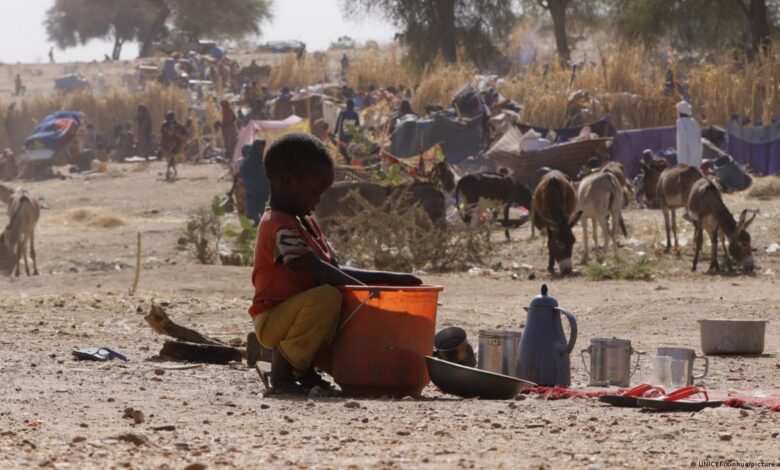
Sudan’s famine risk is no longer attributable to war alone, nor can it be explained simply by declining agricultural production or rising prices for essential goods. The crisis deepening in October 2026 results from overlapping military, climatic, economic and humanitarian factors that directly threaten millions of civilians’ food security, health and survival. Across large parts of Darfur and Kordofan, access to food is deteriorating as incomes shrink, farming and livestock suffer, and humanitarian organisations face growing difficulties delivering assistance.
The Integrated Food Security Phase Classification, an international framework humanitarian agencies use to assess food insecurity, has warned of a growing famine risk in parts of Sudan. The warning is particularly serious because drought is not hitting a stable country with public services capable of absorbing the shock. It is striking a society exhausted by war since April 2023, with extensive displacement, destruction and disruption of essential services.
These conditions create an escalating cycle of deprivation. When farmers lose their land or cannot reach it, fewer crops reach markets. When supplies fall and prices rise, families that have lost their income cannot afford what they need. Persistent malnutrition increases the likelihood of disease, while health institutions become less able to treat children, women and older people, particularly where medical facilities are damaged or cut off from supplies.
The danger therefore lies not only in insufficient food availability, but in the collapse of growing sections of the population’s ability to access it. Goods may be available in markets or elsewhere in the country without displaced or impoverished families being able to afford them, or food being safely transported into besieged or isolated areas.
Drought Hits Agriculture in a Country Exhausted by War
Drought associated with El Niño has added another dimension to the humanitarian crisis. According to the alert issued on 12 October, it affects roughly half of Sudan’s territory and coincides with continuing conflict and displacement, reducing food availability, raising prices and damaging livelihoods.
Its consequences extend beyond insufficient rainfall. Agriculture depends on the timing and regularity of rain, as well as seeds, fuel, labour, transport and farmers’ ability to reach their land and sell their harvests. When these conditions fail simultaneously, the farming season can suffer extensive losses even outside areas of direct fighting.
Risks are heightened in Darfur and Kordofan because parts of the population rely on rain-fed agriculture and livestock. Reduced rainfall limits crop and pasture growth and diminishes water supplies for people and animals. Farmers and herders may need to spend more obtaining water or moving livestock when neither money nor transport is readily available.
Farmers losing their harvest lose more than food for their own consumption. They also lose income intended for medicine, fuel, clothing, and their children’s education. Selling remaining livestock to meet daily expenses depletes productive assets and weakens their ability to recover the following season.
This illustrates the relationship between drought and conflict: war reduces people’s ability to adapt to climate shocks, while drought increases pressure on households and markets and deepens the vulnerability of communities already deprived of livelihoods. What might normally have been a poor agricultural season can become a widespread food crisis that is difficult to contain during war.
Millions Face Food Insecurity
Humanitarian figures reveal the catastrophe’s scale. An assessment from May 2026 found that approximately 19.5 million people in Sudan, more than 40% of the population, faced high levels of acute food insecurity. Around 135,000 were in Phase 5, the classification’s most severe level, associated with catastrophic conditions of extreme food deprivation, malnutrition, and mortality.
These figures do not mean everyone affected faces identical circumstances. Some families cannot obtain sufficient food regularly; others reduce meals or abandon more nutritious foods. The most vulnerable face extreme hunger. Their shared condition is a declining ability to meet basic needs with few remaining coping options.
Households may initially adopt apparently temporary strategies: buying less food, borrowing from traders or relatives, or selling possessions. Over time, these options become less effective. Savings disappear, debts accumulate and assets available for sale diminish. Families displaced repeatedly may have no home, land or tools left to rely on.
Children face particularly serious consequences because malnutrition during growth can affect health and physical and cognitive development. Pregnant and breastfeeding women and people with chronic illnesses also need food and healthcare that limited meal distributions cannot replace. When hunger combines with contaminated water and weak health services, disease becomes more dangerous to already weakened bodies.
This crisis cannot be treated as an emergency that ends when a food shipment reaches an affected area. Immediate assistance is essential to saving lives, but cannot alone restore farming, household incomes, markets or public services. Sudan needs a response combining food, nutrition, healthcare and water with livelihood support and restored production capacity.
Darfur and Kordofan at the Centre of the Risk
Darfur and Kordofan are among the most concerning regions because armed conflict overlaps with reduced rainfall, displacement and limited services. These factors complicate aid delivery and prevent humanitarian organisations from continuously assessing needs across every affected area.
Agricultural livelihoods have been severely damaged in parts of Darfur, while areas of Kordofan face mounting pressure on water and food resources. The consequences extend beyond families losing harvests to traders, transporters and local market workers, whose livelihoods depend on goods moving and residents’ purchasing power.
When roads are disrupted or become dangerous, transport costs rise, and supplies may be delayed or cut off. Food can reach a nearby area without reaching the communities that need it most. Higher transport, insurance, and commercial risk costs can also raise prices even without an absolute national shortage.
Displaced people face compounded risks. Fleeing fighting can mean losing land, tools and support networks. In camps or areas hosting large displaced populations, they may compete with residents for limited water, healthcare and employment. If host areas also experience drought or insecurity, everyone’s capacity to cope declines.
The response must therefore extend beyond places dominating headlines. Less visible areas may contain families facing hunger without regular assistance. Humanitarian agencies need updated field assessments and should prioritise locations combining severe needs, difficult access and a lack of local alternatives.
Safe access should not depend on political or military considerations. Humanitarian assistance is intended for civilians according to need, not according to who controls their location. Obstructing food, medicine or drinking water increases hunger and disease risks and worsens the suffering of people unable to control wartime conditions.
Funding Shortfalls Threaten the Response
The crisis is worsening because humanitarian funding falls short of needs. In a statement issued on 16 October 2026, the UN warned that essential food and humanitarian stocks could run out by early 2027 without urgent financing. It said rainfall-affected areas needed food, nutrition, water, sanitation and health services alongside support for farmers before the winter planting season.
Funding shortages mean more than fewer shipments arriving in Sudan. They can also force reductions in rations, beneficiary numbers or health programmes. Where famine threatens, these cuts can directly affect families entirely dependent on assistance.
Humanitarian organisations cannot compensate for economic collapse or halted agricultural production without sufficient resources. Relief requires purchasing, storing and transporting food, providing fuel, protecting staff, operating health centres and ensuring clean water. Every stage needs sustained funding, not pledges left unfulfilled or delivered too late.
Agencies also face difficult choices between meeting immediate needs and preventing further deterioration. Limited resources may be directed towards those facing the gravest hunger, while other households risk reaching the same point if they lose crops or income. Delayed responses can therefore cost more by allowing conditions to worsen before intervention.
The funding required is consequently more than symbolic solidarity with Sudanese people: it is a practical condition for stopping deterioration. Donors need to provide resources that can respond flexibly to field needs, with transparency and distribution oversight ensuring assistance reaches those most in need.
War Disrupts Food from Production to Consumption
However severe the drought, climatic factors alone do not explain the transformation into a food catastrophe. Since April 2023, war has weakened agriculture, livelihoods, infrastructure and services and displaced millions. Conflict is therefore a principal reason communities are less able to withstand drought.
Farming requires a minimum of stability. Farmers cannot cultivate under threat of attack or buy seeds and fertiliser after losing income or access to functioning markets. Harvesting also requires labour, transport and storage, all vulnerable to fighting and unsafe roads.
Lower production reduces locally available food and may raise prices in areas dependent on supplies from elsewhere. Families that lost income face pressure from both directions: less or more expensive food and a reduced ability to buy it.
Displacement also changes consumption and demand for services. Large population movements increase pressure on markets, water sources and health centres. If services do not expand quickly enough, both residents and displaced people struggle to meet basic needs.
The collapse of healthcare must not be overlooked. Malnourished children require early detection and specialised treatment, while severe cases may need facilities equipped to manage medical complications. Damaged facilities and shortages of medicines, equipment and staff restrict the response. WHO has noted that weak healthcare and limited clean-water access increase illness and death risks among undernourished people.
Preventing famine therefore cannot be separated from protecting civilians and civilian infrastructure, ensuring unobstructed relief and creating conditions for farmers to resume work. The longer fighting continues, the harder rebuilding becomes, even if weather conditions subsequently improve.
What Can Prevent a Wider Catastrophe?
The priority is rapid, safe humanitarian access to people in need. This requires opening necessary routes, reducing administrative restrictions that delay operations, and protecting aid workers and food distribution facilities. Assistance must also cross conflict lines and borders where those routes are necessary to reach isolated areas.
The emergency response must nevertheless extend beyond food distribution. Therapeutic nutrition for acutely malnourished children, clean water, improved sanitation and medical care are interconnected. Families receiving food but forced to drink contaminated water may continue experiencing diseases that weaken the body and increase nutritional requirements.
Livelihoods must also be protected. Farmers need seeds, tools and agricultural inputs, alongside assurances enabling access to and cultivation of their land. Herders need water, pasture and veterinary services, while markets require safe roads and reliable transport. Supporting these activities restores incomes and reduces prolonged dependence on relief.
Inadequate rainfall also requires regularly updated agricultural and humanitarian planning. Monitoring rainfall, crops, prices and food stocks helps identify areas likely to deteriorate before risks become widespread famine. Clear information should accompany monitoring so local authorities, organisations and communities can make timely decisions.
Humanitarian funding must increase and follow assessed needs, with safeguards against diversion. Civilians must remain central to the response regardless of location, affiliation or who controls their area.
The most sustainable solution remains an end to fighting and a settlement protecting civilians and enabling institutions and services to be rebuilt. Assistance can save lives, but cannot alone eliminate the conditions exposing millions to hunger. Agriculture, markets, education and healthcare cannot be durably restored while war threatens residents, destroys infrastructure and displaces more families.
Sudan Faces a Humanitarian and Political Test
The October 2026 famine warning is more than an alert about a poor farming season. It reveals the depth of Sudan’s crisis: drought weakens crops and pasture, war undermines production and trade, displacement destroys incomes, and insufficient funding limits humanitarian action. Together, these factors leave households too vulnerable to absorb another shock.
The danger lies in gradual deterioration that eventually reaches a point difficult to reverse quickly. Families may begin by reducing consumption, then sell possessions, and finally lose the ability to buy food or obtain treatment. Losing one harvest can create a crisis lasting years without resources to restore production and livelihoods.
Preventing famine therefore requires simultaneous action on three levels: emergency assistance against hunger and disease, economic and agricultural support preserving the ability to produce and purchase food, and political and security action ending violence and protecting civilians. A response confined to one level cannot address the crisis’s intertwined causes.
International warnings must not become repeated statements without tangible outcomes. Success means food reaching those who need it, declining malnutrition, restored household incomes, farmers able to cultivate their land and functioning essential services. Until then, millions of Sudanese people will remain threatened by famine—not because of drought alone, but because war has deprived them of the means to withstand it.