Ukraine Between US Sanctions Uncertainty and Escalating Russian Attacks: Trump’s Decision Raises Concerns over the War’s Course
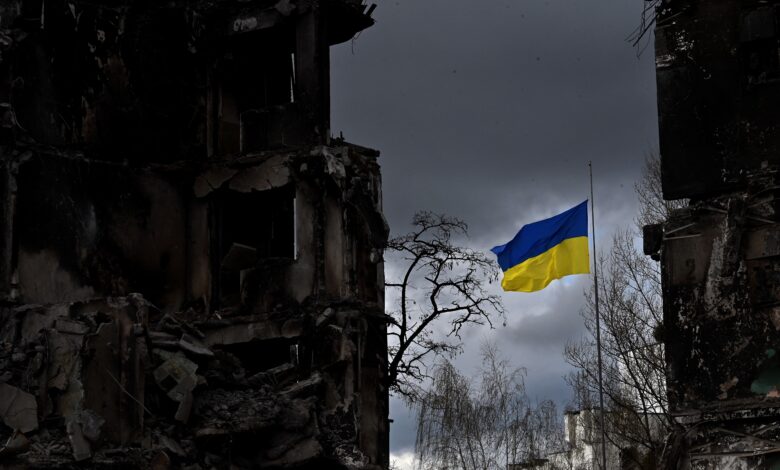
Economic sanctions against Russia returned to the forefront of the Ukrainian crisis on 17 October 2026, after Ukrainian President Volodymyr Zelensky called for support for stronger US pressure on Moscow. His appeal followed President Donald Trump’s signing of an executive order suspending a broad package of sanctions targeting sectors and individuals connected to the Russian economy. The Ukrainian call came at a sensitive moment, as Russian attacks on cities and infrastructure continued and the approaching winter made electricity, heating and water increasingly important to civilian life.
The disagreement concerned not an economic measure separate from the war, but the instruments the United States uses to influence the Kremlin’s calculations. Sanctions are among the principal tools Washington and its allies employ to restrict Russia’s ability to finance military operations, raise the cost of continuing the war and encourage a political settlement. Suspending them nevertheless raises a question: is Washington creating more room for negotiations, or could the decision reduce the economic pressure Kyiv hopes will persuade Moscow to change course?
In a statement on social media, Zelensky described the US decision as regrettable while avoiding a direct attack on Trump. He urged continued support for legislation targeting Russian interests, arguing that sanctions could increase pressure to end the war if implemented effectively. He also thanked Republican and Democratic lawmakers who backed the legislation, seeking to keep the issue active within US institutions rather than leaving it dependent on understandings between the American and Russian presidents.
Ukraine’s position reveals a clear diplomatic dilemma: Kyiv needs continued US support but fears that easing pressure on Moscow could weaken its negotiating position. The US administration, meanwhile, has broad powers to determine sanctions’ timing and scope and says its decisions serve the national interest. The consequences will depend on developments on the ground and on Russia’s and Ukraine’s willingness to accept political and security arrangements ending the fighting.
What Did the New Sanctions Target?
According to the Associated Press, the legislation bore Senator Lindsey Graham’s name and sought tougher sanctions against Russian officials, banks and a network of oil tankers known as the “shadow fleet”. These vessels transport Russian energy through arrangements involving multiple companies and structures. The measures were scheduled to take effect after a specified period, but Trump signed an order suspending implementation shortly before the deadline, citing US national interests without providing enough detail to clarify his reasoning.
Targeting banks matters because financial sanctions can restrict the affected Russian entities’ ability to make international transfers, obtain banking services, and deal with financial institutions needed for trade. Their impact nevertheless depends on their scope, financial institutions’ compliance, and the targets’ ability to find alternative channels.
Measures against oil tankers concern a major source of Russian revenue. Oil and gas sales generate income that can support the state budget and various economic sectors, including military spending. Further restrictions on energy exports could increase transport, insurance and sales costs or force exporters to offer buyers larger discounts. These effects are neither automatic nor guaranteed: they depend on enforcement, market responses and Russia’s ability to redirect exports.
Sanctions generally seek to increase economic costs without directly resorting to military force. Their effectiveness, however, is measured not merely by the number of government announcements but by their influence on the conduct they seek to change. They may constrain activities or make them more expensive without altering the leadership’s fundamental position. Their effects can also emerge gradually or diminish as targets adapt and find alternative trade and financing routes.
Suspending sanctions therefore does not necessarily mean lifting every restriction on Russia, just as implementing another package cannot alone guarantee an end to the war. It does, however, change expectations about US policy: greater economic pressure, additional room for diplomacy or an attempt to combine both.
Disagreements in Washington and Their Impact on Kyiv
Trump’s decision drew criticism from lawmakers who argued that suspending sanctions could weaken pressure on Moscow. Associated Press quoted Democratic Senator Richard Blumenthal, who helped draft the legislation, criticising the move as a retreat from a position supported by members of Congress and European allies. The objection reflects disagreement over how to use American economic power against Russia, rather than merely an administrative dispute.
In the US system, the president has broad authority over foreign policy and sanctions implementation, while Congress can legislate, conduct oversight and exert political pressure. When an executive decision conflicts with the expectations of lawmakers supporting a new law, disputes can arise over the interpretation of powers, the limits of exemptions and the policy’s objectives.
For Kyiv, these disagreements have immediate significance. The United States is not merely an actor expressing political positions: it is a major provider of the military, diplomatic, intelligence and financial support on which Ukraine relies against Russia’s invasion. Changes in Washington’s priorities or willingness to apply pressure can therefore affect Ukrainian calculations about defence and negotiations.
A single decision must nevertheless be distinguished from a comprehensive policy shift. Suspending one sanctions package does not, by itself, prove that Washington has abandoned support for Ukraine. Equally, continued assistance in some areas does not mean disagreements have disappeared. Assessing the broader direction requires examining practical decisions on military aid, funding, intelligence sharing, diplomacy and sanctions over time.
Tensions also appeared in Zelensky’s comments about contacts with Washington. He said Ukraine’s chief negotiator, Rustem Umerov, had met US presidential envoy Jared Kushner the previous day. He added that the United States was working to arrange a trilateral meeting involving himself, Trump and Russian President Vladimir Putin, potentially in the Middle East, Europe or the United States.
This process indicates that diplomatic contacts continued despite disagreement over sanctions. Preparing a meeting does not, however, establish that an agreement is near or reveal whether the parties have agreed on an agenda or preconditions. Political meetings can open dialogue, but they require understandings on fundamental questions to produce tangible results.
Winter and Energy: Another Front in the War
The sanctions debate coincided with escalating Russian attacks on Ukraine’s energy facilities. Zelensky said a large-scale attack struck more than fifteen energy infrastructure sites across the country. Ukraine’s air force reported intercepting all four cruise missiles launched in the attack and most of the 332 attack drones. These figures came from statements quoted in the report and do not mean that all potential damage had been definitively assessed.
Energy facilities are particularly important as winter approaches. Electricity does more than light homes: it supports heating, water supplies, hospitals, transport and communications, as well as factories and public services. Damage to generating stations or transmission and distribution networks can cause widespread outages affecting daily life and the economy.
Cold weather makes the damage harder to manage. Heating needs rise in winter, and prolonged outages can endanger older people, patients, children and families without alternatives. Hospitals may require backup power, while network repairs demand equipment, spare parts and technical teams able to work amid security risks.
The war has already seen repeated attacks on energy infrastructure during colder seasons. These create a parallel struggle over the state’s ability to repair damage and maintain essential services. Such attacks can impose substantial economic and social costs without producing direct battlefield gains.
Kyiv therefore sees pressure on Russia as more than a means of reducing financial resources: it also seeks to influence Moscow’s calculations about continuing attacks. Russia, meanwhile, relies on military capabilities and economic resources to sustain operations. The relationship between sanctions and attacks cannot be assumed automatic, however. Escalation decisions reflect multiple factors, including battlefield objectives, political assessments and each side’s ability to bear the war’s costs.
Civilians remain most exposed to the consequences. Even where a targeted facility has military or economic importance, its destruction can disrupt services relied upon by millions. Civilian protection, protection of civilian infrastructure and compliance with international humanitarian law therefore remain central to assessing attacks, regardless of the parties’ political positions.
Military Communications Disruption Raises Questions About Dependence on US Technology
Ukraine’s concerns that day extended beyond sanctions and energy. Zelensky announced that Kyiv was investigating sudden speed restrictions affecting Starlink satellite internet connections, which Ukrainian forces use for communications and some drone systems. He said the restrictions appeared without warning and affected connectivity when certain terminals moved faster than 160 kilometres per hour. This could force drones to travel more slowly and make them more vulnerable.
Responsibility for the restrictions remained unresolved when the report was published. Trump denied ordering them. Secretary of State Marco Rubio said the White House had not been behind the service reduction and that it was not deliberate. Rubio also said Ukraine lacked access to the Pentagon’s military Starshield system and had requested it to support long-range operations inside Russia. The report stressed that Starlink and Starshield are distinct systems and should not be confused.
The issue exposes Ukraine’s reliance on technological infrastructure it does not fully control. Satellite internet is important for communications between military units, information transfer, and coordination where conventional networks are damaged. Changes to service conditions or disruptions can produce battlefield effects even without an announced political decision to alter support.
This does not prove that the restrictions formed part of a deliberate plan to pressure Kyiv or that their effects were uniform across all uses. It nevertheless highlights the importance of clear agreements governing technical services that have become part of defence infrastructure. States relying on private companies or foreign systems for sensitive security functions need to understand usage limits, who controls service changes, and what emergency alternatives exist.
Ukraine consequently faces a challenge extending beyond conventional weapons supplies: how to maintain communications and digital systems throughout a prolonged war when some capabilities depend on externally managed services. There is no single answer, but diversifying communications, developing alternatives and clarifying responsibilities between governments and companies are increasingly important.
Risks Extend into the Black Sea
In another development, Romania’s Defence Ministry announced on 17 October that F-16 fighter jets had shot down two drones within Romanian territorial waters in the Black Sea. According to the Associated Press, radar detected aerial targets approximately 120 kilometres east of Snake Island. The drones subsequently entered Romanian airspace before being destroyed. Romanian authorities said they belonged to the Geran family, used by Russia in the war in Ukraine.
The incident matters because Romania is a NATO member, and any violation of an allied state’s airspace raises questions about border security and escalation. A drone incursion into a neighbouring country does not, however, automatically mark the beginning of confrontation between Russia and NATO. Assessment requires considering the location, circumstances, authorities’ response and available information about the drones’ origin and flight paths.
The report also mentioned earlier incidents involving drones approaching Romanian and Bulgarian coasts, alongside attacks on commercial vessels in the Black Sea during October. These events show how the war’s consequences extend beyond land front lines to navigation, trade and neighbouring countries’ airspace security.
The Black Sea is an important route for grain, energy and other goods. Deteriorating security can therefore increase shipping and insurance risks and affect trade. Attacks approaching neighbouring territories also heighten the importance of airspace monitoring and interstate coordination to prevent an isolated incident from becoming a wider crisis through miscalculation.
Can Sanctions Push the War Towards a Settlement?
The events of 17 October show that sanctions are part of a wider network of political, military and economic instruments shaping the war. Washington possesses substantial financial and diplomatic influence. Kyiv relies on external support against Russia, while Moscow seeks to preserve the resources needed to sustain military operations and withstand sanctions.
Sanctions are not a complete substitute for negotiations, just as negotiations cannot guarantee peace without addressing fundamental disagreements. A lasting settlement requires agreements on territory, security, future guarantees and mechanisms to monitor any ceasefire. It also requires understandings on responding to potential violations, reconstruction, displaced people’s return and civilian protection.
From Ukraine’s perspective, easing economic pressure could reduce Russia’s incentive to negotiate on terms acceptable to Kyiv. The US administration may instead believe that sanctions flexibility allows exemptions or threats of renewed restrictions to serve its negotiating strategy. Announcing a decision alone cannot establish which calculation will produce better results. That depends on Russia’s response, Western cohesion and the parties’ ability to translate pressure or dialogue into enforceable commitments.
US policy is also not the sole determinant of the war’s course. Russian and Ukrainian military decisions, ammunition and air-defence supplies, the condition of both economies and European positions all affect calculations. The conflict’s future therefore cannot be reduced to the fate of a single sanctions package, however important.
A Test of the Balance Between Pressure and Negotiation
The developments reported on 17 October 2026 highlighted a potential crossroads in US policy towards the war in Ukraine. Zelensky called for continued economic pressure on Russia, while Trump suspended new sanctions, saying the decision served American national interests. The disagreement coincided with attacks on energy infrastructure, concerns over military communications, and drone incidents reaching Romanian airspace.
These developments show that the war is measured not only by battlefield advances but also by the parties’ ability to protect infrastructure, secure communications, retain international support and manage regional escalation risks. Economic, technical and diplomatic decisions can each alter the environment in which the parties operate, even if their effects are not immediately apparent.
The central question is whether Washington will use sanctions as a sustained pressure tool, link their implementation to negotiations or combine threats with targeted exemptions. The suspension alone provides no definitive answer, just as preparations for a trilateral meeting do not establish that a political agreement is imminent.
The most important indicators will be the practical decisions that follow: will sanctions be implemented again? Will aid to Ukraine continue? Will political contacts produce specific steps? Will attacks on cities and energy networks decline? These measures will determine whether the balance between pressure and negotiation helps reduce fighting or remains part of a prolonged conflict whose costs fall on soldiers, civilians and the regional economy.