Cholera Spreads in the Democratic Republic of the Congo as the Ebola Response Strains the Health System
The Democratic Republic of the Congo faces a compound health crisis as cholera continues spreading across several regions while health authorities and their partners battle an Ebola outbreak that is straining hospitals and response teams. In a warning published by the United Nations on 14 October 2026, the World Health Organization said the country had recorded more than 125,000 suspected cholera cases and 3,644 deaths associated with suspected cases between January 2025 and the end of September 2026. These figures reflect the crisis’s scale, but concern suspected cases that are not necessarily laboratory-confirmed.
The developments have significance beyond the DRC because outbreaks do not spread independently of social, security and economic conditions. Access to clean water, sanitation facilities, patient transport and timely treatment determines communities’ ability to contain infection. When these conditions deteriorate, a preventable or treatable disease becomes more deadly, particularly in areas affected by poverty, displacement and instability.
The problem is not simply that two diseases are present in the same country, but that they compete for limited resources. Controlling Ebola requires case surveillance, contact tracing, isolation and specialised care. Cholera control requires improved water and sanitation, rehydration solutions, medical treatment, hygiene and public information, alongside vaccination campaigns where appropriate. If authorities divert additional resources towards one outbreak, other services may face greater pressure unless further support is provided.
Figures published on 14 October indicated that suspected cholera cases recorded since the beginning of 2026 had exceeded 51,412, including 1,487 deaths associated with suspected cases, across 21 provinces. Surveillance data for 21–28 September also recorded 2,932 suspected cases and 86 deaths, compared with 2,506 cases and 62 deaths the previous week. This increase underscores the need to accelerate the response, while recognising that surveillance figures can be affected by differences in detection and reporting capacity between areas.
Why Is Cholera Spreading So Quickly?
Cholera is an acute intestinal infection caused by bacteria usually transmitted through contaminated water or food. It can cause severe watery diarrhoea and rapid loss of fluids and salts, allowing some patients to deteriorate within hours without treatment. The danger lies partly in prevention’s dependence on basic services that may not be consistently available in areas affected by conflict, poverty or weak infrastructure.
Safe water is one of the most important elements of prevention. When families use unprotected wells or water sources, supplies can become contaminated by human waste carrying bacteria. Rain can wash contaminants into water sources, particularly where sanitation networks are inadequate or absent, or facilities are damaged by flooding or poor maintenance.
This does not mean rainfall alone causes cholera. The risk arises from the interaction between environmental conditions and inadequate water, sanitation and hygiene services. Water that appears clean can contain invisible contaminants, while storage in dirty containers can contaminate it again after collection.
Poor households face additional challenges when they must buy water or travel long distances to obtain it. Some families cannot boil or treat water regularly and may struggle to afford soap and materials for cleaning containers and toilets. Under these conditions, health information alone is insufficient without practical services people can use every day.
WHO explains that limiting cholera requires combining rapid treatment with safe water, sanitation and hygiene. Treatment saves patients’ lives, while preventive measures reduce transmission to others. If either is missing, infections may continue even after many patients receive care.
The Worst-Affected Provinces and Barriers to Treatment
According to the report published on 14 October, a large proportion of suspected cases were concentrated in South Kivu, North Kivu and Haut-Katanga, together accounting for nearly 60% of reported cases. Infections were also recorded in new health zones during the latest surveillance period, indicating that the response requires continuous monitoring beyond the locations where the disease first appeared.
Eastern areas face security and logistical challenges that obstruct health teams. In some places, insecurity restricts access to patients, testing, and contact follow-up. Long distances between villages and health facilities can mean hours of travel before treatment—a potentially decisive delay when illness causes rapid fluid loss.
The problem worsens when suitable transport is unavailable, or travel costs rise. Families may delay moving a patient because of fear, lack of money, or limited awareness of symptoms’ seriousness. Patients may arrive with severe dehydration, making treatment more demanding and requiring more intensive medical intervention.
The country’s size and uneven infrastructure also make distributing medical supplies difficult. Health centres need oral rehydration solutions, intravenous fluids and infection-control supplies, while response teams require communications and transport to follow cases in remote areas.
These conditions demand stronger local treatment capacity so that not every patient must travel to distant centres. Existing facilities can be supported with essential supplies and staff training, alongside treatment points established according to public health assessments. Any expansion must nevertheless protect patients and staff and include measures preventing transmission within health facilities.
Ebola Adds Pressure to the Health System
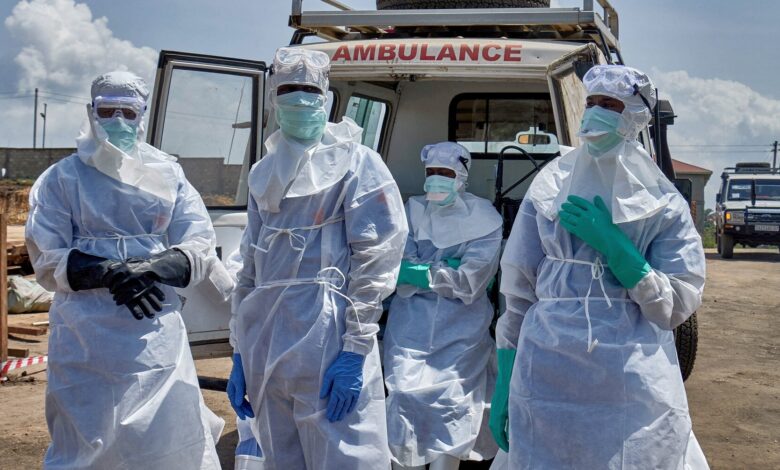
Rising cholera cases coincide with an ongoing Ebola outbreak in the DRC. This overlap creates a complex task for authorities because each disease requires different measures, despite shared needs for laboratories, medical personnel, transport, supplies and community engagement.
Ebola is a serious viral disease requiring rapid detection, strict infection-prevention measures, contact tracing and appropriate care. Cholera can spread widely when water or food becomes contaminated, and controlling transmission depends on improved sanitary conditions alongside treatment.
In its report published on 14 October, the UN said the Ebola outbreak was placing severe pressure on the country’s health capacity. It cited WHO figures of 9,066 cases and 4,381 deaths across seven provinces and 65 health zones, corresponding to a calculated case-fatality rate of 48.3% under the data available at the time. These figures relate to the publication date and should not be treated as a final toll or a substitute for subsequent updates.
The data illustrate the burden on health institutions. As demand for specialised care rises, hospitals may have to reallocate staff, beds and supplies. Without additional resources, other services can be affected, including cholera treatment, care for common illnesses and maternal and child health services.
Responding to one outbreak must not mean neglecting essential services. Patients with other illnesses still need treatment when a new outbreak emerges. Response plans should therefore include funding and resources to maintain necessary healthcare, alongside clear pathways for isolating and treating suspected cases.
Protecting health workers is also essential. They face infection risks, heavy workloads and supply shortages, sometimes under difficult security conditions. They need protective equipment, training, psychological and logistical support, and clear reporting systems. Without such protection, the health system’s response capacity may decline precisely when demand increases.
Vaccination, Safe Water and Community Engagement
The report described preparations to expand preventive interventions, including establishing water chlorination points in affected parts of North Kivu and disinfecting thousands of homes and toilets in Tanganyika. Reactive cholera vaccination campaigns also continued in South Kivu health zones alongside community information activities.
Chlorination can reduce contamination risks when carried out to appropriate standards. Success nevertheless requires water-quality monitoring, correct dosing and treatment points accessible to residents. Communities also need clear guidance on using and storing treated water, since prevention does not end at the treatment point if recontamination remains possible.
Disinfecting homes and toilets helps limit the spread of contaminants, but requires follow-up and sustained sanitation improvements. Risk cannot be eliminated sustainably while wastewater remains close to drinking-water sources or sanitation facilities remain inadequate.
Oral cholera vaccination provides an additional tool in at-risk areas, but does not replace clean water, sanitation and treatment. Campaigns should follow epidemiological assessments, identify priority populations and locations, and reach people facing the greatest access barriers. Coordination between neighbouring areas also matters where communities travel along rivers, roads and across borders.
The report noted preparations for a joint cross-border vaccination plan between the DRC and the Republic of the Congo in areas along the Congo River corridor. Such coordination recognises that population movements and trade do not stop at administrative borders, and effective responses require information sharing and coordinated interventions.
Health campaigns cannot succeed through central decisions alone. They need community cooperation, reliable information in understood languages, and the involvement of local health workers and community leaders. Messages should explain symptoms, when to seek treatment, and safe water and food practices without creating fear or stigmatising patients and families.
A Risk Extending Beyond the DRC
The Ebola outbreak adds a regional dimension to the crisis, as infections recorded outside the DRC have raised concerns about cross-border transmission. The UN report of 14 October said Uganda had declared its outbreak over in August, while Kenya reported an imported case linked to travel from the DRC through Uganda, with reports of a second case at that time.
These developments underscore the importance of surveillance and cooperation between countries, particularly in areas with substantial population movement or close commercial and social ties to the affected country. This includes training personnel at entry points, providing referral mechanisms and rapidly sharing epidemiological information.
Concerns about transmission should not, however, lead to blanket restrictions unsupported by health assessments. Measures should be evidence-based, proportionate to the risk and preserve access to essential services and humanitarian assistance. Stigma and discrimination against people arriving from affected areas can encourage them to conceal symptoms or avoid care, undermining containment efforts.
WHO recommends responses based on updated risk assessments, stronger case detection and preparedness in neighbouring countries, rather than general assumptions about all travellers or residents.
What Is Needed to Prevent the Crisis from Worsening?
Addressing cholera and Ebola requires a plan combining immediate treatment and long-term prevention. In the short term, medical supplies, safe water and patient transport must be provided, facilities receiving cases supported, and response teams’ ability to reach inaccessible areas strengthened.
Over the medium term, investment is needed in water and sanitation networks, early-warning and disease-surveillance systems, health-worker training and laboratory capacity. Earlier case detection and identification of transmission hotspots improve the chances of limiting infection and reducing deaths.
Assistance must not be confined to places with detailed data. Low reported case numbers may reflect weak surveillance or access difficulties rather than an absence of disease. Statistics should therefore be complemented by field assessments accounting for security restrictions and villages’ distance from health facilities.
Funding remains decisive. Sustained responses require resources for medicines, vaccines, water-treatment materials, transport, protective equipment and health-worker support. Delays can slow preventive campaigns, disrupt services in the most vulnerable areas or leave facilities unable to maintain care.
Assistance must also be coordinated between the government, WHO, humanitarian organisations and local partners, avoiding duplicated efforts in some areas while others lack adequate support. Priorities should reflect the severity of needs and health risks, with clear mechanisms to assess interventions and adapt them as circumstances change.
Outbreaks Expose the Fragility of Essential Services
Rising cholera cases during the period covered by the 14 October 2026 report show that the DRC’s crisis is not solely medical. It concerns access to clean water, sanitation, safe roads, and health facilities’ ability to reach patients. The danger increases when cholera coincides with Ebola, requiring the health system to meet different needs simultaneously.
The announced figures demonstrate the need for rapid intervention, while also highlighting the importance of distinguishing suspected from confirmed cases and time-specific figures from subsequent developments. Accurate assessment is necessary to direct resources, identify urgent needs, and avoid overstating or understating the crisis.
Treatment alone cannot stop cholera, just as Ebola cannot be controlled without systems capable of detecting and following cases. Combining medical care, safe water, sanitation, vaccination, public information and regional coordination is essential to reducing deaths and limiting transmission.
Ultimately, protecting people requires more than confronting the current outbreak. It requires building sustainable health capacity to prevent the next disease from causing another catastrophe. Every investment in clean water, local healthcare and early surveillance can reduce risks for millions and strengthen communities’ ability to withstand future health crises.