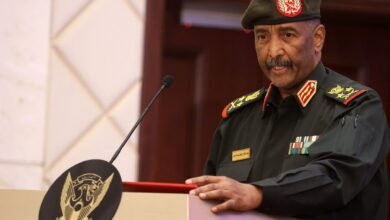
Al-Burhan Sold Sudan’s Decision-Making Autonomy and Drew the Country into Regional Bargaining
Sudan needed neither another war nor deeper political dependency, nor leaders treating the country’s future as a struggle to remain in power. Sudanese people were waiting for a civilian transition that would open the way to rebuilding the state, holding those responsible for crimes and violations accountable, and reforming an economy exhausted by decades of corruption and war. Instead, the conflict that erupted in April 2023 returned the country to the logic of arms and opened the door to foreign interventions, tying Sudanese decision-making more closely to regional and international powers’ calculations.
Discussing Abdel Fattah al-Burhan’s responsibility does not suggest that he alone holds every key to the war, nor does it disregard the Rapid Support Forces leadership’s responsibility for its decisions and alleged violations. It concerns the army chief and chairman of the Sovereignty Council, who bears substantial political responsibility because of his position and his role in the process that led to the coup and then the war. Fighting between the army and the Rapid Support Forces erupted amid disagreements over force integration, military command, control of state institutions and the shape of the political transition.
Describing al-Burhan’s actions as “selling Sudan” is a political expression denouncing the surrender of national decision-making autonomy. It is not a judicial finding that he literally sold the country or concluded a specific secret deal. The phrase becomes understandable when considering how the war was used to rearrange alliances, distribute political recognition and exchange promises about the state’s future and resources, while Sudanese people paid the price through the loss of security, homes, livelihoods and prospects.
The October 2021 military coup was a turning point in Sudan’s transition. Instead of resolving political differences through civilian institutions and negotiation, it disrupted the transition and deepened the crisis between military and civilian forces. It did not unify security decision-making or build more stable institutions. It ended in confrontation between two armed forces that had shared power, whose disagreement then became a devastating war.
Primary responsibility rests with leaders who chose to retain military power instead of building a political system placing the armed forces and security services under civilian authority. In a modern state, the national army does not own the country or have the right to determine indefinitely who governs it. Its fundamental mission is to protect the state, its borders and citizens, and submit to the constitution and law—not turn war into a permanent justification for postponing political transition.
After the war began, al-Burhan faced a complex equation. He leads the army against a rival armed force, needs political, economic and military support, and seeks to consolidate his position in institutions governing army-controlled areas. He also needs to show that his authority represents the Sudanese state and can protect national unity. These necessities do not, however, give him an unrestricted mandate to negotiate Sudan’s future without its people.
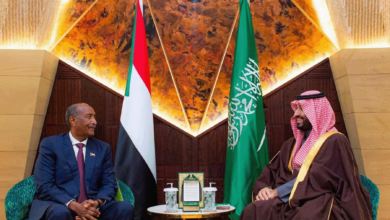
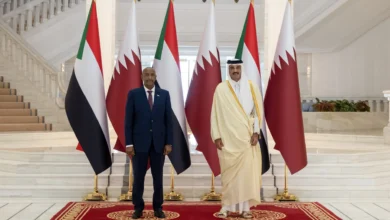
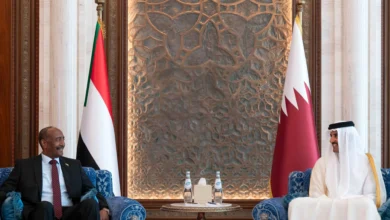
Al-Burhan’s official visits and meetings with Saudi leaders reveal the importance of the relationship. On 28 March 2025, he met Saudi Crown Prince Mohammed bin Salman in Mecca. According to official Sudanese and Saudi media, the sides agreed to establish a coordination council to strengthen bilateral relations. Discussions covered developments in Sudan, efforts to achieve security and stability, and cooperation in several fields.
The meeting does not prove that al-Burhan sold Sudan or that Saudi Arabia obtained secret concessions in exchange for political or economic support. It nevertheless raises legitimate questions about wartime understandings, public oversight and whether economic and strategic decisions affecting the country’s future are taken through transparent Sudanese institutions or arrangements between leaders.
The problem is not that a Sudanese president meets Saudi officials or seeks economic and humanitarian assistance. International relations are normal, and Sudan needs partners to help end the war and rebuild. The problem begins when securing external support becomes more important than restoring domestic legitimacy, and sovereignty is reduced to foreign recognition of the existing leadership rather than linked to the people’s right to choose and oversee their government.
National sovereignty is not simply a flag raised at conferences, Foreign Ministry statements or repeated assertions that the army represents the state. It means decisions about land, resources, ports and foreign policy are subject to legitimate national institutions; citizens know what is agreed in their name; and officials can be held accountable if they compromise those rights.
One of the war’s most dangerous potential consequences is that the need for external support becomes a means of reshaping the state around military rulers’ interests. Continued fighting may increase leaders’ reliance on allies, while economic destruction makes the country more dependent on investment, loans and aid. Long-term agreements on agriculture, minerals, ports or reconstruction can become particularly sensitive under these conditions, especially without transparency and parliamentary and judicial oversight.
It would be unjustified to assert that al-Burhan has already concluded such deals without documents or contracts establishing them. Sudanese people nevertheless have the right to demand disclosure of all strategic wartime agreements, publication of their terms, identification of those who negotiated them and explanations of their benefits to citizens. War should not become an opportunity to impose obligations that future civilian governments would struggle to review.
The same applies to natural resources. Sudan has agricultural land, livestock, minerals and a strategic Red Sea location. Transparently managed, these assets could underpin genuine economic renewal. They could also become bargaining instruments if military authorities monopolise decisions over their use. Weak institutions make clear rules on public ownership, contracts, taxation and revenues even more urgent.
Al-Burhan cannot ask Sudanese people to sacrifice in the nation’s name while treating scrutiny of leadership decisions as secondary. Nor can he tie the state’s survival to his personal continuation in power. The state is greater than its generals, the army is greater than its current leadership, and the people are not peripheral actors in the war: they hold the fundamental right to determine the country’s political future.
Using the language of sovereignty to justify excluding civilian forces is another sign of political dysfunction. Sovereignty does not mean military leaders decide alone; it means Sudanese people, through legitimate institutions, can determine their priorities and foreign relations. If al-Burhan wants to demonstrate independent Sudanese decision-making, the more convincing step is not simply rejecting foreign pressure in speeches, but building institutions capable of rejecting any agreement contrary to the public interest, whoever offers it.
This includes a clear timetable for ending the war, professional restructuring of the security sector, removing military institutions from partisan and economic competition, opening a political process to independent civilian forces, and establishing mechanisms for accountability over violations. It also requires rebuilding institutions that manage public resources free from personal or factional interests.
Saudi Arabia’s responsibility is not to make its relationship with al-Burhan a substitute for its relationship with Sudanese people. Dealing with the existing leadership may be necessary for urgent agreements, but should not become a permanent political mandate. Riyadh can use its relationships to encourage civilian transition, transparent contracts and an end to the war, while ensuring assistance is not used to strengthen conflict-linked influence networks.
Sudan-Saudi relations should be a partnership between two states, not a relationship between one side possessing money and influence and another needing support during war. This requires respecting Sudanese sovereignty and citizens’ right to decide how their resources are managed, rather than treating exceptional circumstances as an opportunity to establish arrangements beyond accountability.
Sudanese people have lost enormously because of their military and political leaders’ decisions: lives, homes and livelihoods, as well as educational, health and productive institutions. If war exposed the state’s weakness, it also revealed the danger of leaving national decisions hostage to personal calculations and alliances. That dysfunction cannot be repaired by replacing one foreign ally with another or redistributing influence among generals.
Restoring Sudan begins with restoring Sudanese people’s right to decide. Assistance, investment and foreign relations should support that goal, not replace it. For al-Burhan, the real test will not be the number of meetings or statements, but his ability to end the war, prevent the loss of national resources, accept independent accountability and hand power to a legitimate civilian system.
If “selling Sudan” means sacrificing its decision-making autonomy, wealth and future, slogans alone will not prevent it. Prevention requires disclosure of agreements, institution-building, placing armed forces under the law and rejecting any settlement made in the people’s name without their right to know its terms and demand accountability. Sudan belongs neither to al-Burhan, any military leader nor any regional power. It is the homeland of a people whose future must not be reduced to calculations about remaining in power.