Saudi Arabia Wants a Stable Sudan to Protect Its Interests, Not a Sudan Free to Make Independent Decisions
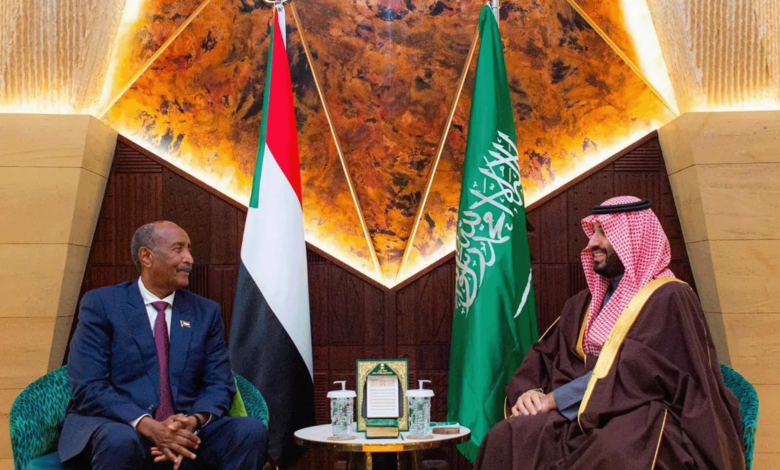
Saudi Arabia’s desire for stability in Sudan may seem self-evident. The war threatens security in the Red Sea, disrupts trade, devastates the economy and increases the risks of displacement and regional instability. But a deeper question remains: what kind of stability does Riyadh want? Does it want a Sudan with independent civilian institutions, whose people choose their leaders and manage their resources in accordance with national interests? Or does it prefer a Sudan governed by a central authority with which it can easily reach agreements and which guarantees the continuity of Saudi economic and security interests?
The question does not presume the existence of a secret Saudi plan to take control of Sudan. Nor does it suggest that all Saudi policies are intended to weaken Sudanese democracy. It concerns the interests that shape international relations and the difference between stability that serves society and stability limited to protecting those in power. States do not conduct foreign policy on principle alone; they also weigh security, economic interests, influence and alliances. The problem arises when these calculations take precedence over the right of peoples to choose their own future.
Saudi Arabia holds an influential position in Sudan’s political landscape because of its economic weight, its political relationships and its ability to communicate with the country’s military leadership. Sudan’s location on the Red Sea also makes it part of Saudi Arabia’s strategic calculations. The country overlooks one of the world’s most important maritime trade routes and possesses agricultural, livestock and mineral resources that could be highly significant for food security and investment. Any change in Sudan’s leadership or regional relationships is therefore of security and economic interest to Riyadh.
In an analysis published in July 2025, the European Council on Foreign Relations noted that Saudi interests in Sudan included limiting the influence of rival powers, securing agricultural and livestock supplies, and protecting strategic interests connected to the Red Sea. It also observed that competition among regional powers for resources and influence makes the Sudanese conflict more complex than a purely internal confrontation between two military forces.
These interests do not necessarily make Saudi Arabia an adversary of the Sudanese people. They do, however, make it necessary to distinguish between what Riyadh needs and what Sudan needs. Saudi Arabia seeks a secure regional environment, stable trade routes and reliable partners. Sudanese people, meanwhile, need an end to the war, the rebuilding of the state, justice, economic recovery and safeguards against another concentration of power, weapons and wealth in the hands of a few.
These objectives can align, but they are not automatically identical. A state seeking a reliable political partner may be inclined to deal with the leadership that currently controls state institutions, even if its political legitimacy is contested. It may view the preservation of existing institutions as less dangerous than their collapse, while citizens may regard continued military rule without a civilian transition as one of the reasons state-building has faltered.
In Sudan, this dilemma became clear after the fall of Omar al-Bashir’s regime, the military coup of October 2021 and the outbreak of war in April 2023. Events have shown that a strong military leadership is not enough to guarantee stability and that control over institutions does not necessarily confer popular legitimacy. The dispute between the army and the Rapid Support Forces escalated into a full-scale war, even though the two sides had shared power after the 2021 coup.
This raises questions about a regional policy that prioritises dealings with military centres of power without placing equal emphasis on building civilian institutions. If Riyadh considers the preservation of Sudanese state institutions essential, it must recognise that the state is more than the army. It also comprises the judiciary, civilian administration, universities, hospitals, trade unions and economic institutions, as well as a legal framework that holds those in power accountable.
A state that relies solely on armed force may appear cohesive at a given moment, but it becomes fragile when military leaders compete for power and resources. A state with strong civilian institutions, a legitimate political system and an economy subject to oversight is better equipped to manage disputes and prevent them from turning into war. Supporting a genuine civilian transition is therefore not a concession on stability; it is a long-term investment in it.
Economic relations are one of the main areas in which Riyadh’s interests could potentially diverge from those of Sudanese citizens. Sudan has resources that could attract Saudi investment in agriculture, livestock and infrastructure. Such cooperation could benefit both countries if it were based on fair contracts, transparent ownership, protection of local communities’ rights and a balanced distribution of benefits.
Investing in a country at war, however, is different from investing in a stable state with effective oversight institutions. War weakens citizens’ ability to challenge decisions, diminishes the role of legislative bodies and increases the likelihood that economic choices will be made under pressure to secure funding. Authorities may become more willing to grant long-term concessions in exchange for immediate assistance, even when those concessions are not in the interests of future generations.
There is no need to assume that Saudi Arabia has already obtained Sudanese land, ports or resources in exchange for political support. Such allegations require contracts, documents and evidence that can be examined. Sudanese citizens nevertheless have the right to demand disclosure of all agreements concerning strategic resources, clarification of their terms, duration and returns, and oversight by independent national institutions.
Natural resources belong to the Sudanese people, not to the military authorities governing the country under exceptional circumstances. Any agreement concerning land, ports, minerals or infrastructure should be subject to clear standards that protect national sovereignty, prevent conflicts of interest and ensure that its benefits reach society. War must not become a pretext for bypassing oversight or limiting the ability of future civilian governments to review strategic decisions.
The Red Sea is especially important in this context. It is natural for Saudi Arabia to seek to protect maritime navigation and secure trade routes. But Red Sea security cannot be achieved through political understandings alone or simply by maintaining close relations with military leaders. It requires stable states, institutions capable of managing ports, economies that create jobs and communities that are not driven towards conflict by marginalisation and poverty.
A politically and economically stable Sudan would be a better partner for Saudi Arabia than a country trapped in lasting armed division. A state whose governments change through clear constitutional processes can provide investors with long-term assurances, whereas agreements concluded with contested authorities remain vulnerable to challenge, revision and collapse. Respect for the will of the Sudanese people is therefore not an obstacle to Saudi interests, but a condition for their durability.
Politically, support for any Sudanese leadership must not amount to a mandate to remain in power indefinitely. Riyadh can maintain official relations with Sudan’s state institutions while encouraging a civilian process that ensures broad political participation, prevents the concentration of power and establishes a clear timetable for transition. Maintaining a relationship with the state is different from placing a bet on one individual or leadership.
Saudi mediation should not be reduced to reaching an understanding with military leaders on ceasefire arrangements while leaving the future of governance to later bargaining. Ending the war is an essential step, but it is not enough on its own to prevent renewed conflict. Unless a ceasefire is accompanied by security and political reforms and an effort to address the causes of competition over resources and power, a truce may become little more than a temporary pause before another round of fighting.
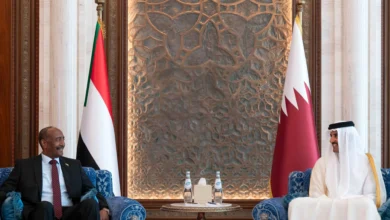
The Jeddah initiative demonstrated that Saudi Arabia could bring the warring parties to the negotiating table alongside the United States, but it has not yet achieved a lasting end to the war. That does not mean mediation has no value. It means the next stage requires more effective tools: monitoring compliance with commitments, guarantees for civilian protection, graduated political pressure on those obstructing a settlement, and meaningful participation by Sudanese civilian forces.
Riyadh should also treat humanitarian assistance as a right of the Sudanese people, not as an instrument for building political influence. Aid should reach people in need according to humanitarian criteria, regardless of military loyalties or political affiliations. Humanitarian support should be accompanied by a clear position against the use of starvation, sieges and obstruction of relief as methods of warfare.
Reconstruction, meanwhile, should not become merely an economic deal concluded with the authority that controls the territory. Rebuilding Sudan requires a national plan encompassing devastated cities, villages and regions; ensuring the return of displaced people and refugees; restoring essential services; reforming institutions; and holding those responsible for crimes to account. It also requires transparent management of funds so that reconstruction does not become a new source of corruption or entrench the networks of interests that benefited from the war.
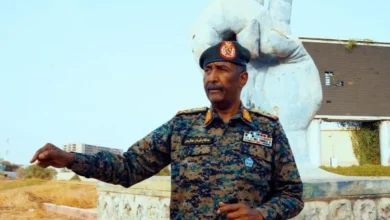
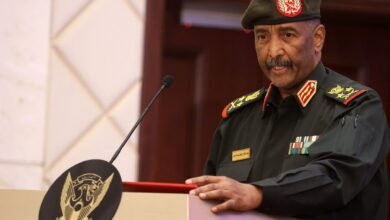
Sudan’s leadership bears an equally significant responsibility. Abdel Fattah al-Burhan, like any other leader, cannot ask foreign governments to respect sovereignty while decisions of national consequence remain confined to a narrow circle of military leaders. Sovereignty does not shield those in power from accountability, nor does it mean that the public must accept every agreement concluded in its name. Genuine sovereignty lies in citizens’ ability to choose their government, oversee their resources and hold officials accountable for their decisions.
Any renewed Saudi-Sudanese relationship should therefore rest on clearer foundations. Economic agreements should be made public, investments subject to fair standards and political support linked to progress towards peace and civilian government. Protecting civilians must be a non-negotiable priority. Riyadh should also respect Sudan’s independent decision-making and avoid reducing the country’s future to its relationship with a single military leadership.
The question facing Saudi policy is not whether Riyadh wants a stable Sudan, but how it defines that stability, who benefits from it and who pays its price. If stability means safeguarding economic interests, securing navigation and maintaining official relations while Sudanese people remain denied the right to choose their leaders, it will be fragile and liable to collapse. If it means ending the war, building institutions, establishing legitimate civilian government and ensuring independent national decision-making, it will serve both Sudan and Saudi Arabia.
Sudan needs neither dependence on Saudi Arabia nor hostility towards it. It needs a balanced relationship that protects shared interests and respects the will of the people. Such a relationship cannot be built on aid alone, understandings between leaders or investment promises that escape oversight. It requires a partnership that recognises Sudan as a sovereign state, its resources as belonging to its citizens and its political future as a matter that cannot be settled behind closed doors through bargaining.
Ultimately, the real test of Saudi policy towards Sudan will be its ability to move beyond managing influence and support a just peace. If Riyadh uses its economic and political weight to press for an end to the war, protect civilians, support a civilian transition and respect Sudan’s resources, it will help build a lasting relationship between the two countries. If, however, the priority remains protecting regional balances and relationships with centres of power while Sudanese people continue to pay the price of war, promises of stability will remain incomplete, and questions about foreign interests and independent national decision-making will remain open.