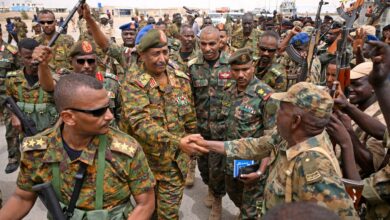
Turkey Fuels Sudan’s War with Drones and Arms, Betting on an al-Burhan Victory
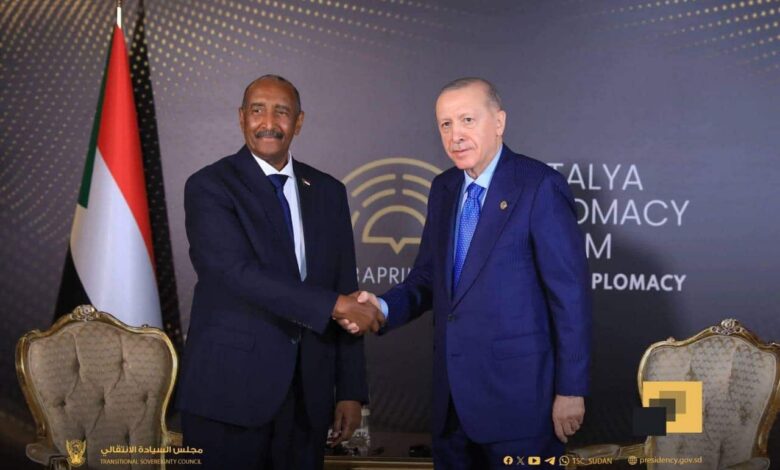
Sudan’s war is no longer simply an internal power struggle between the army and the Rapid Support Forces. It has become a conflict in which military calculations, economic interests and competition for regional influence intersect. Against this backdrop, Turkey’s role has emerged as one of the external factors contributing to a shift in the balance of power on the ground. News reports and investigations have documented deals involving Turkish weapons and drones delivered to the Sudanese army during the war, even as Ankara declared its support for peace and stability and expressed its readiness to act as a mediator.
The paradox is that Turkey presents itself as a country seeking to preserve Sudan’s unity and prevent foreign interference. At the same time, it has a defence industry capable of supplying one side of the war with sophisticated weapons that strengthen its ability to keep fighting. This raises fundamental questions about Ankara’s actual policy and the extent to which its diplomatic rhetoric can be separated from the military and commercial interests shaping its relations with Sudanese authorities.
In March 2025, The Washington Post published an investigation based on documents, correspondence, financial records and flight data. According to the newspaper, Turkish company Baykar had concluded an arms deal worth approximately $120 million with the defence industry complex linked to the Sudanese army. The agreement included Bayraktar TB2 drones, warheads and control stations, as well as technical support inside Sudan. The investigation reported deliveries during 2024 and correspondence concerning the monitoring of military operations after the drones arrived.
Considered in their military and political context, these findings indicate that the relationship between Ankara and Sudan’s military leadership has gone beyond diplomatic exchanges and conventional cooperation. Drones are not merely neutral pieces of defence equipment: they can carry out strikes at a distance, monitor movements, target military positions and change an adversary’s calculations on the battlefield. When such systems reach a party engaged in an internal war, their impact extends beyond the commercial transaction and can affect the future course of the conflict itself.
Recent conflicts have shown that drones can reduce the cost of reconnaissance and attacks, extend the reach of operations and allow the forces that possess them to strike targets without exposing pilots to the same risks associated with conventional aircraft. For the Sudanese army, acquiring advanced Turkish systems strengthens its air capabilities against a force that also relies on a range of combat methods. It also provides additional leverage in battles of attrition being fought across extensive fronts.
The central problem, however, lies not in the technology alone but in the environment in which it is used. Sudan is living through a war that has caused widespread collapse of public services, displaced millions of people, destroyed residential neighbourhoods and civilian facilities, and worsened hunger and disease. In such circumstances, supplying weapons to one side is a decision with political and humanitarian consequences that cannot be reduced to questions of lawful commerce or the right of states to engage in military cooperation.
Supplier states and companies bear increasing responsibility for assessing the foreseeable risks associated with the use of their weapons, particularly when those weapons are destined for a country experiencing a large-scale armed conflict. This does not require assuming that every weapon will necessarily be used in violation of international law. It does, however, require recognising that continued military supplies may strengthen the ability of the parties to keep fighting and weaken their incentives to negotiate.
In Turkey’s case, the questions are more complex because of the company involved and its position in the defence industry. Baykar is not a small supplier: it is one of Turkey’s leading drone manufacturers, and its name is associated with the rise of a defence industry that has become an important instrument of Ankara’s foreign policy. The company’s deals in conflict zones therefore carry significance beyond their immediate commercial value. They are connected to Turkey’s international image, its strategic interests and its ability to build long-term relationships with governments that buy its weapons.
The risks of this model become apparent when weapons serve as a means of expanding political influence. A state that supplies arms to a government may gain a privileged place in its security calculations, an opportunity to influence its future decisions and an advantage in competition for economic contracts and infrastructure projects. Defence interests thus become intertwined with investment, mining and ports, creating a network of relationships whose individual components are difficult to separate.
The Washington Post investigation referred to discussions about potentially offering Turkish companies opportunities in Sudanese mining and port projects, including gold, copper and silver, as well as the Abu Amama port project. These details raise a legitimate question about the political and economic benefits Ankara might derive from its relationship with Sudan’s leadership. They also raise questions about the independence of Sudanese economic decision-making amid growing reliance on external support.
This does not mean that every economic agreement with Turkey is necessarily an improper deal, or that discussions about investment alone prove the existence of a direct exchange for weapons. But the overlap between the army’s military needs and Turkish companies’ interest in resources and ports calls for full transparency regarding contracts, their terms and their beneficiaries. Sudan’s resources belong to its people. They should not become a bargaining chip used by a military authority to obtain foreign support that strengthens its ability to continue the war.
Turkish policy therefore faces a real test. If Ankara genuinely wants to end the war, it must make military de-escalation a tangible priority, support an inclusive political process and ensure that any defence cooperation with Sudan is governed by clear rules preventing equipment from being used in violations against civilians. Calls for peace become less convincing when military and commercial relationships that strengthen one party’s capabilities continue.
Sudan’s leadership also bears responsibility. As head of the military authority conducting the war, al-Burhan should disclose the military and economic agreements concluded in Sudan’s name and clarify their terms, sources of funding and any future obligations they may create. Military necessity cannot, on its own, justify concealing strategic contracts that may affect future generations’ rights to the country’s resources and economic sovereignty.
The real danger is that Sudan could become an open market for weapons and a testing ground for military technology, while its citizens pay the price through the loss of security, livelihoods and prospects for the future. Each increase in combat capabilities may give one side a temporary advantage, but it does not in itself provide a political solution. It may also encourage the other side to seek countervailing weapons, opening another cycle of escalation.
It is not possible to conclude that Turkish support alone has prolonged the war, since the conflict is shaped by multiple domestic and external factors. Nevertheless, the published evidence concerning drone and munitions deals, together with the economic interests associated with the bilateral relationship, makes Turkey’s role a legitimate subject for scrutiny and investigation.
Sudan needs the protection of civilians, the restoration of state institutions and a political process that ends the domination of weapons over national decision-making more than it needs additional arms. Any country that genuinely wishes to help Sudanese people must demonstrate that commitment through policies that reduce the likelihood of continued fighting, rather than through relationships that tie the country’s future more closely to the calculations of foreign suppliers.