FEMYSO and EMF in France: Does Membership of a Shared Network Reveal Wider Political Coordination?
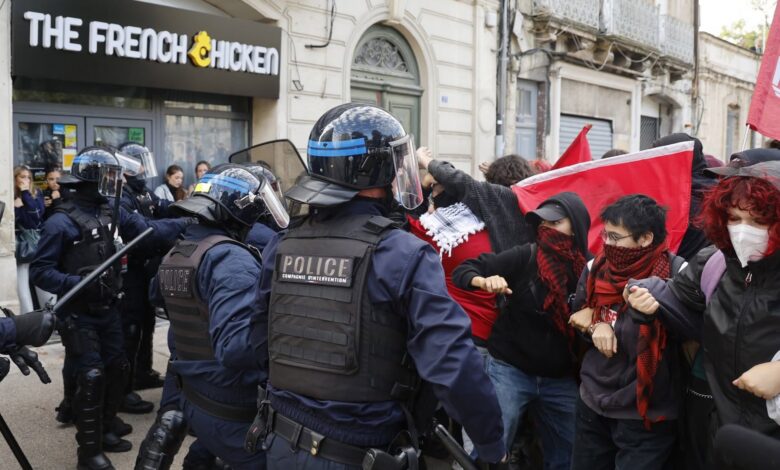
The relationship between the Forum of European Muslim Youth and Student Organisations (FEMYSO) and Étudiants musulmans de France (EMF) occupies an important place in the debate over the nature of Muslim youth networks in Europe. The question became particularly relevant after EMF called on students to take part in the mobilisation held in France on 17 October 2026, following FEMYSO’s statement of solidarity with students in France and Belgium on 9 October. This sequence raises questions about the relationship between the European and national levels and about how membership of a transnational network may influence local associations’ positions. Establishing coordination beyond expressions of solidarity, however, requires evidence concerning decisions, communications and resources; timing alone is not enough.
-
Implementing the European Parliament’s Resolution on the Muslim Brotherhood Requires Financial and Judicial Oversight and Clear Standards for Institutional Participation
-
The European Parliament Steps Up Action Against Muslim Brotherhood Influence and Opens the Door to a Review of Institutional and Financial Relationships
Information published on EMF’s official website states that the organisation is a member of FEMYSO, alongside other civil society networks. EMF describes itself as an independent student organisation and denies any link to the Muslim Brotherhood or subordination to a political party. This stated position is an essential part of balanced journalistic coverage and should not be overlooked when examining allegations concerning the organisation or the networks with which it cooperates. At the same time, a declaration of organisational independence does not prevent journalists and researchers from examining the practical relationships between associations, provided they rely on verifiable evidence.
On 15 October, EMF published a call on its official website to participate in the mobilisation scheduled for 17 October, after the European Forum had expressed solidarity with protesting students in France and Belgium. This sequence can be read as an example of messages moving between European and national levels: a general position issued by a continental network, followed by a local call to participate in a specific mobilisation. The sequence does not, however, prove by itself that the French call was issued at the Forum’s instruction or that the protest formed part of a unified political plan. Reaching such a conclusion would require access to internal correspondence, organisational decisions and any documents demonstrating joint planning.
-
European Resolution on the Muslim Brotherhood Tests the Implementation of Transparency and Democratic Safeguards
-
Modern Diplomacy: The Muslim Brotherhood Faces a New Challenge Between National Security and Freedom of Association
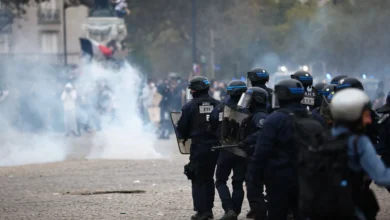
This distinction matters particularly given the nature of the French protests themselves. Independent news reports described demands concerning conditions in schools, staff shortages and education funding. They also noted that the mobilisations had expanded to include different sections of society. Taking part in a protest centred on social demands does not necessarily mean that participants share a single ideological project, nor that every association supporting it can direct it. Mass movements often bring together trade unions, students, parents and civil society groups from different backgrounds who nevertheless agree on specific demands.
Examining EMF’s role within FEMYSO remains legitimate. A national association’s membership of a European network enables the exchange of experience and positions and may provide opportunities for media coordination or joint campaigns. The question worth investigating is not whether membership exists—it is publicly acknowledged—but what it produces in practice. Is it limited to training, communication and advocacy on issues affecting young Muslims? Or does it include political coordination on local matters beyond the student sphere? These questions cannot be resolved without examining programmes, joint statements and decision-making mechanisms.
-
EU Reporter: European Alerts Intensify over Muslim Brotherhood Networks and Their Funding Sources
-
Le Pont de Genève : l’Europe ouvre le dossier des réseaux des Frères musulmans et de leur influence politique
It is also necessary to distinguish between three different levels: the institutional relationship established by membership, the similarity of publicly stated positions and an alleged organisational connection to a particular political movement. The first can be verified through official websites; the second can be analysed by comparing statements; the third requires stronger independent evidence, such as authenticated documents or clear financial and administrative information. Confusing these levels turns journalistic investigation into a predetermined conclusion rather than an open inquiry into the facts.
The importance of the FEMYSO–EMF case lies not in issuing ready-made judgments, but in examining the transparency of transnational youth networks. French and European audiences have a right to know which organisations call for mobilisations, where their funding comes from and the nature of their institutional relationships. Associations, in turn, have a right to be assessed on the basis of documented actions rather than their religious identity. Ultimately, documents establishing actual coordination would be more valuable than the mere timing of statements: they would help determine whether the relationship amounts to ordinary civic solidarity or organised political cooperation.
-
Universities and Grants: Europe Mobilises to Curb Muslim Brotherhood Influence in Educational Institutions
-
Muslim Brotherhood Funds and Influence Networks: al-Tamimi and Abu Daya at the Heart of the European Network
-
The Brotherhood’s soft face in Germany: What is the “CLAIM” alliance?
-
The Muslim Brotherhood in France Practices Judicial Terrorism