Egypt and Turkey in Sudan’s War: Military Support Prolongs the Conflict and Deepens Civilian Suffering
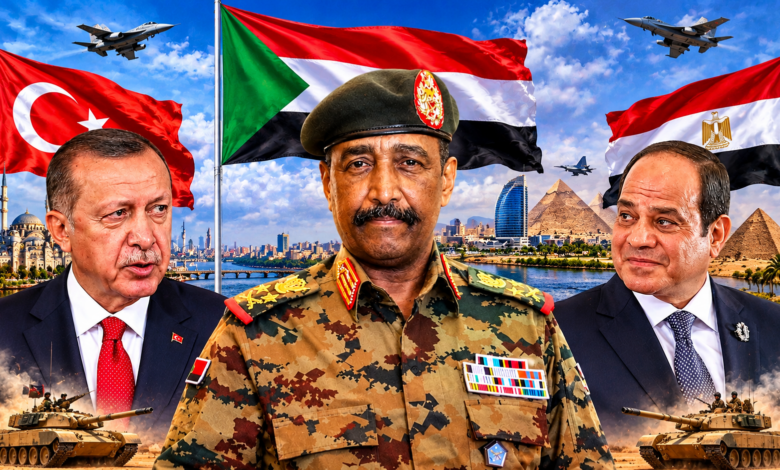
Sudan’s war is no longer simply an internal military confrontation between the army and the Rapid Support Forces. Over time, it has become an arena of competing regional interests and strategic calculations, with foreign powers seeing the collapse of the Sudanese state as an opportunity to expand their political, military and economic influence. Egypt and Turkey stand at the centre of this equation: both have historical and strategic ties with Sudan, alongside interests that extend beyond conventional diplomatic relations. Yet a pressing question remains: have Cairo and Ankara helped extinguish Sudan’s conflict, or have their military and political ties with the army leadership helped sustain it?
Since fighting erupted in April 2023, Egypt has adopted a clear political position towards Sudan’s military establishment, declaring its support for the country’s unity and national institutions. Cairo has presented this stance as a matter of national security, citing the countries’ long shared border and common interests concerning Nile waters and regional security. However, Egypt’s position cannot be separated from the historical relationship between the two countries’ military establishments, or from Cairo’s preference for a central military authority capable of controlling the situation in Khartoum over a political transition that could redistribute influence within the Sudanese state.
International reporting has revealed multiple forms of military and logistical cooperation and support between Egypt and the Sudanese army. In February 2026, Reuters published an investigation into the deployment of Turkish-made Akıncı combat drones at an Egyptian base near the Sudanese border, drawing on satellite imagery and information from regional officials and experts. The investigation reported that Cairo had strengthened its security and military presence around Sudan and that Egyptian security officials had discussed providing logistical and technical support to the Sudanese Armed Forces.
These developments raise a fundamental question about Egypt’s role: is it limited to protecting its borders and preventing instability from spreading, or does it extend to directly influencing the balance of power in Sudan’s war? When bases, airfields and military equipment become factors shaping operations, that role requires political and legal scrutiny, particularly when the result is prolonged fighting and wider destruction.
The central problem with Egypt’s position lies in treating the army as the sole guarantor of stability, without giving sufficient weight to Sudanese aspirations for a civilian state free from the dominance of armed power. Sudan’s stability cannot be reduced to keeping a military leadership in office. Nor should protecting Egypt’s borders become a justification for sidelining the political will of the Sudanese people or supporting arrangements that enable the war to continue.
As for Turkey, journalistic investigations have revealed a more direct role in supplying weapons. In an investigation published in March 2025, based on documents, correspondence, trade data and flight records, The Washington Post reported on Turkish arms deals for the Sudanese army. These included Bayraktar TB2 drones, ammunition and missiles, with an estimated value of at least $120 million, according to documents reviewed by the newspaper. The investigation also described the presence of personnel linked to the Turkish company Baykar during deliveries and technical follow-up work.
Viewed in the context of an ongoing war, this information shows that Turkish-Sudanese relations now extend beyond traditional defence cooperation. They involve a sensitive sector: drone technology and munitions that directly affect the capabilities of the warring parties.
The danger of this support lies not only in where the weapons come from, but also like the war in which they are used. Sudan faces devastated cities, bombed residential neighbourhoods, hospitals forced out of service, disrupted food supply routes and millions of displaced people. Under such conditions, providing more sophisticated weapons to the warring parties risks expanding military operations and increasing their human cost.
In an investigation published in July 2024, Amnesty International documented the arrival in Sudan of modern weapons and ammunition from several countries, including Turkey. It highlighted the risk that some could be diverted to conflict areas, including Darfur, despite restrictions on arms supplies to the region. The organisation also identified Turkish arms and ammunition exports to Sudan and called for tighter oversight of supply chains.
This brings the responsibility of arms-exporting states into focus. Governments cannot simply declare that deals are lawful or that weapons are destined for official institutions. International humanitarian law grants no party immunity from accountability because of its official status. Transferring weapons to a party in an armed conflict also requires assessing the risk that they could be used to commit serious violations.
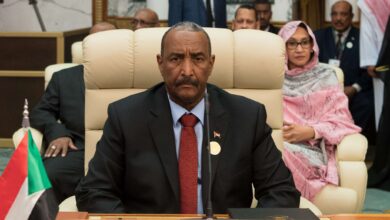
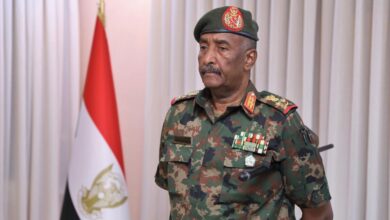
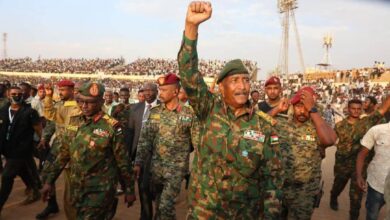
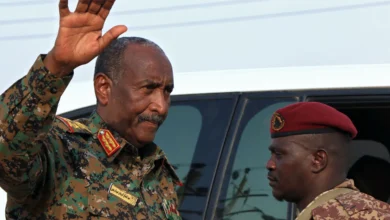
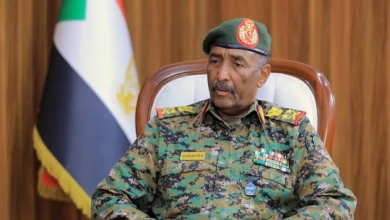
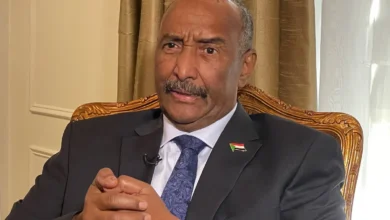
But responsibility does not rest with Cairo and Ankara alone. As the army’s commander-in-chief and chairman of the Sovereignty Council, Abdel Fattah al-Burhan bears substantial political responsibility for the Sudanese leadership’s choices and the relationships it has built with foreign powers. An authority that agrees to expand military and economic cooperation with external actors, without transparency or civilian oversight, places the independence of national decision-making under serious strain.
Sudan’s leadership could have prioritised ending the war and rebuilding civilian institutions over seeking additional military support. It could have established clear conditions for foreign cooperation to prevent Sudanese land, ports and resources from becoming bargaining chips in exchange for weapons and political backing. Instead, the lack of transparency surrounding many economic and military arrangements raises legitimate questions about the price Sudan may pay for this support.
Land and ports are a prominent concern. Journalistic investigations have reported negotiations between the Sudanese authorities and Turkish companies over opportunities in ports, mining, and natural resources. Documents cited by The Washington Post also indicated that the Sudanese authorities wanted to give Turkish companies roles in developing and managing Abu Amama port, alongside mining opportunities and economic licences.
Granting strategic concessions in ports or mining does not necessarily amount to selling land. It becomes a serious sovereignty issue, however, when it takes place without parliamentary or public scrutiny, or when it is linked to military deals whose terms and consequences remain unknown to Sudanese citizens.
Sudan is not a territory available for bargaining, nor a storehouse of gold, minerals and farmland whose concessions can be distributed according to the calculations of those in power. The land belongs to the people, ports are part of the state’s security, and natural resources are an entitlement of present and future generations.
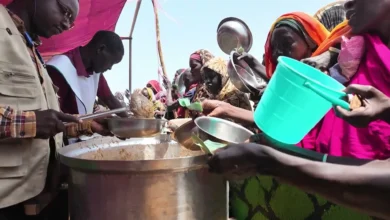
Civilians, meanwhile, bear the greatest burden. A child who has lost access to school, a patient unable to find a hospital, and a family that has fled its home under bombardment are not concerned with geopolitical calculations, arms deals or corporate ambitions. They want the war to end, security to return and the state to resume its essential functions.
Continued foreign support for the warring parties, whatever its justifications, weakens the prospects for a settlement and gives military leaders another reason to believe that victory can be achieved by force. The greater their capacity to keep fighting, the weaker their incentive to enter serious negotiations.
The question directed at Cairo and Ankara is therefore not a hostile one, but a legitimate political and moral challenge: what have these relationships delivered for the Sudanese people? Have they helped end the war, or strengthened the military capabilities that allow it to continue?
The question facing al-Burhan is no less important: under what national mandate is the future of ports, resources and strategic concessions being negotiated? Who scrutinises agreements concluded in Sudan’s name? Does a military leadership have the right to tie the state’s security and economic interests to its own calculations about remaining in power?
Ending the war requires more than diplomatic statements. It requires halting the flow of weapons, holding those responsible for violations accountable, ensuring transparency in foreign agreements and restoring civilians’ rightful place as those with the primary right to determine their country’s future.
Sudan will not regain its sovereignty merely through shifting front lines, nor will expanding its arsenal deliver stability. Sovereignty begins when decisions, resources and land remain in Sudanese hands, and when no foreign actor can determine the country’s future through an arms deal, a port concession or a closed-door agreement with a military leadership.